Moorestown High sophomore Sandro Boujaoude was recently a winner in the 2026 International River of Words Environmental Poetry and Art Competition, widely recognized as the largest youth environmental poetry competition in the world.
Hosted by the Center for Environmental Literacy at Saint Mary’s College of California’s Kalmanovitz School of Education, River of Words combines art and poetry to inspire exploration by young students and enable them to express their connection to the natural world.
“What makes this recognition especially meaningful to me is that it sits at the intersection of two things I care deeply about: environmental science and storytelling,” Boujaoude said. “I believe science can inform people … It can tell people about statistics and other things like that, but storytelling and writing can really move people to action.
“Poetry allows environmental issues to become emotional and personal to people and impossible to ignore.”
Boujaoude was one of just three international winners in the category of grades nine to 12, which saw 1,700 submissions from youth worldwide. His award-winning poem, “What the Valley Drinks,” was recognized for its exploration of environmental systems and human impact through creative expression.
Two of his other works – “A Species the Ocean Could Not Reject” and “When the Trees Begin to Move” – were both selected as international finalists. All three of Boujaoude’s poems will be published in the 2026 International River of Words Anthology.
“What the Valley Drinks” explores the idea that the environment absorbs the consequences of human behavior, often invisibly. “A Species the Ocean Could Not Reject” and “When the Trees Begin to Move” explore themes of pollution, ecological instability and humanity’s relationship with nature.
“Today, so much of climate change and environmental degradation is discussed through statistics, graphs and policy debates,” Boujaoude noted, “and those things are critically important. But writing and art can help people emotionally connect to the urgency of these issues in a way that data alone often cannot.
“I believe that our generation is growing up at one of the most defining moments for the future of the planet,” he added. “Climate change, bio-diversity loss, pollution and environmental injustice are no longer distant problems, they are affecting communities right now. Young people have a responsibility not only to understand these challenges, but to actively engage with them.
“The time to act is now.”
One of the things Boujaoude cares about most is helping younger generations see environmental stewardship not as an abstract responsibility, but as something personal and connected to their everyday lives. He believes that environmental literacy is one of the most important forms of education for young people and that advocacy is all about protecting communities, public health and future generations.
Beyond writing, Boujaoude is involved in environmental leadership and advocacy initiatives. He is president of the high- school’s Environmental Science and Sustainability Club, where he helps lead ecological restoration efforts in the community.
Boujaoude is also on the executive leadership board of the New Jersey Sierra Club Youth Action Committee, where he has contributed to climate-related research and environmental advocacy projects, including drought impacts on New Jersey farmers and sustainability concerns related to AI data centers.
Boujaoude hopes his work will show how young people can contribute meaningfully to environmental conversations.
“I hope my writing encourages people – especially students – to slow down, pay attention to the natural world around them and realize that environmental action can begin with awareness and curiosity,” he observed. “I strongly believe that people protect what they feel connected to.
“Facts can educate us, but stories can inspire us to care enough to act,” Boujaoude added. “Through this (poetry) competition, I wanted to use writing and storytelling as a form of environmental advocacy. I wanted my poetry to encourage readers to emotionally connect with the natural world and recognize both its beauty and its fragility.
“Awareness is where change begins. Before people act, they first have to care, and before they care, they have to truly see what is happening around them.”
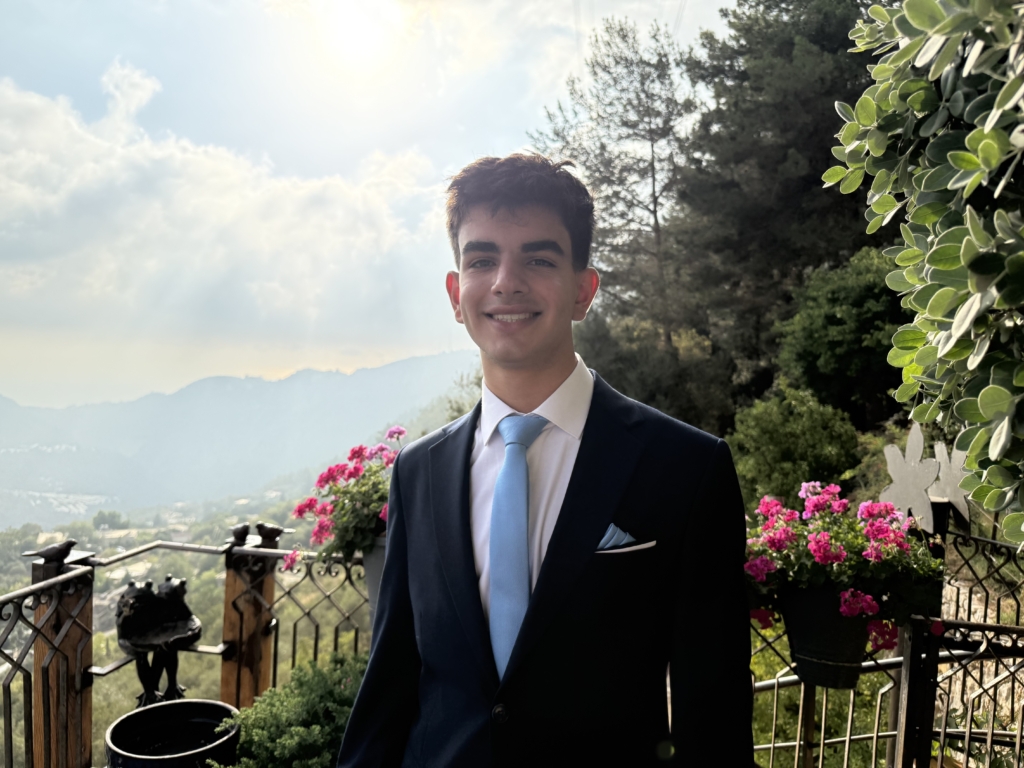
“I hope my writing encourages people – especially students – to slow down, pay attention to the natural world around them and realize that environmental action can begin with awareness and curiosity,” said Sandro Boujaoude, a winner in the 2026 International River of Words Environmental Poetry and Art competition.

