GERALD B. SHREIBER
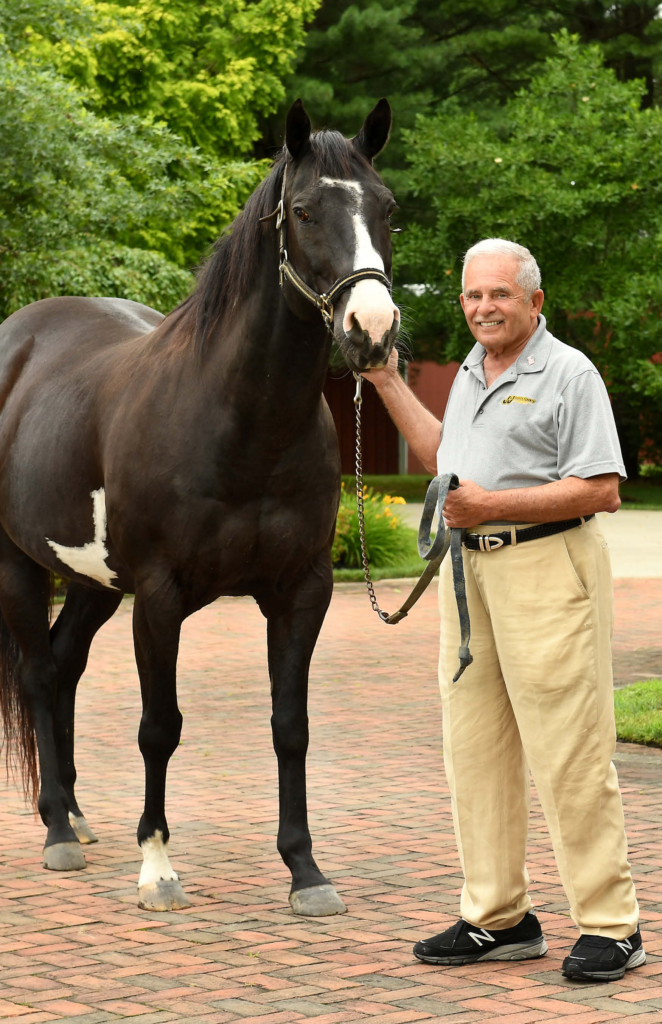
Gerald “Gerry” Shreiber was many things: a stern but generous boss, an animal lover and a self-made businessman who abided by no one’s rules but his own, his obituary notes.
Stacey Inglis can attest to that last one. A former employee of J&J Snack Foods – the billion-dollar company Gerry built from a $72,000 investment in soft pretzels – she pointed to an oft-told story about a move her boss made that was so audacious, Inglis remembers it to this day.
Shreiber was still building J&J Snack Foods into the behemoth it would become when a supermarket buyer of his pretzels expressed an interest in water ice, the story goes. Gerry – who went by GBS – assured him that while he had no water ice samples that day, he would be back with some.
After that encounter, one of Gerry’s salesmen remarked that he had no idea J&J sold water ice.
“We don’t,” Gerry replied nonchalantly, “but we will.”
And he did, eventually adding Luigi’s Water Ice to his product line.
“He was an old-fashioned entrepreneur,” noted Inglis, who compares Gerry to chocolate maker Milton Hershey. “People there (at the company now) are never going to know what it was like to work with Gerry – his energy, his passion.
“And he had a devilish sense of humor,” Inglis added, referring to the water ice story. “It also says a lot about his chutzpah.”
Gerry was a taskmaster, Inglis acknowledged, but he was hands on.
“His yelling sometimes was his way of expressing his passion for the business,” she recounted, “but he was there every day, walking the halls. He had an open-door policy.
“He wasn’t on some pedestal because he was the CEO and founder.”
Gerry’s obituary notes that he was born in Bridgeton and had jobs in his younger years that included door-to-door salesman and water bed store owner. He took that 1971 investment of $72,000 and grew it into a multi-product business led by SUPERPRETZELS, sold world-wide at thousands of retailers and public venues.
Gerry took great pleasure in seeing the SUPERPRETZELS logo behind home plate at Phillies games, Inglis said. Later came churros; ICEE; and Dippin’ Dots, among others, according to J&J.
Those acquisitions reflected a fierce work ethic, explained Inglis, who was one of what is now 4,500 employees at J&J.
“If you understood his passion and determination for the company he was building,” she related, “then you understood his work ethic and what he expected from you.”
Gerry’s other passion was animals. He dubbed one of the six German shepherds that walked the halls of J&J with its owner the CED – Chief Executive Dog – according to Inglis. He owned and rode horses and cared for two goats at his Mullica Hill farm.
In 2023, Gerry donated $30 million to Rowan University – the school’s third-largest gift ever – and saw his name grace what is now the Shreiber School of Veterinary Medicine.
“I couldn’t think of a better way to give something back to make a positive impact on their lives,” Gerry said of vet students, according to the university.
One of them is Erika Fusco.
“His generous donation to the Shreiber School of Veterinary Medicine is allowing me the opportunity to grow into the wonderful future vet that I will be,” she wrote in an online memorial. “I will be forever grateful for his generosity and dedication to the care of animals.”
Gerry described his success as “a business fairy tale come true,” he told Rowan.
But Inglis believes her former boss’ character is what made the man, not his fortune.
“He was a very kind person,” she observed, “equally kind on a daily basis.”
Added Fusco: “I know he will be missed.”
Gerry was 84.
Sources: J.S. Goldstein Funeral Home and Monuments Inc., Rowan University, J&J Snack Foods Inc.
CLARENCE B. JONES
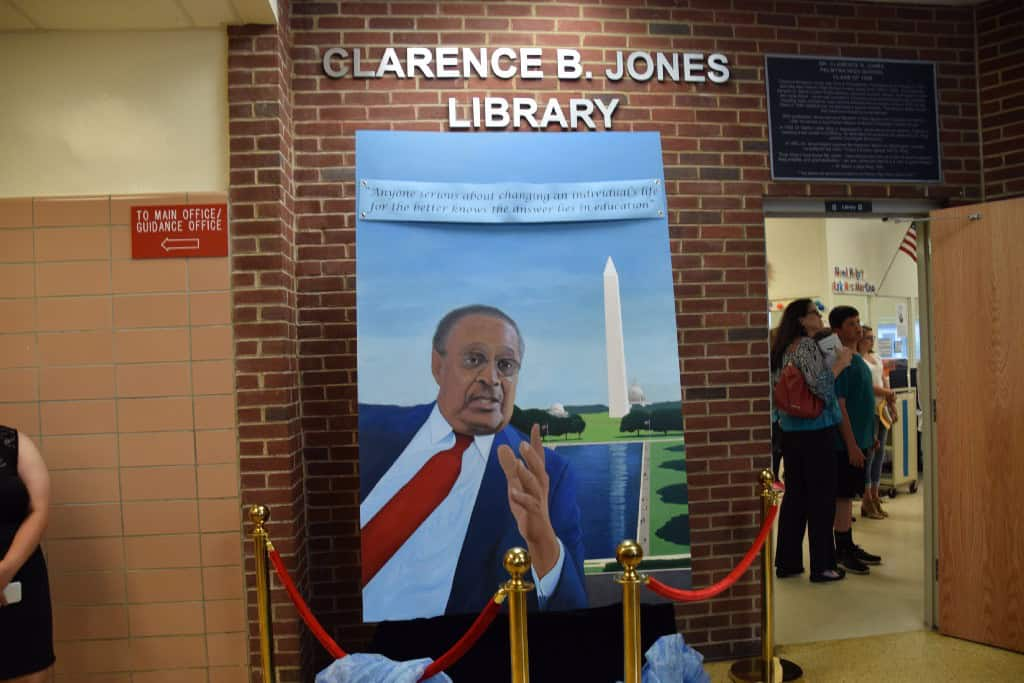
Clarence Benjamin Jones’ life took him from Cinnaminson to the pinnacle of the American civil rights movement and the side of its most famous orator: Dr. Martin Luther King.
Clarence is often credited with co-authoring King’s thundering “I Have a Dream” speech more than 60 years ago. But that’s not exactly what happened.
As documented by the New York Times, King and his speechwriter wrote words that had no reference to a dream because King hadn’t planned on saying them, Clarence wrote in a 2011 memoir quoted by the newspaper.
The 1949 Palmyra High graduate and class valedictorian recalled that he and other planners were more concerned with logistics than King’s address: The March on Washington for Jobs and Freedom saw more than 250,000 people peacefully gather at D.C.’s National Mall on Aug. 28, 1963, the day King voiced his dream.
The relationship between Clarence and King had begun in 1960, according to The Sun. Clarence – whose parents were domestics for a prominent Riverton family – was a copyright attorney asked to help King fight a tax evasion charge.
Clarence was initially put off, until King invited him to a speech he was giving in Los Angeles.
“I started crying,” Clarence remembered. He was smitten.
When Clarence’s father died, King showed up for the funeral at Riverton’s Mount Zion AME Church, Clarence recalled to The Sun. Someone told him that King wanted to speak. Despite their close relationship, Clarence couldn’t imagine why, given that King didn’t know his father.
But again, King’s words – as they had in Los Angeles – left Clarence speechless.
“I was dumbfounded,” he told The Sun.
The power of words brought Clarence back to Palmyra High in 2017, when the school named its library for him. And quite fittingly for a former speechwriter, a book he co-wrote in 2008 was titled, “What Would Martin Say?”
Clarence was 95.
Sources: The Sun, The New York Times
The Good Life appears twice a month. To suggest someone who recently passed away for a tribute, email Christina Mitchell at cmitchell@donnelly.media. Please describe in a few words something about the person’s life.

