September is National Suicide Prevention Month. The annual observance is intended to bright light to the stigmatized, yet pivotal, topics of suicide and mental health.
The Gloucester County Library System (GCLS) Mullica Hill branch hosted an open event on September 15 to bring awareness to suicide, specifically among high school-aged kids and teens. The event, titled Talk Saves Lives, which is an educational program part of the American Foundation for Suicide Prevention (AFSP), featured local guest speakers and resources on suicide prevention and how to be supportive of others who may be struggling.
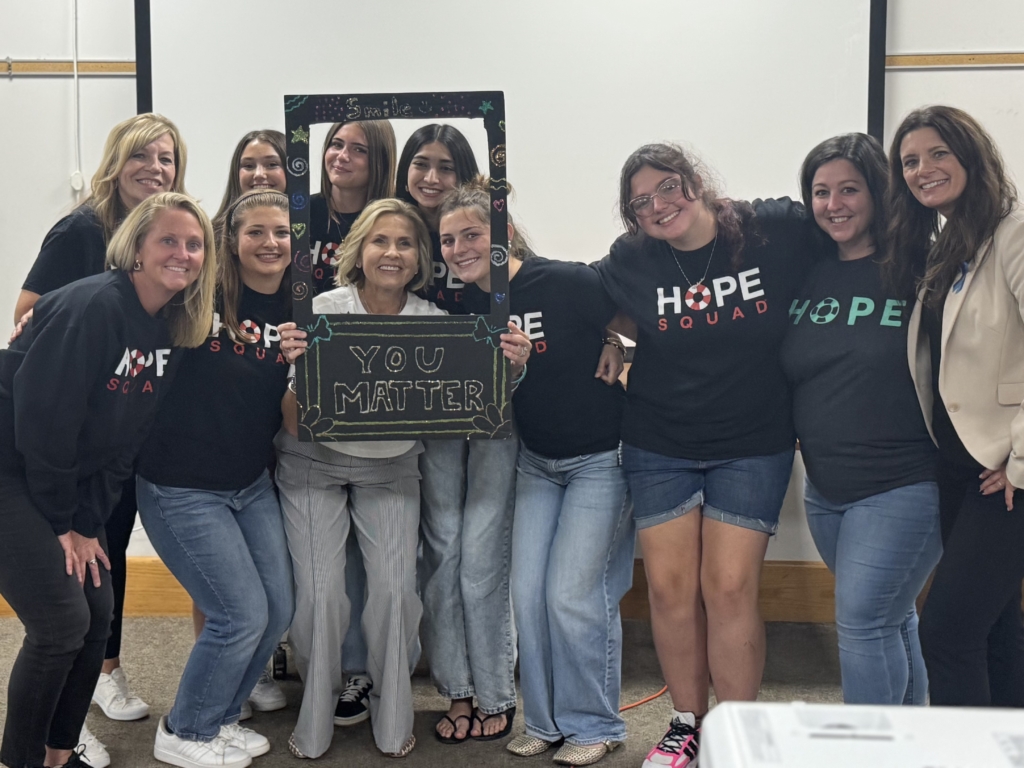
This included Crysta Miller, the branch manager at GCLS’s Margaret Dombrosky Swedesboro library and volunteer with AFSP; Michelle Leyman, a licensed therapist and the owner and founder of Swedesboro, Woodstown and Vineland-based My Therapy Connections; and advisors and student leaders from Clearview Regional High School’s Hope Squad, a peer-to-peer suicide prevention program.
The event was also hosted by the Paul Michael Donahue Memorial Foundation, a Harrison Township non-profit founded by the family of Donahue, who lost his life to suicide at 19-years-old in 2022. Additionally, there were resource tables from the aforementioned groups, plus Acenda Integrated Health Mental Health Urgent Care and the National Alliance on Mental Illness Gloucester County, both located in Sewell.
Miller began with a presentation on a brief introduction to mental health and how to start a conversation around suicide. She focused on the lens of high school students and families, though all the major points and themes that can be adaptable and appropriate for people of all ages.
In her interactive presentation, she discussed the warning signs of someone struggling with mental health and suicidal ideation. Things like change in mood, discussing feeling hopeless, distancing one self, and difficult life or environmental situations are just some factors someone struggling may be displaying. As a friend, peer, loved one or bystander, Miller said there are ways to check in and be there for individuals, as well as refer them to further help with professionals.
Having these conversations are invaluable parts of suicide prevention.
“I want to emphasize being direct,” Miller said. It is common to just “skirt around” a general “how are you?” question and receive a “not my best” response. How you follow up on that, Miller said, is what is important and can make the difference.
Rather than just nodding and feeling glad you asked, following up with more thoughtful, direct responses like, “What’s making you not feel your best? What’s the trouble?” Then, Miller said, you can deepen the conversation and gradually get to direct, important questions like, “Are you thinking about killing yourself? Do you have suicidal tendencies?”
“Don’t be afraid to say those words,” Miller said.
Leyman also emphasized the importance of being direct and normalizing our language around mental health and suicide. She also discussed the value of therapy for everyone, stating that you do not need to be in crisis to deserve help or therapy.
“I think that everyone should go to therapy, just like everyone has a doctor. If your kid is sick, or if your kid is not doing well in school, you get them a tutor. Or if they need to improve a skill, you send them to practice. Why are we not having our kids going and just checking in with someone regularly?” Leyman said, who was inspired to become a therapist at 21 years old after her father died of suicide. Even as a therapist, she sees a therapist herself, too, and said she will “never stop going.”
In addition to discussing points about therapy, Leyman discussed more information about suicide and the struggles of feeling suicidal. She discussed protective and risk factors, which are things that can positively or negatively impact an individual’s mental health and risk of suicide.
An important protective factor she mentioned was having relationships. It is important to have people to communicate with and share life with.
“There’s a great Brené Brown quote (I have) on my website. ‘Connection is why we’re here; it is what gives purpose and meaning to our lives,'” she said. “We’re all here to be in connection, to be in relationship, to be there for each other.”
She cited Clearview’s Hope Squad as a great example of people exhibiting connection for the betterment of others. Hope Squad, a national suicide prevention organization in schools, has chapters across the country. Clearview launched its Hope Squad last school year.
It is run by Student Assistance Counselor Jessica Datz and teacher Ivy Mazzuca. Fifty students were nominated by their peers to serve as a volunteer member. These students are educated on mental health and suicide information and prevention skills, and they use these tools to help facilitate meaningful and supportive connections with other students at the high school.
“(Hope Squad’s) goal is to normalize those conversations in everyday language to their peers,” Datz said. “We (Mazzuca and I) are older. It’s very different when you talk to a younger person when it’s not their peers. When it’s peer to peer, it makes all the difference in the world.”
Clearview’s Hope Squad was able to launch through funding from the Paul Michael Donahue Memorial Foundation. The foundation has raised a lot of money over the years through its charitable Wings of Life runs over the years, as well as other fundraising and donations. Some of the money raised was used to get Hope Squad into the school for at least three years so more students and teens can receive necessary mental healthcare.
For more information on suicide awareness, prevention and local resources, head to the websites or social media pages for the aforementioned organizations. Help is available.