For Voorhees resident and trial attorney A.M. Soliman, fighting for people whose voices have been overlooked has been a central part of his legal career. Now, he’s bringing that same passion for justice to the pages of his latest novel.
Set for release on Nov. 10, The Name She Carries tells the story of a Black woman whose medical emergency becomes a fight for accountability after she experiences racial discrimination in a hospital emergency room.
But beyond its exploration of medical bias and civil rights, Soliman says the story is rooted in something even closer to home: the relationship between a father and his daughter.
“To me, it’s a legal drama, but first and foremost, it’s a love letter to daughters from a father,” he said. “In a lot of ways, that’s the emotional spine of the book.”
The novel follows Aisha Reynolds, a woman who arrives at a hospital suffering from severe abdominal pain. Rather than receiving immediate treatment, she is labeled as potentially seeking drugs, delaying the care she needs.
After discovering that she had a ruptured appendix, Aisha and her husband seek legal representation, determined to hold the hospital accountable for its treatment of her.
Their case eventually lands in the hands of Mary Adel, a young attorney who inherits the legal battle from her father, an experienced lawyer whose cancer diagnosis forces him to step away. With her father’s legacy and a family’s pursuit of justice on the line, Mary enters the unfamiliar world of civil-rights litigation.
For Soliman, the novel brings together two of the most meaningful parts of his life: his career as an attorney and his experiences raising a daughter.
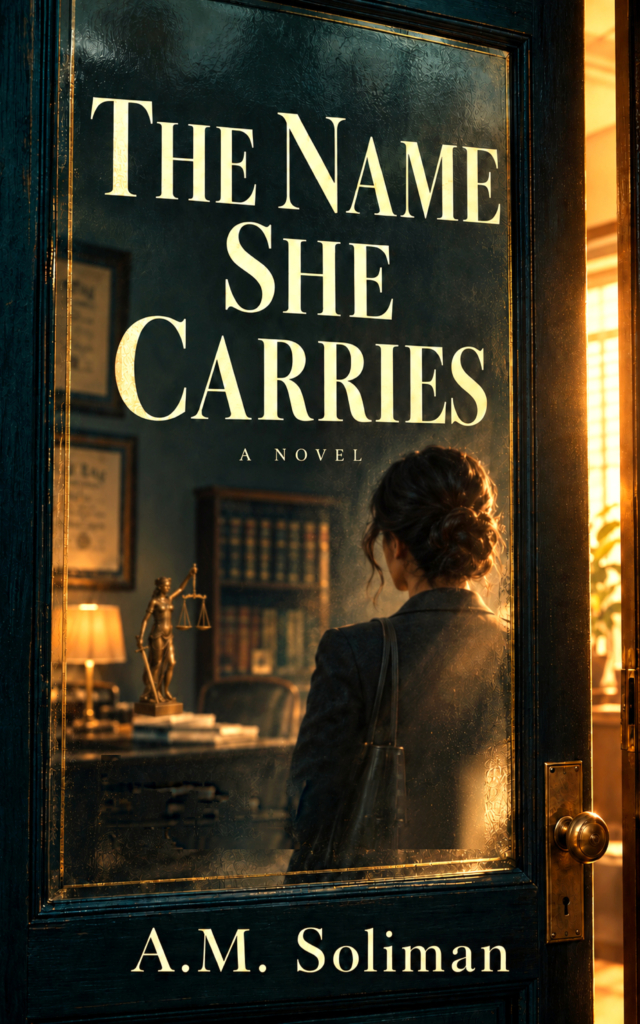
Soliman’s new novel explores legal proceedings, medical equity issues and family relationships.
A longtime South Jersey resident, Soliman moved to the area approximately 20 years ago when he and his wife decided to attend Rutgers Law School in Camden together. The couple later settled in Voorhees, where they have lived for 11 years and are raising their two children.
Soliman, who operates his own civil litigation practice in Cherry Hill, said his family has developed a strong connection to the community.
“We couldn’t be [happier] with this village,” he said, describing the relationships his family has built with local schools, teachers and residents.
The family’s connection to Voorhees has also influenced his perspective on storytelling and the importance of sharing experiences with others.
“It’s the most important community, the people immediately surrounding me,” Soliman said of introducing his work to local readers.
Although he has spent the past two decades practicing law, Soliman’s professional journey began in journalism.
While attending college in North Jersey, he originally planned to pursue engineering. That changed after he joined his campus newspaper and wrote an opinion piece that earned recognition from the New Jersey Press Association.
He soon switched majors and began building a career in media, eventually becoming a columnist for The Record in Bergen County and producing a documentary for PBS.
After marrying, Soliman and his wife decided to pursue law degrees together, an opportunity that would ultimately bring them to South Jersey.
His transition from journalism to law required him to develop a different approach to writing, but his interest in storytelling never disappeared.
When the COVID-19 pandemic brought much of everyday life to a standstill, Soliman decided to revisit a longtime goal: writing fiction.
“It was always on my bucket list to do fiction writing,” he shared.
The transition, however, proved more challenging than he anticipated.
Accustomed to writing concise newspaper columns and carefully structured legal arguments, Soliman found that developing a novel required an entirely different skill set.
He spent time studying fiction writing, reading books about the craft and repeatedly revising his work.
“Learning the prose of fiction writing is what took me a while,” he said. “And then revise, revise and revise and revise.”
While mastering the craft required patience, finding inspiration for the story came naturally.
As a civil litigator who has handled civil-rights cases, Soliman has encountered many of the legal and social issues that informed The Name She Carries.
The idea took shape during the pandemic, when conversations surrounding racial disparities in health care and unequal treatment of minority patients were receiving increased attention.
Soliman emphasized that the novel is not based on a particular case he handled, but rather on the broader experiences and issues he has encountered during his career.
“It is informed by my experience as a litigator in New Jersey,” he said, noting that both the story and its legal proceedings are set in the state.
He hopes the book encourages readers to recognize that discrimination in medical settings is not limited to other parts of the country.
“Sometimes people will think, you know, this is Jersey. That sort of thing is not going to happen here,” he expressed. “No, it can and does happen here.”
While the novel addresses serious issues of racial inequality and medical discrimination, Soliman wanted the story to appeal to readers through its characters and relationships.
The father-daughter dynamic became particularly meaningful as he considered his own relationship with his 13-year-old daughter.
Originally, he imagined the story centered on a male attorney handling the case. But as the concept developed, he began to consider a different perspective.
“What if it was a female attorney? And what if that female attorney was my daughter in the future?” he recalled thinking.
That idea ultimately helped shape Mary Adel’s character and the relationship she shares with her father.
Soliman said readers have connected with different aspects of the book, including the legal proceedings, medical equity issues and family relationships.
“Different aspects appeal to different people for different reasons,” he said.
Ahead of its publication, The Name She Carries has already received recognition from Kirkus Review, earning the publication’s “Get It” recommendation. Soliman said the book is also scheduled to be featured in the publication’s Dec. 15 issue.
The review described the novel as “a poignant story that exposes racism in the medical field but fuels an activist hope for the future.”
For Soliman, who considers fiction writing a hobby alongside his legal career, the recognition has been particularly rewarding.
“I was so pleased and honored because really this is a hobby I’m doing on the side as a trial attorney,” he said.
The Name She Carries will be Soliman’s second published novel, though it was the first one he wrote.
His debut, Brothers in Service, was released earlier this year to coincide with the 25th anniversary of the Sept. 11 terrorist attacks. The novel explores the lasting impact of the tragedy on a family over the following 25 years.
With both manuscripts nearing completion, Soliman decided to release Brothers in Service first because of its connection to the anniversary, followed by The Name She Carries in November.
Although both books explore serious subjects, Soliman said they offer different reading experiences.
He described Brothers in Service as an emotional story about family and the long-term consequences of national tragedy, while The Name She Carries combines courtroom drama with family relationships and broader social issues.
Behind both novels is a carefully structured writing process.
Unlike writers who begin with a character or scene and allow the story to unfold as they go, Soliman prefers to map out the entire plot before drafting.
He begins by determining the story’s opening and ending, then develops a three-act structure, breaking each section into chapters before filling in the details.
His background in journalism and documentary filmmaking has helped inform that approach.
“You’re really telling three different stories in this book,” he said, referring to the legal case, the father-daughter relationship and a romantic subplot.
Although the process of learning fiction writing was initially difficult, Soliman has found it uniquely rewarding.
Unlike journalism or documentary filmmaking, where the stories are rooted in actual events, fiction gives him the freedom to create characters and determine the directions their lives will take.
With two novels now under his belt, Soliman is considering a third project, though he said it remains in the early stages.
For aspiring writers in Voorhees and surrounding communities, particularly those who have spent years pursuing other careers, Soliman offers a simple piece of advice: try.
It’s a lesson he learned from his own father when he was 30 years old and considering attending law school with his wife.
At the time, Soliman worried that he was too old to begin another three years of education.
His father offered a different perspective.
“You’re going to be 33 anyway. Do you want to be 33 with a law degree or 33 without it?” he recalled his father asking.
That advice ultimately inspired him to pursue law school and, years later, helped motivate him to begin writing fiction during the pandemic.
For Soliman, the lesson is that it’s never too late to pursue something meaningful.
“You miss all the shots you don’t take,” he said.
As The Name She Carries prepares to reach readers, Soliman hopes the book will encourage conversations within his own community about medical equity, discrimination and the importance of family relationships.
He is also welcoming opportunities to connect directly with local readers, including offering to attend book club discussions in person.
The novel will be available Nov. 10 through Amazon in paperback and Kindle format. The Kindle edition is available for preorder.
Additional information about Soliman and his books is available at amsoliman.com.

