Students at Cherry Hill High School West visited middle and elementary schools across the Cherry Hill Public Schools district for their annual Hispanic Heritage Month Tour earlier this month. As part of this tradition, the students performed traditional dances, shared cultural presentations and engaged with the younger students through fun and educational activities.
“For me, the thing that I look the most forward to is the reaction of the kids,” said Cherry Hill High School West senior Roger Zhindon.
“Looking at their smiles and they’re just laughing and clapping, all of it,” said West junior Ashera Cooper of what she was looking forward to for the special event.
“When we do the Samba (and) we tell them to start dancing with us, they can try and learn how to dance Samba,” said senior Priscilla Herrera.
Zhindon, Cooper and Herrera were three of the 48 students who performed seven special dances from around the world at Thomas Paine Elementary School on Oct. 16. It took the group a month to prepare and in total they visited five additional schools throughout the day. It was all worth it and a good experience, Zhindon said, who was happy to share different cultures with the younger students. For Cooper, the event was about giving the audience something that they don’t get to see every day.
“They get to see how similar or different they are, and they get to compare them (the dances) all,” Herrera added.
Maria Rivas-Mintz, who also goes by Alejandra, has been a Spanish teacher at Cherry Hill High School West for 25 years. She teaches a program titled Spanish for Heritage Speakers, which started in 2004. With the support of the district, the class has been a nice space for students to enhance their skills in their preferred language as well as learn about their own culture, Rivas-Mintz emphasized. Most of the students who were a part of the school’s Hispanic Heritage Month Tour were juniors and seniors. Rivas-Mintz believes that the tour was a highlight in the students’ careers at Cherry Hill West, and the most rewarding part for her is when they come to her and tell her that they once were sitting in the audience watching.
“The energy, the culture… We are all about sharing who we are, and we see this as a community service because we are actually teaching,” Rivas-Mintz said. “This is a project where they have to do research, they have to choose the dances, they have to know what they mean, and they need to create the choreography. It is very involved, but it is a highlight in our school year.”
Styles of dance that represented Colombia, Ecuador, Mexico, Costa Rica, Republica Dominicana, El Salvador, and Brazil were a sight to see on Oct. 16. Cumbia is a blend between European, African and indigenous cultures. It was born on Colombia’s Caribbean coast where it was originally an African courtship dance that evolved with the addition of African, European and indigenous instruments and indigenous dance steps. Jaway Jaway is a vibrant, traditional folk dance closely tied to Ecuador’s Andean roots, indigenous heritage and festive celebrations. Quebradita is a Mexican American dance and transnational musical style that became hugely popular across the southwestern United States during the early to mid-1990s. Quebradita translates to “little break,” referring to the signature dramatic backbend or “break” where the male partner dips or lowers the female dancer backward near the floor before quickly pulling her back up.
Merengue attracts people of different social classes, which helps to promote respect and coexistence among individuals, groups and communities. It is considered part of the national identity of the Dominican community and plays an active role in various aspects of people’s daily lives – from their education to social gatherings and celebrations, even political campaigning. The Samba is an Afro-Brazilian dance that dates to the West Africans in the Congo and Angola. During the early 20th century, Brazilians associated their culture and national identity with samba music, and the Bahian Samba de Roda became their primary dance. Easy to learn, samba can be done solo, in groups, or with a partner, while styles vary.
“What I tell my students is that they’re representing (Cherry Hill) West, they’re representing Latino people everywhere, so I’m very strict in terms of dress code, what you’re doing, what you’re not doing, because I say, the kids will see you as a rock star. They want to be you, and they don’t even know you.”
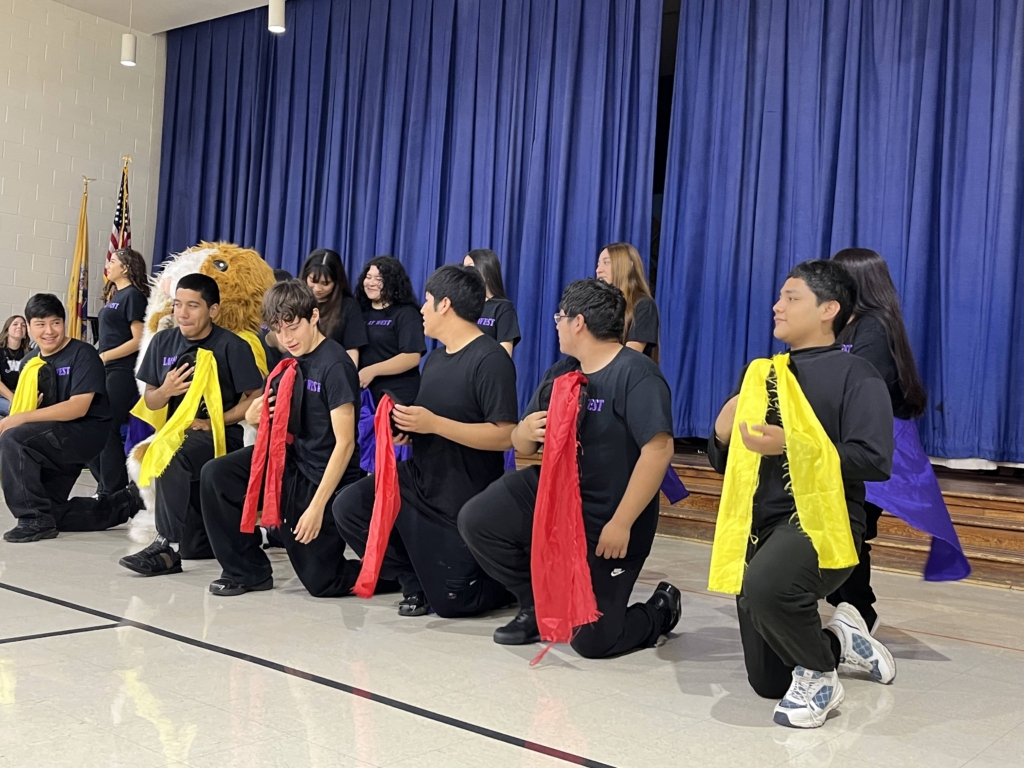
Cherry Hill High School West students at Thomas Paine Elementary School on Oct. 16.
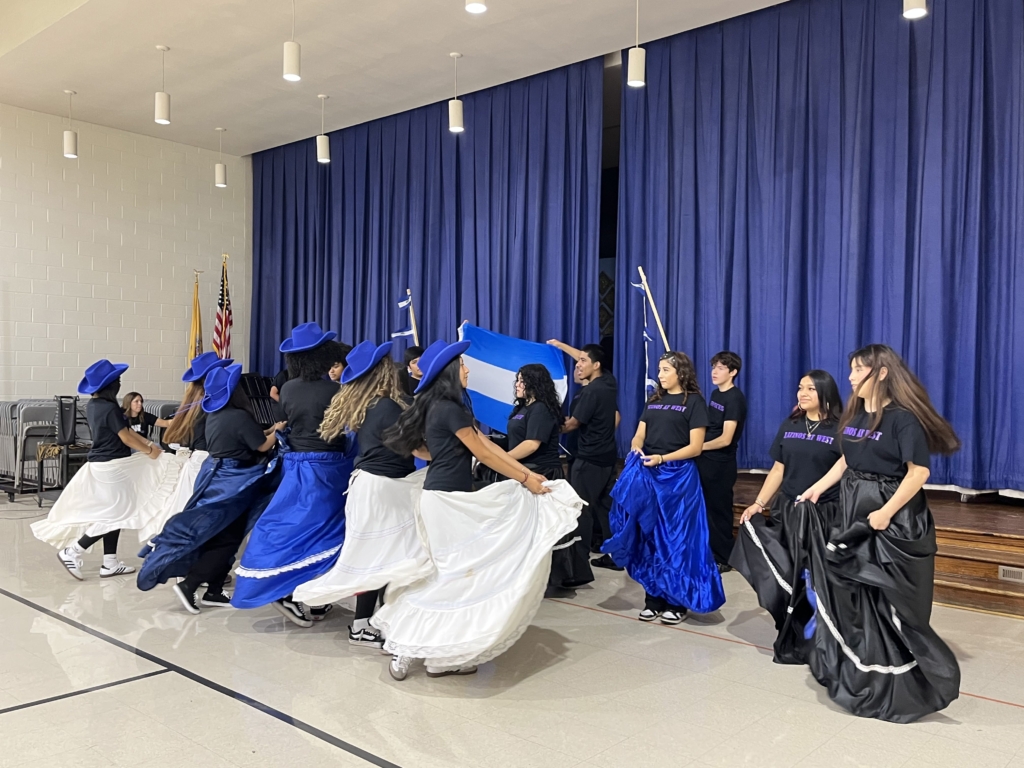
The school’s Hispanic Heritage Month Tour included traditional dances.
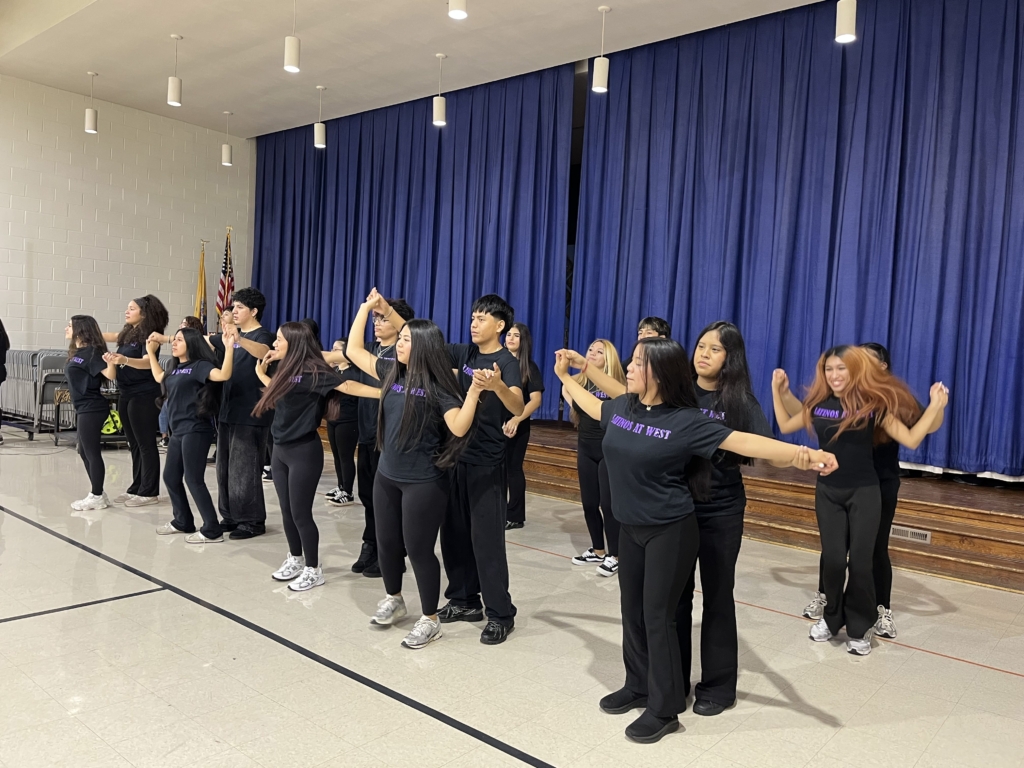
The tour is one of many highlights in the students’ careers at Cherry Hill West.

