Here we can see three stages of blossoms of Magnolia grandiflora. The blossoms range in size, typically measuring 8 to 12 inches but reaching as large as 14 inches. Photo: Famartin, wiki commons.
Commonly called southern magnolia, its scientific name, Magnolia grandiflora, conveys much about this stately tree.
While visiting the deep south on a musical event tour, beginning in Nashville and ending in New Orleans, I’ve been inspired to write about a southern beauty. When we arrived on the grounds of Belle Meade Historic Site and Winery, in Nashville, Tennessee—once home of Bonnie Scotland, a famed racehorse from which racing greatness derived—our subject stood in stately fashion before our group. I remarked on the one lone blossom remaining among her green foliage. It persisted, reminiscent of her once-glorious white gown.
Playwright Robert Harling so aptly named his lovely female characters Steel Magnolias, denoting a lovely feminine exterior and a superficial manner that may easily fool an observer into missing the inner strength of his characters. Indeed, our subject’s thick glossy leaves often conceal its sturdy scaly trunk.
Few trees define the South better than the Magnolia grandiflora and the live oak. The pyramidal magnolia is a favorite in landscaping because of its lengthy blooming season—beginning primarily in May, but with sparse and sporadic blooms through summer and even into autumn. Its deep evergreen color provides a contrast to its snowy white blossoms.
There are actually 35 species of magnolia in North and Central America, of which nine are native to the United States. In our region the prevalent native species is the swamp or sweet bay magnolia—Magnolia virginiana.
Our topic tree, grandiflora, is abundant in coastal states from Louisiana to South Carolina (central Florida), but many range maps show its coastal range northward to southern New Jersey. In fact, we do see the occasional ornamental southern magnolia in people’s yards.
As a young woman, I observed the magnolia planted by the Morie family in Mauricetown as a bit of a novelty. Looming over the top of the Morie house, the backyard giant was visible from the front street—an oddity of sorts, yet undeniably stately.
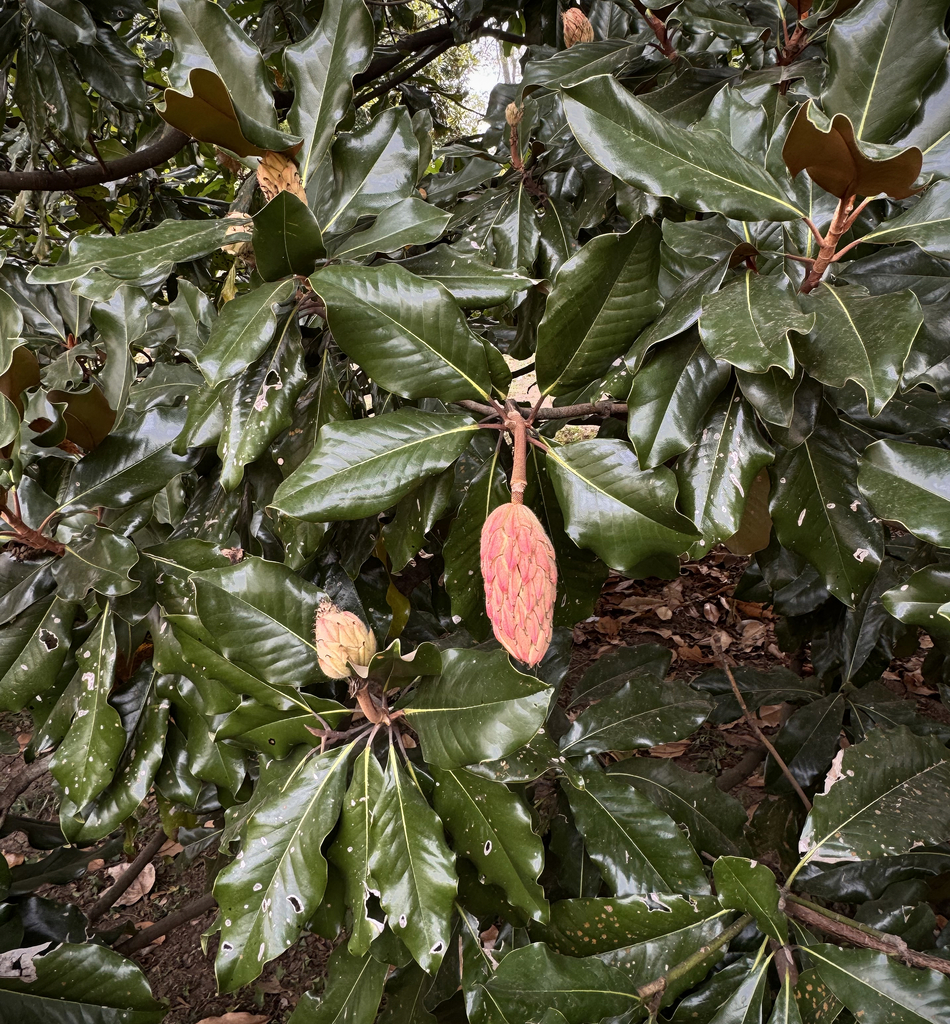
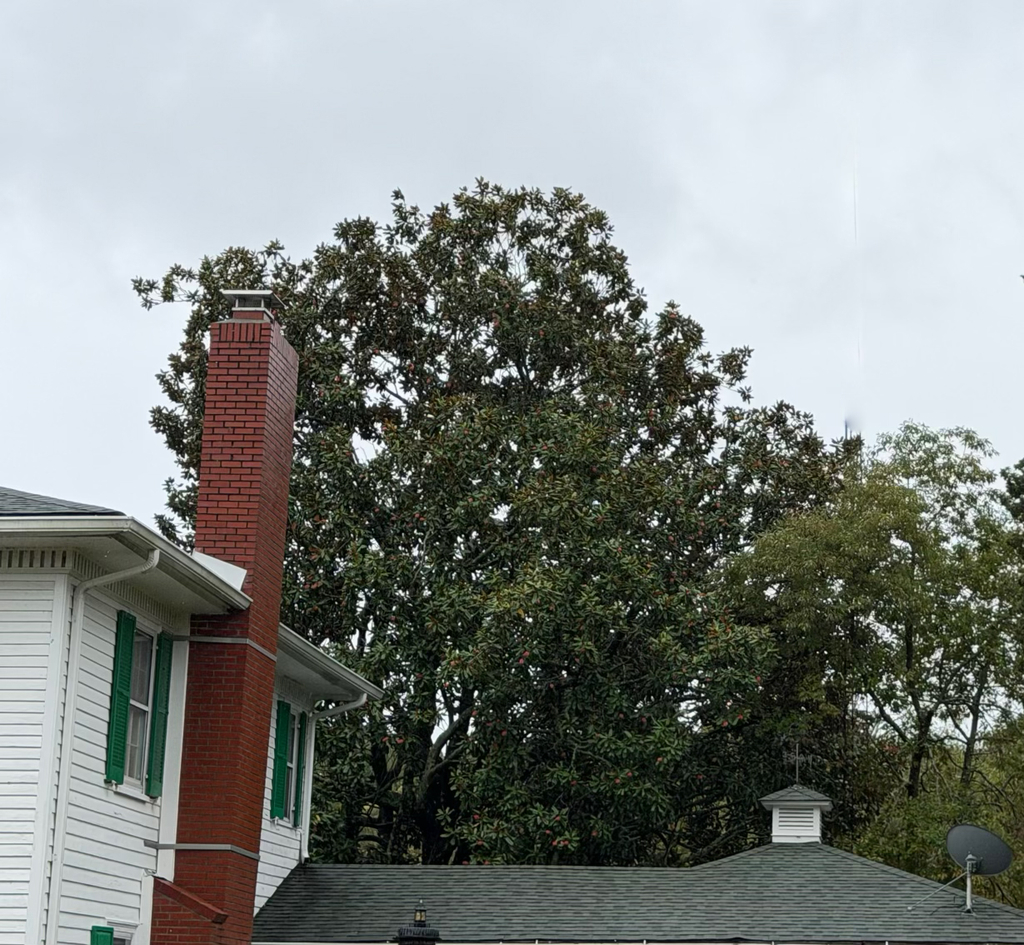
Seed pods on a Magnolia grandiflora. The three- to five-inch pods typically hold 30 to 155 seeds. Photo: J. Morton Galetto • RIGHT: A magnolia towers over the roof of a home in Mauricetown. Photo: Peter Galetto
Magnolia grandiflora is commonly called southern magnolia or bull bay; we will use the scientific name since grandiflora says so much about its grandeur.
Grandiflora likes loamy, moist soils along streams and near coastal swamps. It does not, however, tolerate prolonged inundation. Elevation does a lot to define its presence; it is absent above elevations of 500 feet and is most prevalent at 200 feet.
Like many trees it prefers a mixed forest, even though most northerners only see it where it is planted as an ornamental. Common allies in the woods include American beech, tulip tree, sweet gum, dogwood, bayberry, live oak, white oak, greenbrier, Virginia creeper, mockernut, and pignut hickory.
Seedlings are sensitive to low temperatures and even a light frost or freeze can kill them, while winter drought can cause mortality in adult trees. Thus being near a swamp or wetland can boost its chances of a long life.
In southern New Jersey, our coastal soils and elevations are appropriate for its survival. Some arborist scholars suggest that we consider introducing more southern species with northern ranges extending into our region, in order to help establish such trees in preparation for die-offs of other species caused by global warming. Put differently, trees expand into a region more slowly than optimal to account for the rapid nature of climate change. People can select varieties that match up with species of fauna existing in both regions of North America to accommodate these shifts.
The grandiflora is an attractive landscape tree with relatively fast growth, adding to its appeal. It reaches heights of 60 to 90 feet tall. Within 10 years it can produce seeds, while optimal seed production begins at about 25 years. The U.S. Forest Service indicates that an adult tree can produce 5,800 to 6,800 pounds of seed. I’m trying to wrap my mind around that statistic.
Quite a few swallowtail butterfly species make use of grandiflora. Its seeds are eaten by species of squirrel, opossum, and ground birds, while pollinators enjoy its nectar.
The most common use by people today is as an ornamental addition to their property. It is also employed to make furniture, pallets, and veneer. Pharmaceutical uses are currently being explored. Originally, Native Americans utilized parts of the tree for medical purposes, and interestingly a number of modern studies parallel the very practices that the tribal Choctaws followed to treat their illnesses.
Choctaws used a decoction of bark for a dermatological application/wash for prickly heat. They also made a bark steam bath for dropsy or inflammation caused by kidney maladies, and a wash (or antiseptic) for sores. The primary active ingredients in magnolia are common to other magnolia species as well; therefore depending on the geographical region Native Americans could use magnolia for similar ailments.
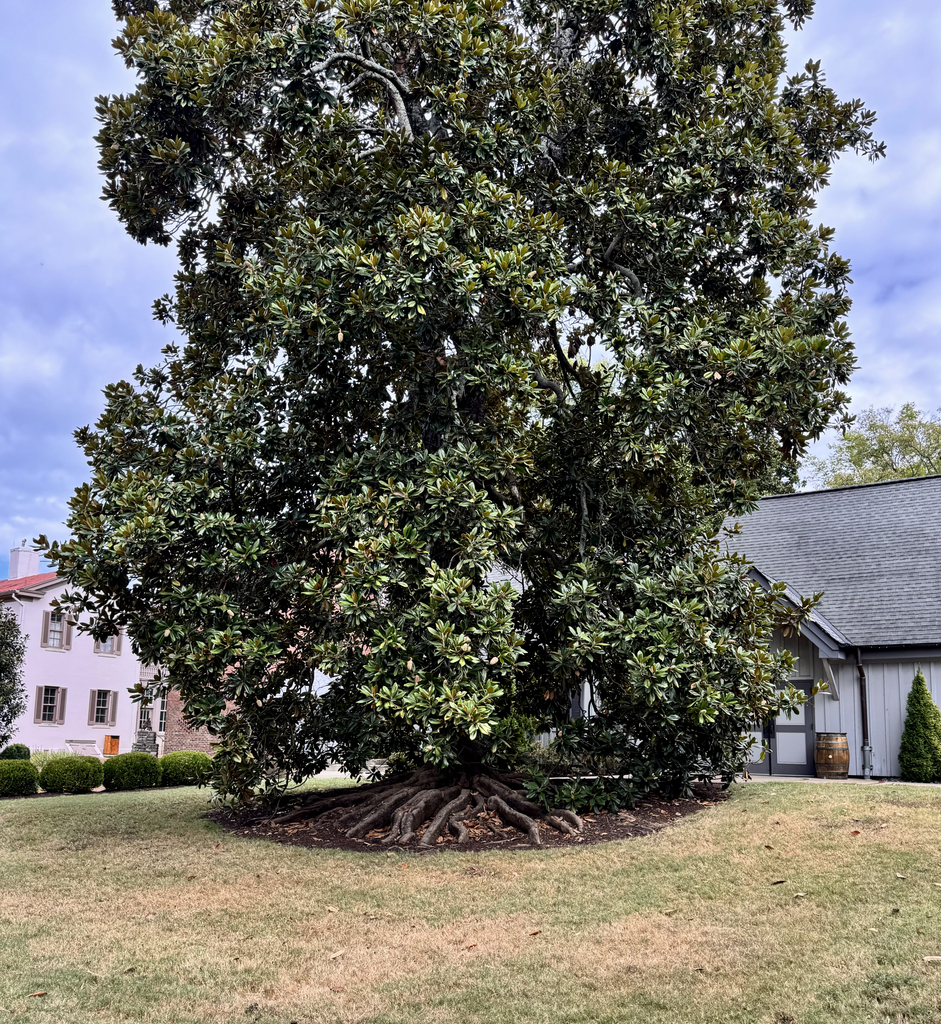
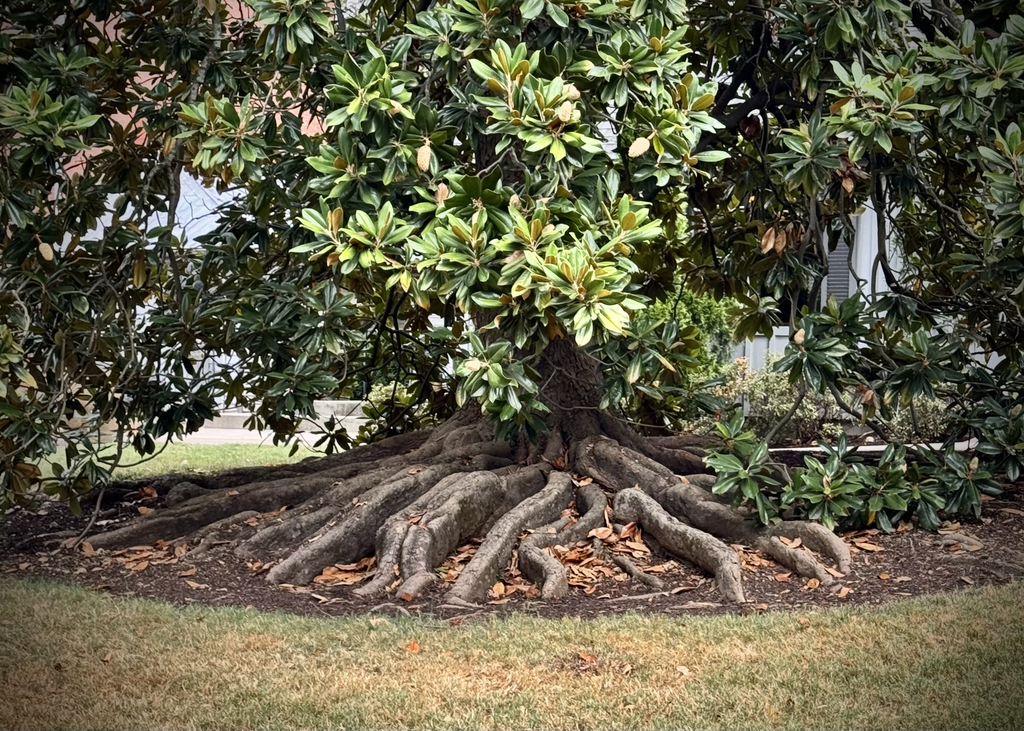
One of a number of magnolias that dwarfed the mansion at Belle Meade Historic Site and Winery in Nashville, Tennessee. This tree relies on a broad root system to keep it erect. The carriage house by the tree was built in 1892, so our columnist surmises that it could be 120+ years old. Magnolias have a lifespan of 80 to120 years. Photos: J. Morton Galetto
The Sloan Kettering Cancer Center’s website talks about laboratory discoveries for this tree in general terms, including treatments for inflammation and diabetes as well as an antibacterial, and for the reduction of depression and anxiety. After a small survey of studies, I found that the tree is primarily characterized as containing bioactive compounds documented to have anti-inflammatory, antimicrobial, and analgesic properties. In my readings, it appeared that the findings are limited to the laboratory but nevertheless show effectiveness in these areas.
I suppose the tree holds great promise for future therapeutic cures, but in the context of taking a musical tour in the south, it is the tree’s beauty that captures one’s soul. From the persistence of its evergreen nature to that of a single late bloom, it is the grandeur of the magnolia that leaves an indelible impact on all those who take a moment to absorb its stately presence. And it does raise a compelling point: Every day we take for granted nature’s gifts that hold secrets we seldom consider.
Sources
Hoyt Arboretum, Ask an Expert Magnolias.
Sloan Kettering, Integrative Medicine, About Herbs, Botanicals & Other Products, Magnolia officinalis
Pandey, P., Kumarihamy, M., Ibrahim, M.A., Ilias, M., Doerksen, R.J. 2023. In vitro and in silico studies of neolignans from Magnolia Grandiflora L. seeds against human cannabinoid and opioid receptors.
U.S. Forest Service, Research, Southern Magnolia
USDA Agricultural Research Service, Natural Products Utilization Research: Oxford, MS
USDA, Plant Database

