Every October, pink ribbons appear on storefronts, uniforms, social-media feeds and community signs as Breast Cancer Awareness Month puts a familiar color on a disease that touches hundreds of thousands of families each year.
The numbers explain why the awareness campaign remains so visible.
The American Cancer Society estimates that 321,910 women in the United States will be diagnosed with invasive breast cancer in 2026, while another 60,730 cases of ductal carcinoma in situ will be diagnosed. An estimated 42,140 women will die from breast cancer this year. Breast cancer accounts for about one in every three new cancers diagnosed in women.
The impact is substantial locally, too. The American Cancer Society estimates 13,720 new cases of female breast cancer in Pennsylvania in 2026 and another 9,510 in New Jersey. An estimated 1,770 women in Pennsylvania and 1,160 in New Jersey will die from the disease this year.
There has also been significant progress.
The breast-cancer death rate among women declined 44% from its peak in 1989 through 2022, a reduction the American Cancer Society attributes to advances in treatment and earlier detection. Yet incidence increased by about 1% annually from 2012 through 2021, with an even steeper increase among women younger than 50.
And the outcome can vary dramatically depending on when the disease is found. The National Cancer Institute’s latest SEER statistics show an overall five-year relative survival rate of 91.9% for female breast cancer. For cancer confined to the breast, that figure is 100%. For breast cancer that has spread to distant parts of the body, it is 33.8%.
But even those numbers tell only part of the story.
They don’t describe a mother coming home from chemotherapy and returning immediately to caring for her baby. They don’t measure the husband changing dressings after surgery, the neighbor leaving dinner on a doorstep, the friend sitting through an infusion playing cards or the nurse dancing for a patient who is too exhausted to dance herself.
They don’t capture the anxiety before another mammogram, the lasting numbness in someone’s feet, the grief over a changed body or the fear of hearing that cancer has returned years later.
And they don’t define what it means to survive.
For nine women whose lives stretch across Philadelphia, South Jersey and surrounding communities, breast cancer has meant different diagnoses, treatments and outcomes. Some are years removed from treatment. Others live with stage IV metastatic disease. One is undergoing chemotherapy now. Another describes herself as still being on her healing journey.
Yet their stories repeatedly return to the same things: family, community, self-advocacy and the importance of having someone there when cancer becomes too heavy to carry alone.
A diagnosis changes everything
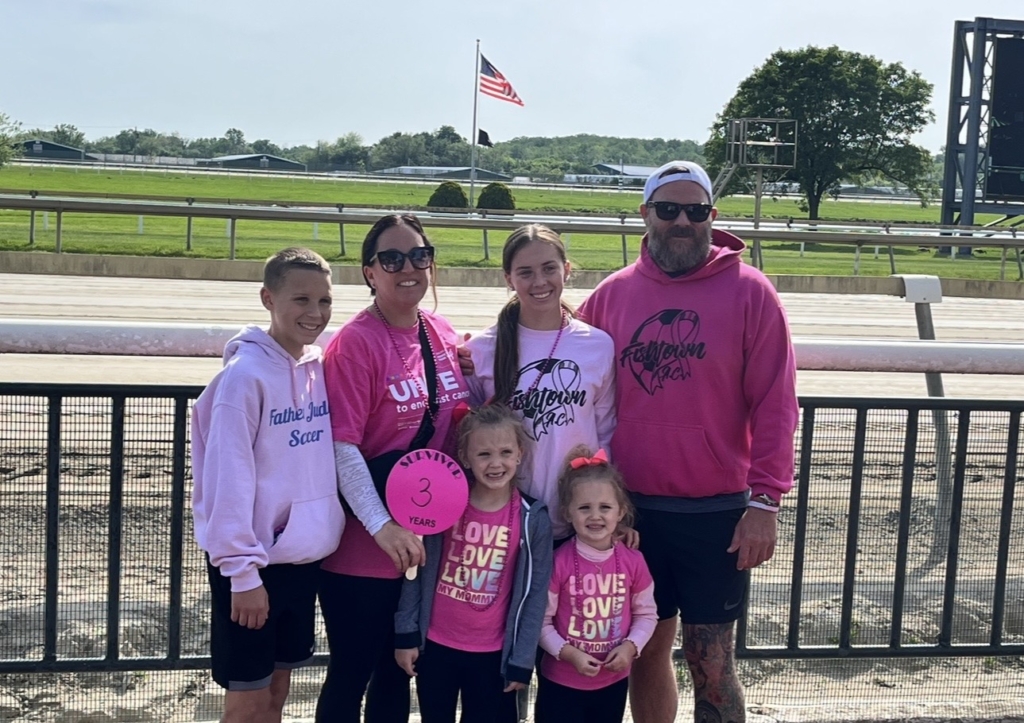
Northeast Philadelphia resident Amy Schmanek underwent a double mastectomy in March 2020, just days before the COVID-19 shutdown. Through multiple surgeries and recovery, Schmanek leaned on her husband, four children, extended family, friends and community for support, an experience that now inspires her to help other women facing breast cancer.
Amy Schmanek of Northeast Philadelphia had recently finished nursing her youngest child when she discovered a lump. At the time, her four children included a 9-month-old and a 2-year-old.
Her first thoughts went to them.
“How are we going to do this?” she remembered wondering.
A mammogram and ultrasound did not show the cancer, Schmanek said, but the lump could still be felt. Her doctor performed a biopsy, and after she was diagnosed, an MRI with contrast revealed the extent of the cancer in her left breast.
On March 9, 2020, Schmanek underwent a double mastectomy.
Four days later, the country began shutting down because of COVID-19.
What could have made an already frightening experience even more isolating instead created an unexpected source of strength. With her children suddenly home, Schmanek had a reason to get up every morning.
“No matter what I still had to Mom first,” she said.
Her recovery included four surgeries between March and July because of infections. Her husband, Kevin, a nurse, became her primary caregiver while helping manage the household and their four children.
Their older children stepped in, too. Their daughter helped with diapers and feeding while their older son entertained his 2-year-old sister.
“I couldn’t have gotten through this without them,” Schmanek said.
Holly Boggess, also of Northeast Philadelphia, remembers sitting alone in her car in July 2020 when she received her own call.
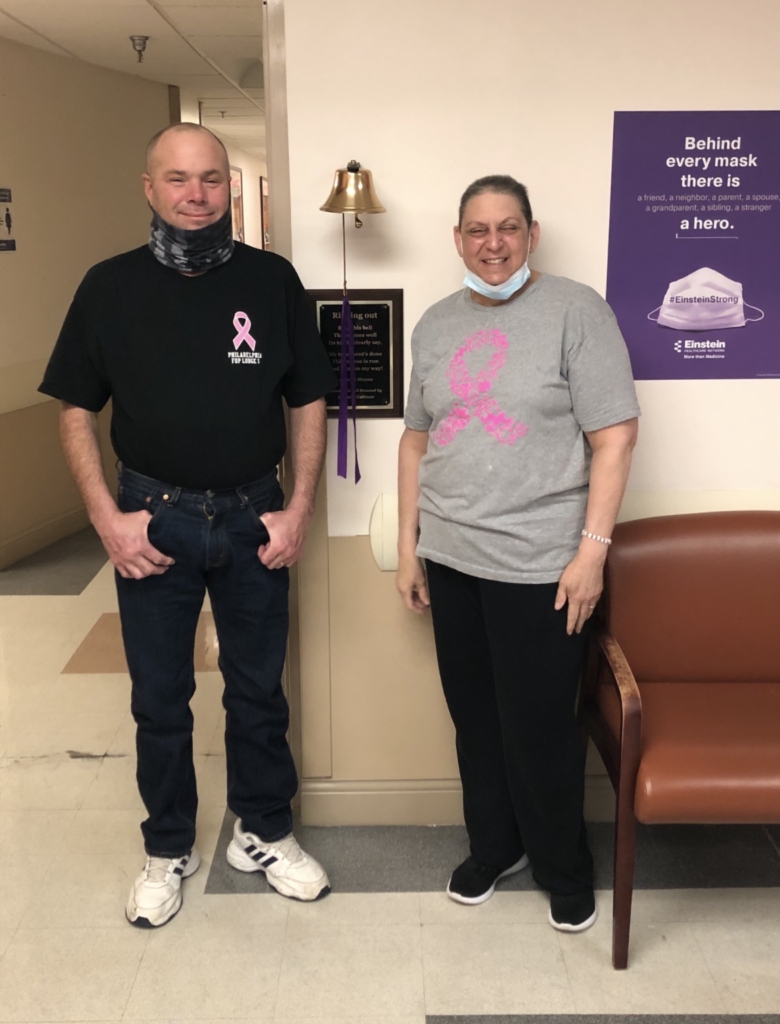
She had been running errands. Her husband was away for work and her two daughters weren’t home.
Boggess remembers little of what her doctor said beyond three words that suddenly described what was ahead: chemotherapy, radiation and surgery.
She cried, called her husband and then went to a family friend’s house because she needed someone beside her.
The following weeks became a blur of appointments, information and preparations.
“I had breast cancer,” Boggess said. “I either had to accept it and fight, or let it take over.”
She went through 15 months of intensive treatment.
For Bridget Hopkins of Cinnaminson, the first diagnosis came at 35, when she was healthy, engaged and planning her wedding.
After a day of yard work in September 2017, Hopkins found a lump. Even with her medical background as a nurse practitioner, she thought it was probably a cyst.
Then her wedding planning was replaced by oncology appointments.
Hopkins underwent several surgeries, including a bilateral mastectomy, and oral therapy. For almost eight years, she remained free of disease.
Then, in 2024, at 42, she was diagnosed with stage IV metastatic breast cancer.
Because Hopkins had worked in palliative and hospice care, she understood the medical language attached to the diagnosis.
That knowledge didn’t make hearing it easier.
“I’ve come to realize that resilience doesn’t mean never feeling afraid,” Hopkins said. “It means finding a way to keep moving forward, even when you are.”
Veronica Pitts had spent much of her life being the person other people could turn to.
The 46-year-old wife, mother of four and grandmother of two volunteers with Meals on Wheels and, with her husband, founded The Village, Inc., a Delaware nonprofit that helps working single parents and their children with needs ranging from groceries and gas to medical copays and holiday gifts.
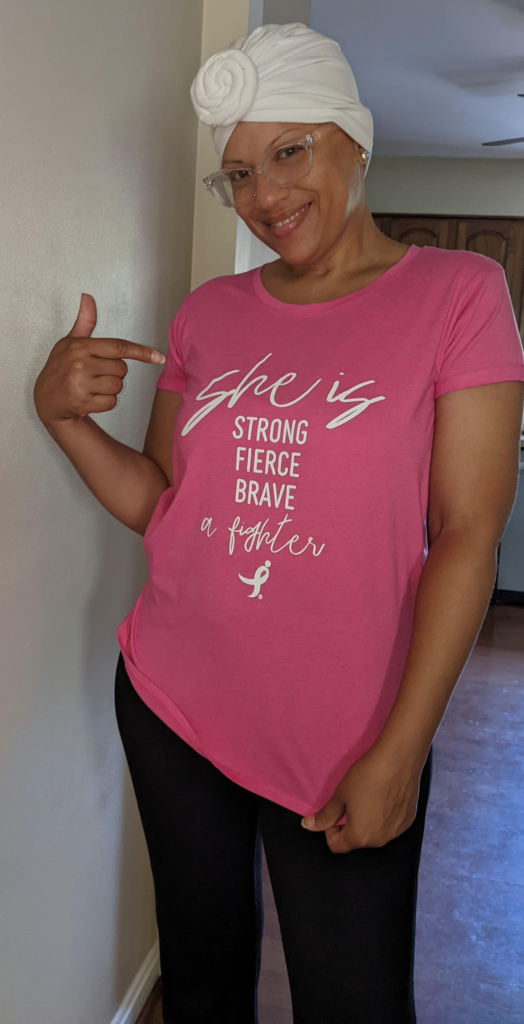
In October 2023, Pitts was lying in bed performing a self-exam when she felt a small, hard lump in her left breast.
A mammogram and ultrasound led to additional testing, which she said revealed three tumors. Nine tissue samples were taken during biopsies.
On Dec. 6, 2023, she learned she had breast cancer.
“I was not expecting to hear that,” Pitts said. “I just lost it. Like, I was just in disbelief.”
Pitts was ultimately diagnosed with stage III breast cancer. She underwent 16 rounds of chemotherapy, a double mastectomy and reconstruction and continues to describe herself as being on a healing journey.
When cancer happens again
For South Philadelphia native Dina Decero, breast cancer wasn’t her first encounter with the disease.
Decero, who works in the emergency room at Children’s Hospital of Philadelphia, had survived bone cancer after being diagnosed at 11. She had been in remission for nearly 25 years and began receiving mammograms at 18 as a preventive measure.
She had just walked out of a trauma at work when her phone rang around 6 p.m.
It was Penn.
An MRI had detected breast cancer, she said, despite her mammogram being negative.
“I felt like my whole world crumbled,” Dina said.
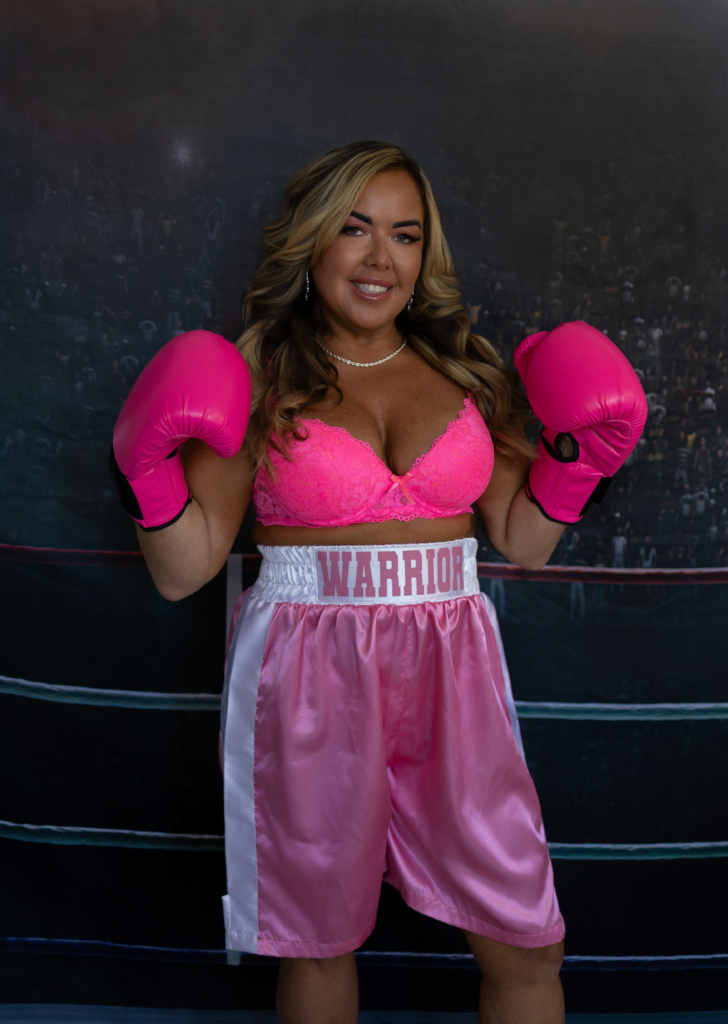
This time, cancer felt different.
As a child, she hadn’t been confronting what a diagnosis could mean for a husband and children. Breast cancer also presented decisions about her body that her childhood cancer had not.
“I knew what I was about to face,” she said, “and this time I have a family and kids who need me.”
Donna May has confronted cancer repeatedly.
May was 28 when she discovered a lump in her right breast in December 1997. She said she initially had difficulty obtaining an appointment because of her age and was told the lump could be related to her menstrual cycle.
It didn’t disappear.
She continued seeking answers and was ultimately diagnosed with stage I triple-negative breast cancer in 1998.
Years later, persistent throat pain and another lump led May to again push for additional testing. She was eventually diagnosed with a rare salivary gland cancer.
Then came more breast concerns.
After repeatedly questioning another lump in her right breast, May sought another opinion and underwent 3-D mammography. Cancer was found. She ultimately chose to have both breasts removed and said examination following surgery also discovered DCIS in her left breast.
Her experiences created a philosophy she now shares emphatically with others.
“No one knows you like you know you,” May said.
In November 2021, May’s cancer story changed again. After severe pain sent her to the hospital, testing revealed cancer in her lungs and bones. She was diagnosed with stage IV metastatic breast cancer.
Today she continues treatment and sees her oncologist monthly.
“Be your own advocate,” May said.
The American Cancer Society recommends that people be familiar with how their breasts normally look and feel and report changes to a health-care provider. Screening recommendations vary based on age and risk; women at high risk because of certain factors may be advised to receive both MRI and mammography.
The journey happening now
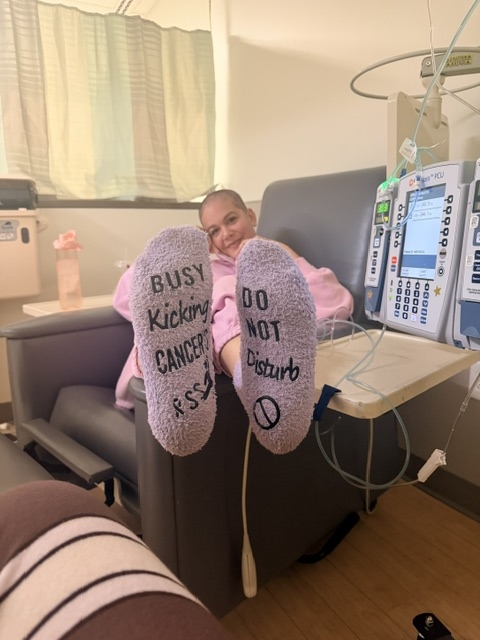
For first-time mom and newlywed Gianna Cacia, there hasn’t yet been time to look back on breast cancer from a distance.
She is living it now.
On July 24, 2026, Cacia received the call that she had breast cancer.
She broke down. Her husband, Joey, rushed home from work. Her mother left work and arrived at her doorstep about 40 minutes later. Family moved in and out of the house throughout the day.
They cried together.
Cacia gave herself that day to feel it.
Then she made herself a promise.
“From the next day forward, I was going to remain positive through the whole journey,” she said.
Her daughter, Joey Alexandra, is in her first year of life. Cacia has been fortunate enough to spend that first year home with her, something she calls the best year of her life despite cancer.
At the time she shared her story, Cacia was approaching her sixth weekly chemotherapy treatment in a planned 12-week stretch, with additional treatments to follow.
She goes to chemotherapy.
Then she comes home and becomes Mom again.
She has already confronted hair loss, deciding to shave her head when her hair began falling out.
“What an emotional roller coaster that was,” she said.
Asked what being a breast cancer survivor means to her, Cacia didn’t pretend she had reached a finish line that remains ahead.
“I’ll have to get back to you on this one,” she said, “once I beat this thing.”
An army behind them
If the diagnoses differ, so do the ways communities respond.
Before Schmanek underwent surgery, her parents filled their home with about 75 people for a gathering intended to remind her how many people were behind her.
Then COVID changed how people could show up.
They adapted.
Parents from schools and sports teams collected money, sent meals and dropped off gifts. Friends and relatives found ways to provide encouragement without putting her health at risk.
Schmanek still remembers walking outside and discovering a breast-cancer ribbon lawn sign placed there by Sixsmiths.
Small gesture. Lasting memory.
“It’s great to live in the Northeast,” she said.
Cacia calls the network surrounding her an “army.”
Her husband is at the center of it. Her parents accompany her to appointments, tests and procedures. Her mother-in-law and brother- and sister-in-law care for the baby during treatments. Her brother Ronnie passes chemotherapy hours playing War and Rummy with her. Her aunt Steph and best friend Taryn keep her laughing.
Friends, former high-school classmates and even friends’ families have called, texted, sent flowers and delivered meals.
For Valerie, neighbors started a Meal Train while she recovered from a bilateral mastectomy with reconstruction, removing the everyday worry of feeding her four children while she healed.
Valerie had already endured profound loss before her diagnosis. Her husband had died from esophageal cancer less than two years before she learned, through biopsy results on her phone in March 2021, that she had invasive ductal carcinoma.
Dance became another community.
She continued teaching ballet and taking classes during treatment. While recovering from surgery, she took ballroom lessons at Universal Dance Center, an experience that helped her reconnect with a body that cancer had changed.
And then there is Tracy Worrell.
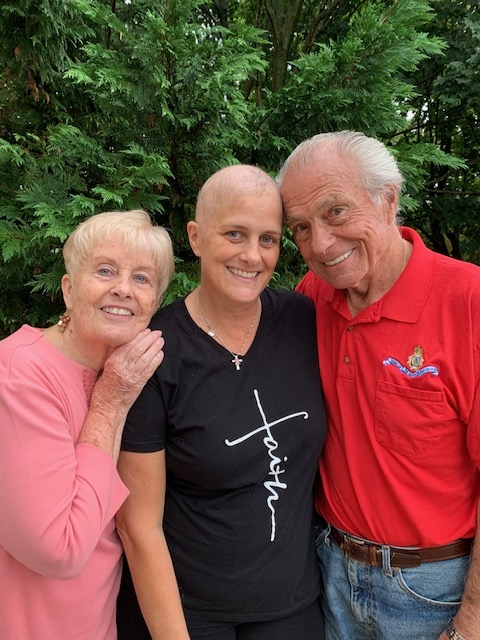
A mother of seven and sign-language interpreter, Worrell found two lumps in her right breast in August 2020. Testing led to a diagnosis of stage IV triple-negative breast cancer that had spread to her lymph nodes and liver.
COVID restrictions meant family couldn’t physically accompany her through many parts of treatment.
Worrell decided she would dance her way into appointments, chemotherapy infusions and radiation treatments.
Then one day, she couldn’t.
She was exhausted and didn’t have the energy.
Her radiation nurses and staff stood up and danced instead.
“Don’t worry Tracy, we got you today,” she remembers them saying.
Worrell went into treatment laughing.
She may have been physically separated from her support system during appointments, she said, but she was never truly alone.
Learning to receive help
Cancer also reversed a role Pitts had known for most of her life.
She was accustomed to helping.
Now she needed to be helped.
During chemotherapy, Pitts went from working three jobs to being unable to work or, at times, take care of herself and her daughter.
“I was always the person that helped others,” Pitts said. “And now being in a position where I needed help was hard to accept.”
The physical and financial consequences mounted together.
Pitts said her family accumulated debt and sometimes relied on food banks while her husband worked to keep the household going. Eventually, she sought financial assistance from community organizations.
She was also struggling emotionally.
Pitts described falling into a severe depression during treatment. She sought therapy and life coaching from her pastor at church at a point when, she said, she couldn’t see a way forward.
Her pastor helped her begin to see what she called “a pin drop of light at a time.”
The woman who had spent years helping other people had to learn something new: accepting help didn’t diminish who she was.
It helped her survive long enough to give again.
When community becomes medicine of another kind
Support also came from organizations dedicated to helping cancer patients navigate needs beyond clinical treatment.
Boggess developed neuropathy in both feet following treatment. After seeking different ways to manage it, she discovered Unite for HER, a nonprofit that supports breast and ovarian cancer patients through wellness and integrative services.
Through the organization, Boggess accessed acupuncture, which she says has helped significantly.
She eventually became a volunteer herself.
Valerie also received support through Unite for HER and credits For Pete’s Sake with providing her family a respite at Woodloch.
Cancer had consumed so much of their lives that getting away offered something deceptively simple: time to laugh, relax and make memories together.
Cacia was connected to Unite for HER through social workers and nurse navigators at Penn.
For Worrell, a nurse navigator opened another door.
On her first day of chemotherapy, fear overwhelmed her outside the cancer center bathroom. Her nurse navigator sat with her and connected her to Gilda’s Club, where Worrell found other people who understood treatment, side effects and the emotional realities of cancer in ways even loving family and friends sometimes could not.
That same nurse navigator later submitted Worrell’s name to Pink Clover for financial assistance.
What began as a grant grew into a lasting relationship.
Worrell has since volunteered at Pink Clover golf tournaments, participated in Christmas caroling for other recipients, spoken to local football and cheerleading teams about what Breast Cancer Awareness Month means and attended events connected with cancer research.
“What they truly gave me was never ending support, love, laughter, hope, joy and a family in Pink Clover,” she said.
Pitts found Pink Clover during her own period of financial hardship.
She had received assistance from several organizations, but she said something about Pink Clover felt different.
“Pink Clover didn’t just see me as a cancer patient,” Pitts said. “They saw me as Veronica Pitts.”
The relationship didn’t disappear when the immediate financial need was addressed. Pitts joined the organization’s monthly prayer group and said members continued checking on her and making her feel valued as a person.
“They are so personable and really make their recipients feel special and honored and loved,” Pitts said.
Now Pitts is completing the same circle Worrell and Boggess have.
The Village, the nonprofit Pitts and her husband created to support single-parent families, is expanding its mission to include cancer patients.
“It’s given me a new purpose in life,” Pitts said.
Again and again, the pattern repeats.
Someone receives help.
Then, when able, she turns around and reaches back for the next person.
There is no single way to survive
The word “survivor” itself becomes complicated when nine women with nine different experiences are asked to define it.
For Boggess, one misconception stands out.
“When the last treatment is done and that bell is rung, it is not over,” she said.
Her neuropathy remains. So does the anxiety surrounding follow-up mammograms.
People may see someone finish treatment and assume she is back to normal, Boggess said, without understanding that her energy, body and outlook may have permanently changed.
Dina expresses a similar frustration about breast reconstruction.
“It’s definitely not a free boob job,” she said.
A mastectomy and reconstruction are not equivalent to elective cosmetic breast surgery, she stressed, and complications and long-term effects can continue well beyond chemotherapy.
“No one talks about life after chemo,” Dina said, “but it’s a real thing.”
Pitts is confronting her own version of life after intensive treatment.
She said her cancer treatments were followed by rheumatoid arthritis and fibromyalgia, leaving her with pain and physical limitations that weren’t part of her life before cancer.
Her mind still wants to do things her body sometimes won’t allow.
“The older Veronica does no longer exist to a certain extent,” Pitts said. “I’m not the same woman that I was before cancer.”
That realization has been particularly difficult when she thinks about her children. Pitts used to regularly help her oldest daughter with her catering company. Now there are things she physically can’t do.
So she is learning another version of survival: finding different ways to show up.
“You just have to find new ways that you can be there for the ones you love,” Pitts said. “You have to discover your new self and discover your limitations and accept them.”
For Valerie, recovery also requires acknowledging what happens emotionally.
Today, she is pursuing a master’s degree in clinical mental health counseling and hopes to work with people experiencing trauma and grief. Her own experiences changed the way she thinks about self-care, mental health and healing.
“The fear, the uncertainty, the changes to your body, and everything you’ve experienced don’t disappear when treatment is over,” she said.
She now wants women to understand that caring for their mental and emotional health should be part of recovery.
“I don’t want to just survive life,” she said. “I want to actually feel good and enjoy it.”
Living with stage IV
For Hopkins, May and Worrell, survivorship includes another reality: metastatic breast cancer.
Stage IV breast cancer has spread beyond the breast and nearby lymph nodes to other parts of the body. The latest SEER data put five-year relative survival for distant female breast cancer at 33.8%, compared with 100% for localized disease. Those statistics describe populations, however, and cannot predict what will happen to an individual patient.
Hopkins’ BRCA2 mutation made her eligible for targeted therapy, something she said gave her hope when she desperately needed it.
Her years as a nurse practitioner also helped her ask questions, but her experience as a patient taught her something medicine alone could not.
She remembers the interventional radiologist who treated her compassionately during her first diagnosis. She remembers clinicians who saw a person instead of a disease.
A kind word, reassuring touch or willingness to listen mattered.
Now, unable to work the way she once did because of disease progression and treatment side effects, Hopkins has found another way to care for people through patient advocacy and speaking.
Worrell also wants people to understand that stage IV changes the meaning of survivorship. Even when scans show no evidence of active disease, she said, monitoring, testing and the effects of treatment remain part of life.
For Hopkins, survivorship is no longer defined by completing treatment.
“Survivorship means waking up each day, adapting, and choosing to live with purpose even when the future feels uncertain,” she said.
For May, continuing treatment is part of everyday life. She sees her oncologist monthly, takes daily cancer therapies and receives treatment to strengthen her bones.
Her reason for continuing is simple.
“My family is worth it,” May said. “I am worth it.”
More than pink
Breast Cancer Awareness Month has made the pink ribbon one of the most recognizable symbols in health advocacy.
But Schmanek wishes recognition of the ribbon came with a deeper understanding of what patients experience.
“Everybody thinks because breast cancer is ‘the big one’ everyone knows pink and what a pink ribbon is,” she said, “but not how hard it is to get through.”
She knows that firsthand.
She also knows what it means to become the person another woman calls after receiving a diagnosis.
Since her own cancer experience, Schmanek has helped other women prepare for what may come next.
May built a similar message around self-advocacy.
Boggess now volunteers with an organization that once helped her.
Worrell received assistance from Pink Clover and became part of the community supporting other recipients.
Valerie is studying counseling with the goal of using her experiences to help others.
Hopkins has turned to patient advocacy.
Dina now helps others facing their own cancer battles.
And Pitts is expanding a nonprofit originally created to help single-parent families so that it can help

