Relaxing in a kayak can be a lot of fun. Knowing how to swim and wearing a life jacket makes it much more enjoyable. Photo: CU Maurice River File photo
Enjoy some summer water fun, and maybe a paddle, too—but safely.
I’ve been thinking about the many mistakes I’ve made around water, when I was a child as well as an adult. These blunders make for excellent stories although any one of them might have required someone else to tell it. Water can be incredibly unforgiving. As we immerse ourselves into the summer season, take it from me: Do as I say, not as I have sometimes done.
When it comes to water I’d prefer to learn from others’ mistakes, but that advice doesn’t always match my experience. I grew up close to Union Lake and I suppose I’m lucky to have made it to my golden years.
With the years, I’d like to think I’ve finally gotten wiser. I’ve sailed ice boats into open water at over 40 miles an hour, and I’ve jumped into choppy waves to help disabled sailors, completely forgetting my own life jacket. I’m not even a strong swimmer—ironic, considering I was New Jersey’s first windsurfing champion. But today, when I stand up from my office chair I have to wait and see if my hips have the same idea as my mind!
Luckily, I have also made many good decisions around water, and a life jacket has saved me on a number of occasions. Once, kayaking under rough conditions on the Egg Harbor River in Weymouth, I capsized onto a piling hidden beneath the surface. The piling knocked the wind out of me, and were it not for the life jacket it would have likely hurt my chest badly or done even worse.
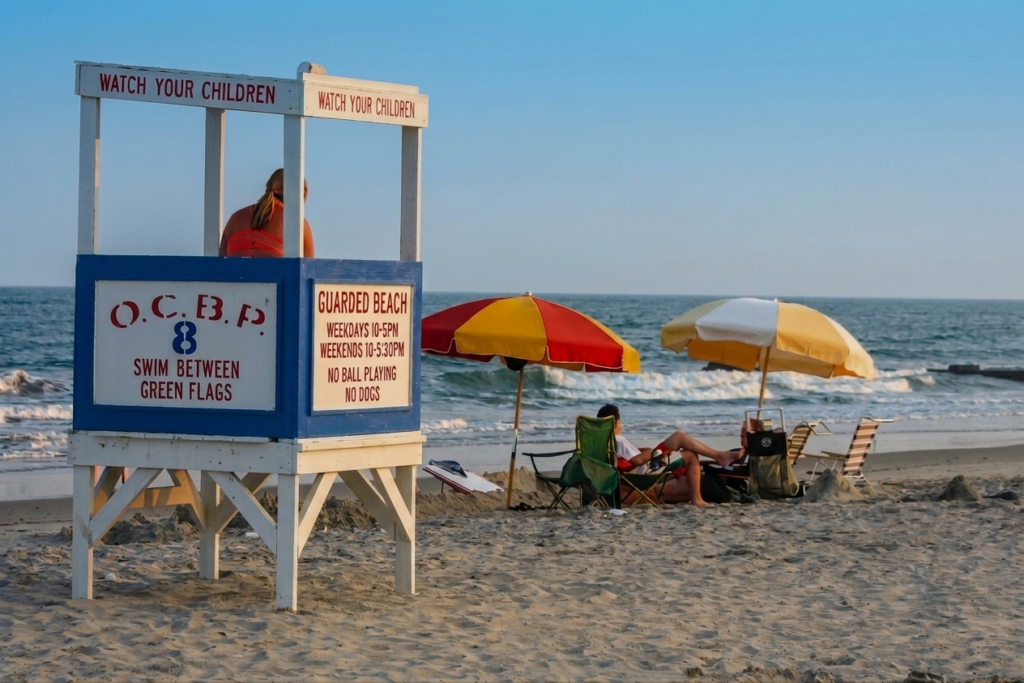
When possible it is wise to swim at a guarded beach. Photo: Trip Advisor Submission Anonymous
The takeaway: Don’t just carry a life jacket—wear it. Potential disaster often gives no warning, and once you’re in trouble, it’s already too late.
There is a wealth of excellent safety advice available from outdoor excursion experts. First and foremost, learning how to swim, float, and tread water can save your life. And there are some essential rules to keep in mind as well.
• Never jump headfirst into water where you can’t see the bottom. Every year people are paralyzed—or worse—by doing just this.
• Whenever possible swim only in areas where a lifeguard is present. In the absence of a lifeguard, don’t court danger by swimming alone; always have a buddy nearby.
• Never assume someone else is watching your child. If you hand off supervision duties, ensure all parties are explicitly clear on who is responsible. Many adults let their guard down once their child learns to swim, but it is during the first years of mastering those techniques that many drownings take place. Also, even when a child is standing right next to you he can drown. Rather than the splashing that is often depicted as typical of this situation, a child can quietly slip underwater without struggling or even making a sound.
Moving on to paddling, most people today prefer kayaks to canoes, and while there are endless books and online videos offering advice, nothing beats seeking out expert, hands-on instruction.
When heading out, it is always best to travel with a group. For excellent advice, the Minnesota Department of Natural Resources (MDNR) distills fantastic safety tips for paddlers (see the sidebar); its staff does a wonderful job of relaying practical facts to the public.
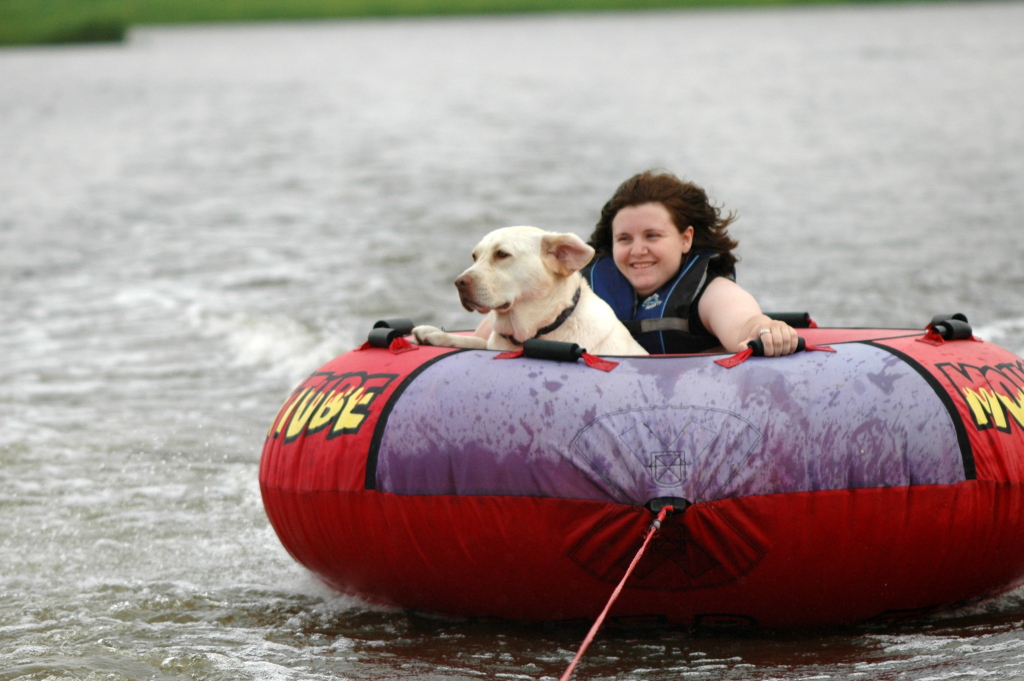
Water sports are lots of fun when good safety measures and swimming skills are honed. The author’s daughter took this to a new level by having her rescue laborador Hobnob join in the fun. Hobnob loved to go tubbing with Ashley. Photo: J. Morton Galetto
New paddlers often rely too much on their arms for paddling, which can cause fatigue. Turning your torso by moving your shoulder forward with the paddle that is entering the water helps to give your stroke more strength, incorporating your core and shoulder muscles as well.
To ensure your core muscles are engaged you need to sit up straight with your knees slightly bent. If you are slouched you will rely too heavily on your arms. Lounging in a kayak is fine but if you’re paddling, sitting straight will also help prevent back fatigue.
Your knees also need to be bent and splayed out to be on the same plane as your hips. Your hands should be placed such that if you raise your paddle above your head your arms make a 90º angle at the elbow.
The ideal way to hold your paddle is with a secure but relaxed grip—not a “death grip.” Control the paddle primarily with your thumb and forefinger while keeping your other three fingers loose to allow for better wrist control. This too will reduce arm fatigue. A stroke involves pulling the head of the paddle from your feet to just behind your seat in the water.
A little tip: When paddling in flat water, I occasionally release my thumb from around the paddle’s shaft to give the webbing between my thumb and forefinger a brief rest. Wearing fingerless padded gloves can also cushion your hands against blisters and fatigue.
Finally, don’t just learn how to move forward. Take the time to learn a sculling draw stroke, which allows you to move your kayak sideways—incredibly helpful when pulling up to a dock. Most importantly, practice entering and re-entering your kayak. If you haven’t mastered how to re-enter your craft from open water, it is wise to stay close to the shoreline.
Enjoy the local waterways but most importantly, safety first.
CU Maurice River offers opportunities to paddle with others on local rivers. These are bring-your-own boat excursions. Check out these and other outdoor possibilities on the website at CUMauriceRiver.org.
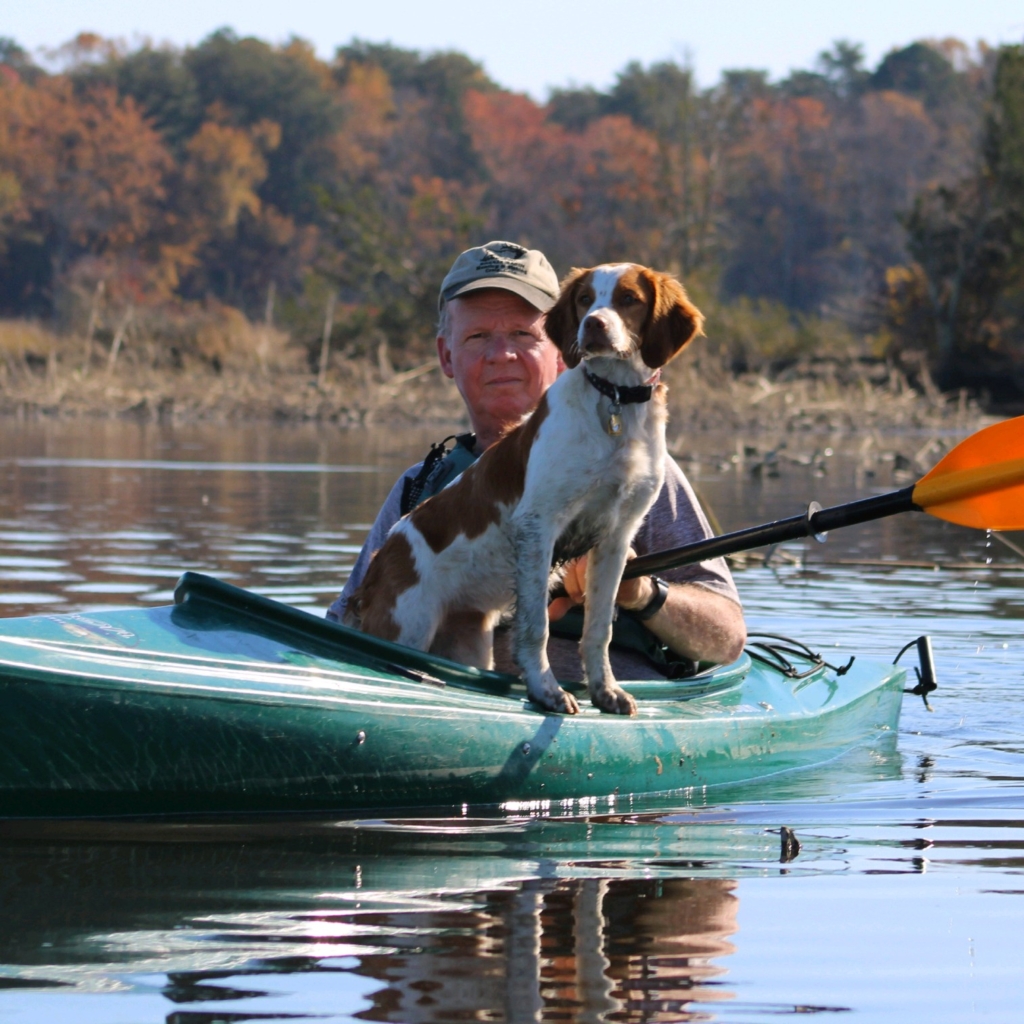
Taking a dog along might make you more likely to capsize. A life jacket and being a good paddler are important to pulling this off. Photo: J. Morton Galetto
Paddling Safety Tips
Minnesota Department of Natural Resources
Before you go
Let someone know where you are going, the route you are taking, and when you expect to return.
Plan an alternative takeout point in case of emergency.
Monitor the weather. Check the forecast before leaving, and prepare for rain even if you don’t think it will. Bring a weather radio as an early warning system for inclement weather.
Dress appropriately for the weather. Wear quick-drying clothing (not cotton!) made of material that retains heat even when wet, to help you stay warm and dry.
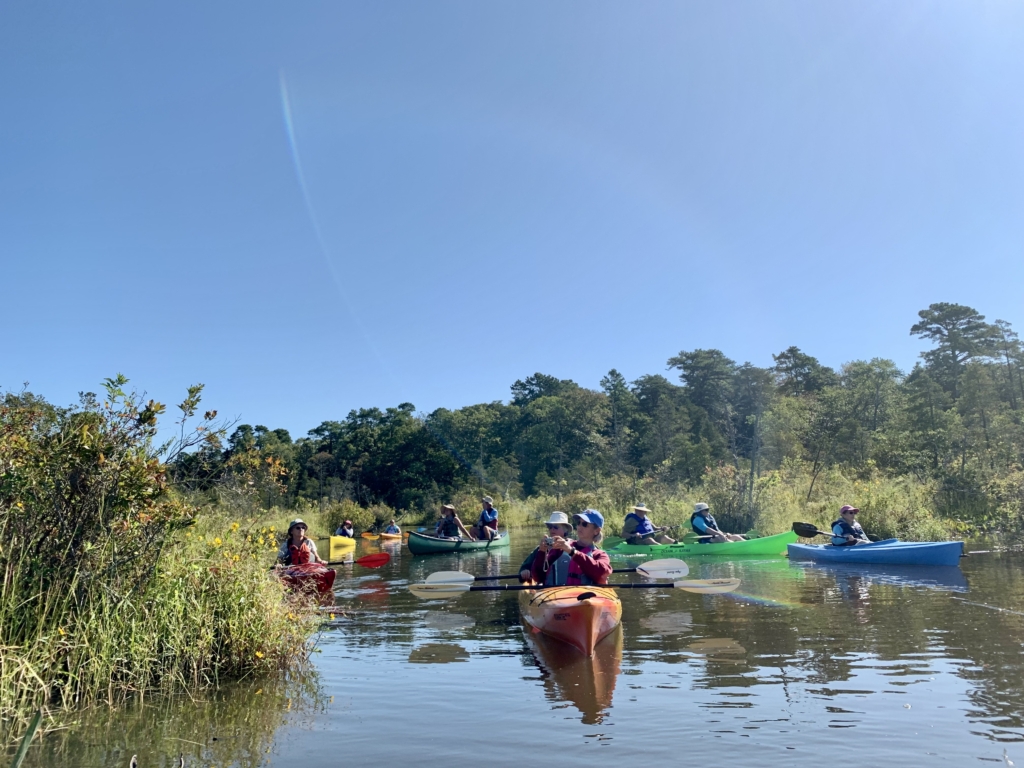
Paddling with others is safer than going alone. Photo: J. Morton Galetto
Wear bright colors or a high-visibility life jacket. The law requires a boat to carry one life jacket per person aboard, but people die each year because they weren’t wearing theirs. Buckle and zip up that life jacket!
Carry a first aid kit and know how to use it.
Carry a cell phone or radio for emergency communication, but keep in mind you may not have service in a river valley or remote area.
Carry plenty of food and water. Drink fluids frequently to avoid dehydration, which can impair your judgment and damage your health. If you get a headache or haven’t urinated in a few hours, drink a quart of water.
On the water
Don’t paddle if you are under the influence of drugs or alcohol.
Use extra caution when paddling in cold water. Boating accidents are five times more likely to be fatal if the water is colder than 60 degrees.
Never strap a person or lifejacket to a canoe or kayak.
Paddling in a group is safer than paddling alone. If you are in a group, stay within visual or verbal contact if possible.
In areas of high motorboat traffic, stay near the shore, and approach waves head-on or at a slight angle to avoid capsizing.
If you do fall out or capsize, keep your feet pointed downstream and keep them off the bottom to avoid getting snagged or stuck. Stay upstream of your boat to avoid getting pinned between it and a rock or log.
Reading the water
Scan ahead for hazards like overhanging trees, rocks, low bridges, or rapids.
If a section of river appears too challenging for you or your group, don’t be afraid to portage around it. This is a much better option than paddling in rapids, or quick currents that you aren’t used to. “When in doubt, get out and scout!”
Not so likely in southern New Jersey but good to know for those who venture to other areas.
Riffles in the water mean that rocks are dangerously close to the surface. Follow the smooth water shaped like a “V” pointing downstream.
For advice on fitting a life jacket or a checklist for paddlers https://www.dnr.state.mn.us/watertrails/paddling_safety.html

