By ALISON MITCHELL
Executive director, New Jersey Conservation Foundation
March is Women’s History Month, a time to honor women who changed the world, those who marched, legislated and shattered glass ceilings in laboratories and lecture halls.
One of them was Mary Treat, a scientist who lived and worked in Vineland and brought scientific research and attention to the natural resources of the Pine Barrens.
Treat was born in 1830 in New York, but it was Vineland that shaped her life’s work. She and her husband moved there to start a fruit farm and study insects that were damaging crops. It was a practical, place-based scientific pursuit. When they separated in 1874, Mary did something extraordinary for a 19th-century woman: She supported herself through her writing and scientific work.
And what work it was.
If you’ve ever paddled a slow, tea-colored river under a canopy of Atlantic white cedar, or walked a sandy trail edged with huckleberry and blackjack oaks, you know the Pine Barrens feels otherworldly. It is one of the most ecologically unique regions in the Northeast, home to rare plants, specialized insects and astonishing botanical ingenuity.
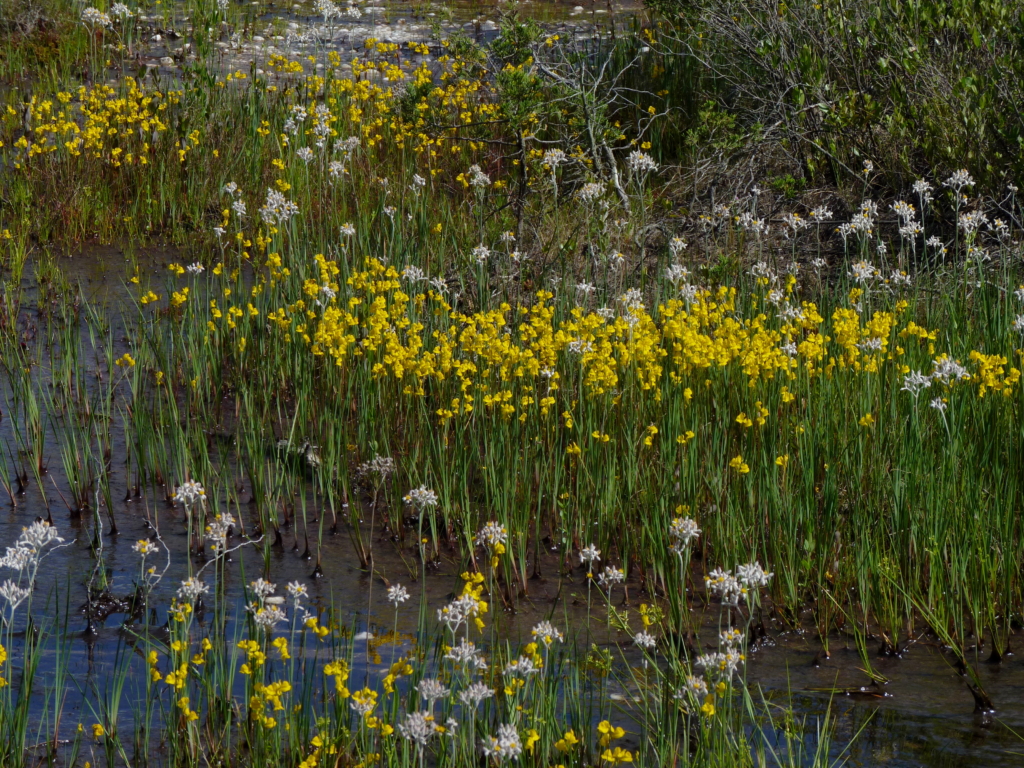
Treat was captivated by the Pine Barrens’ carnivorous flora, including Drosera (sundew) and Utricularia (bladderwort). Through careful observation and experimentation, she documented how these plants functioned, sharing her findings widely. Her research on bladderworts earned the respect of the world’s leading naturalists, including Charles Darwin, with whom she corresponded for five years about the rootless, aquatic plants.
From the wetlands of the Pine Barrens, she contributed to global scientific conversations about plant behavior and adaptation. Treat identified a new species of orange aphid, an ichneumon fly, two spiders, and an ant later named in her honor: Aphanogaster treatiae.
Over her 50-year career, Treat became a prolific naturalist and popular science writer. Her articles appeared in major publications including Harper’s and Atlantic Monthly. She published five books, including 1885’s “Home Studies in Nature.” Her 1882 book “Injurious Insects of the Farm and Field,” was reprinted five times.
At a time when women were rarely welcomed into scientific institutions, Mary Treat built her own platform.
You may be familiar with her as one of the main characters in a 2018 novel by Barbara Kingsolver. You can learn about the real Mary Treat through letters and documents bequeathed to the Vineland Historical and Antiquarian Society, or by reading “Mary Treat: A Biography,” by Deborah Boerner Ein –
Treat lived to be 92 and was laid to rest in Vineland, the center for a scientific life that rippled far beyond. She helped show how rigorous science can grow from close observation, that a woman could sustain herself through scientific and intellectual work and that South Jersey’s wild landscapes were worthy of global attention.
To learn about preserving New Jersey’s land and natural resources, visit the New Jersey Conservation Foundation website at www.njconservation.org or contact me at info@njconservation.org.

