The Gloucester County Prosecutor’s Office hosted a series of educational presentations on elder fraud and scam prevention last month. On September 17, the office hosted its free presentation at Washington Township Senior Center.
Gloucester County Prosecutor Andrew B. Johns led the presentation to the room filled with seniors. Representatives from his office also participated in the presentation. Additionally, there were representatives from the New Jersey Division of Consumer Affairs (which is part of the Attorney General’s Office) and the Gloucester County Clerks Office, plus a segment from Senator Paul D. Moriarty.
“It’s an everyday part of our life these days, and it’s an important job for the prosecutor’s office and for our law enforcement agencies to equip you with the knowledge that you need to protect yourself from these scams,” Johns said at the start of the presentation. “I will be honest, once that money is out of the bank account of a victim, it is almost impossible for us to get it back.”
Scams, mostly facilitated through call, text, email, social media and fraudulent websites or companies, target any and everyone.
According to a 2026 report from the Consumer Federation of America, it is estimated that Americans lose a combined total of $148.2 billion every year to online scams. However, those ages 60 and older are the largest targeted demographic.
“Scammers target the elderly because they are going after your retirement money. (Scammers) know that you’ve worked your whole life and you’ve saved up. It’s your time to enjoy yourself, do what you want to do, travel. And they are going after that money,” said Melanie Hazen, a representative from Consumer Affairs.”That is why it is important to be educated about this. And now, whatever you learn here, don’t just keep it to yourself. Bring it out to your friends (and family).”
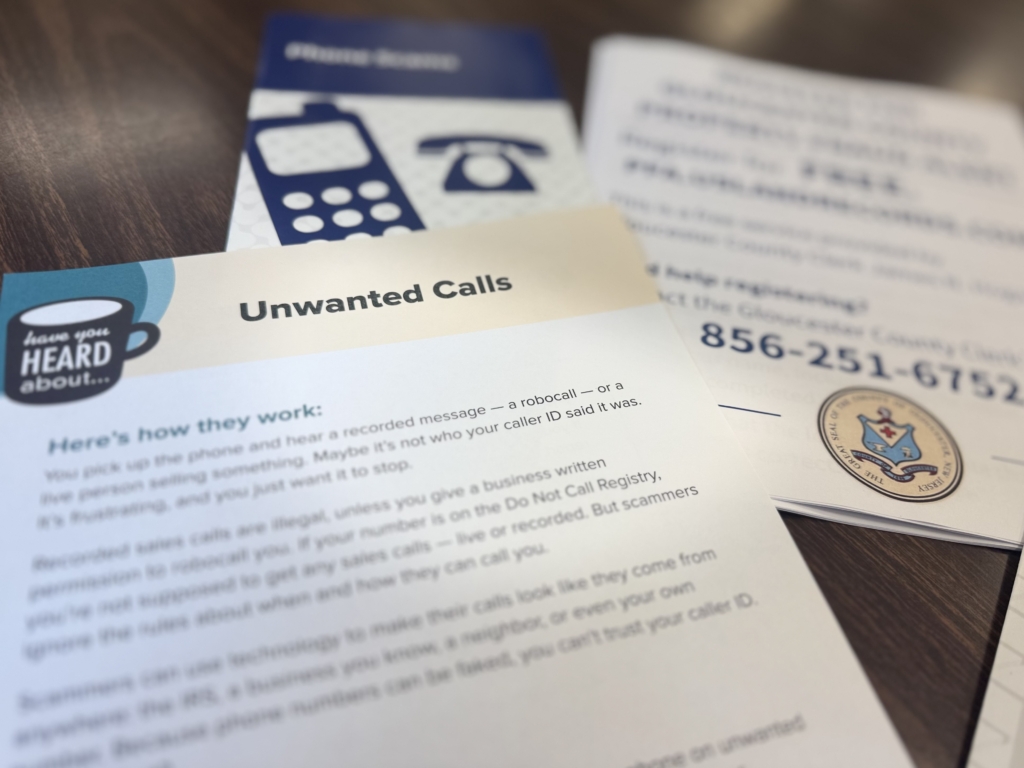
Several informational papers and pamphlets were given out at the educational presentation. The same information can be found online.
Additionally, the elderly are often not as equipped with technology as younger generations, and they may be suffering with other health or cognitive issues, making them a more vulnerable target.
The presenters shared that most scams — whether it is a fake call allegedly from your bank stating your account was overdrawn, a final notice text from E-Z Pass stating you owe a sum of money or a congratulatory email sharing you have hit the jackpot from a casino in a country you have never been to — will often come off as too urgent or too good to be true.
Senator Moriarty said if you ever accidentally answer a call that has to do with money and seems very urgent, hang up and forget about it.
“Nothing is that urgent. (But that’s what scammers) try to do. They try to build anxiety and get you to do something right away,” he said.
He said to pause and end the call. Then, he suggested reaching out to any of the aforementioned offices for support, as well as report the scam call to the Federal Trade Commission by calling 1-877-FTC-HELP or visiting www.ftc.gov/complaint (this website also has more helpful information).
“If it’s too good to be true, it is,” Hazen said in regards to scams that state you won money or a flashy reward, yet require you to provide personal account info or click on a dangerous link that can hack your devices and steal your data.
This also applies to contractor fraud and scams where you think you are getting a deal on a big investment or purchase, but really it was just a way to steal your money or info. If the price you owe is too good to be true, it likely is.
Additionally, it is important to remember that most places, like banks, the Social Security Administration and service providers you are enrolled with, already have your account information and numbers. You should not need to provide that information to the organization it is part of. If you are worried, just reach out to the actual bank or service provider on your own to verify if they need something from you.
The presenters said someone can be scammed through interaction with a real person on the other end, as well; scams do not only happen through dangerous links or bots. Sometimes, a scammer from an illegitimate establishment will be friendly, appear helpful and build a rapport with you to build trust. Then, they can take advantage of you and your money or information.
Alternatively, these scammers can try to instill fear and threats over you as a form of manipulation to give away money or information. The presenters said a common tactic is called the grandparent scam, where you will receive a call or message stating they have your grandchild and need X amount of dollars or X personal info in order to save your loved one. These calls or messages will often come at uncommon or disorienting times, like it in the middle of the night, which make people more vulnerable to the attack.
The presenters suggest to remain calm and take a step back before taking any action with the scammer. Ask yourself if it is actually possible your loved one ended up in this situation, consider calling the loved one on a different line or just call the police. Through these methods, you can prove to yourself if the message you received is legitimate or not.
The offices part of the presentation provided resource papers and pamphlets for the guests to encourage them to learn more about scam and fraud prevention. This information can be found online or by calling the offices.
“We (are not) focusing our efforts necessarily on enforcement after these scams happen,” Gloucester County Prosecutor Johns said. “(We are focusing” on prevention. An ounce of prevention goes a long way here.”
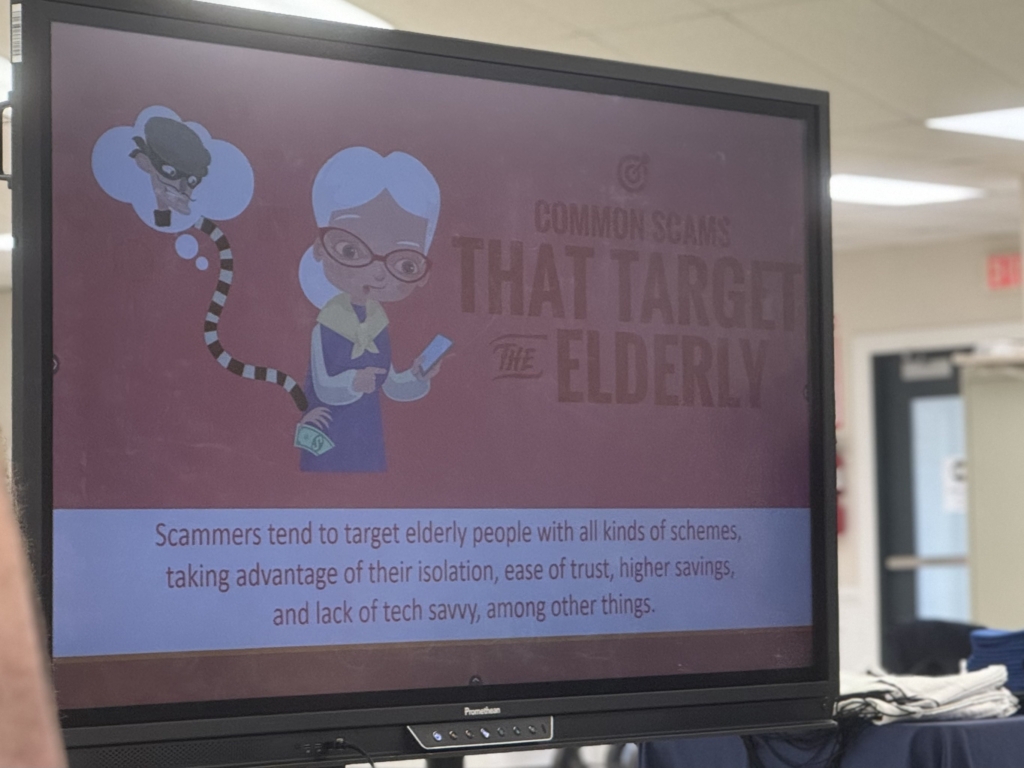
The Gloucester County Prosecutor’s Office hosted an education presentation series about elder fraud and scams. The office visited Washington Township Senior Center on September 17.

