A Native American family participates in bringing their heritage to light. Marie Reed Ayars proudly observes her adult children, Brianna Dagostino and Dylan Ayars, as they examine an ancestral stone pestle. Photos: J. Morton Galetto
On November 8, I had the privilege of doing something I truly enjoy—envisioning the future by exploring the past. Even better, I was able to visualize the potential of Cumberland County’s newest Museum of Native Heritage during its first public Open House in Greenwich. Thanks to the yeoman efforts of the Cumberland County Historical Society, Fabbri Builders, and the Woodruff family, the building stands complete. Together with many generous donors, they have laid the groundwork to bring this exciting new cultural space to life.
County Historical Society members greeted us and several people spoke. Brianna Dagostino, a descendant of the Lenape people and a teacher of Native American history at Millville High School, described her family’s roots in the Greenwich area. She welcomed us in her ancestral language and offered her enthusiasm for not only the collections that would be housed in the museum, but also for their proximity to the original sites of discovery.
Robert Woodruff spoke of his father George’s lifelong passion of searching for artifacts and cataloging his finds. He related that the museum was originally housed in the family’s residence, and described his mother’s frequent hosting of guests who visited to view the relics of our region’s original inhabitants.
In our area the Indigenous tribal people were the Lenape, and today some 3,000 descendants of the group still live here. In the 1900s it was a popular pastime to look for and collect the relics of their past. Many people simply made art from their findings, with little interest in their true historical value. Sadly, such hobbyists unintentionally destroyed the knowledge that could have been gained from leaving those artifacts in situ, or in place, and today it is a strongly discouraged practice.
George J. Woodruff and Alan Carman were two local individuals who were more serious about their collections. They wanted to understand more about the original inhabitants, their culture, and the uses of the implements they found.
In the past, we have explored the Woodruff collection at its former home in the Bridgeton Library (SNJ Today issue 7/16/2025), and our CU Maurice River members have taken field trips to the Prehistoric Museum in Greenwich. Both collections will now be housed in a new 4,000-square-foot building at 884 Ye Greate Street in Greenwich.
George Woodruff (1904–1969) found his first arrowhead (more accurately called a “point”) on his father’s farm when he was 10 years old, while picking up chestnuts off the ground. His collection represents 55 years of ardent searches. Ultimately he amassed over 30,000 implements, all originating within a 30-mile radius of his home. He began cataloging his finds around 1917, marking each piece’s origin, what he believed the item was, and whether he found it or it was donated to him. Each item was numbered and cross-referenced.
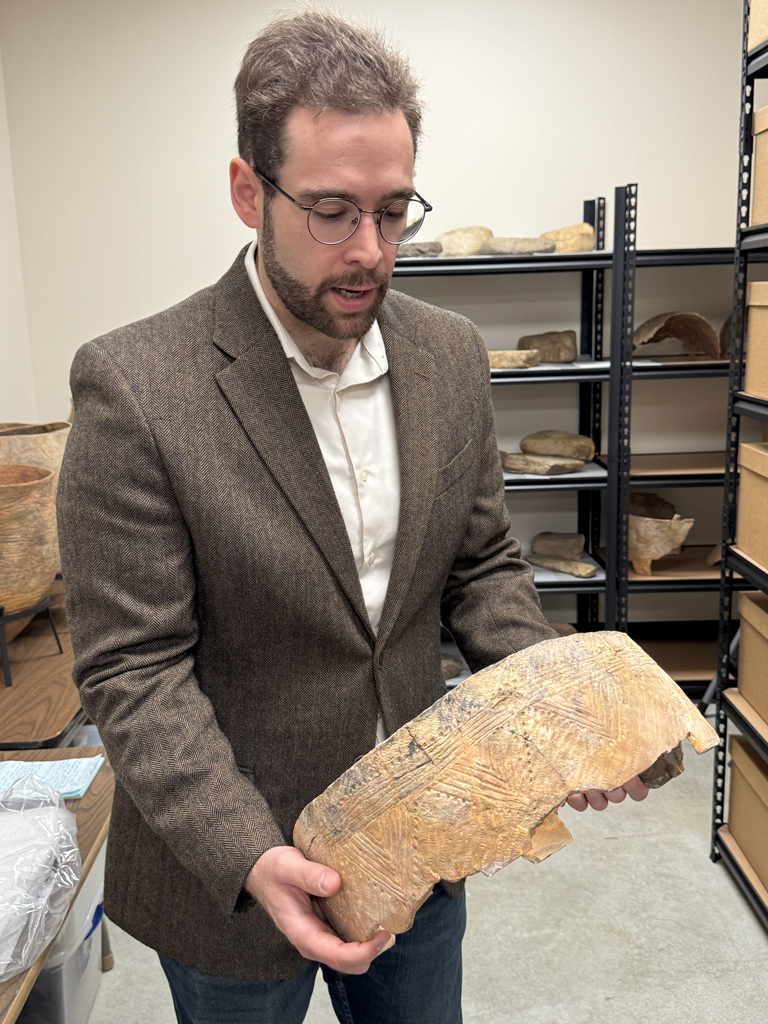
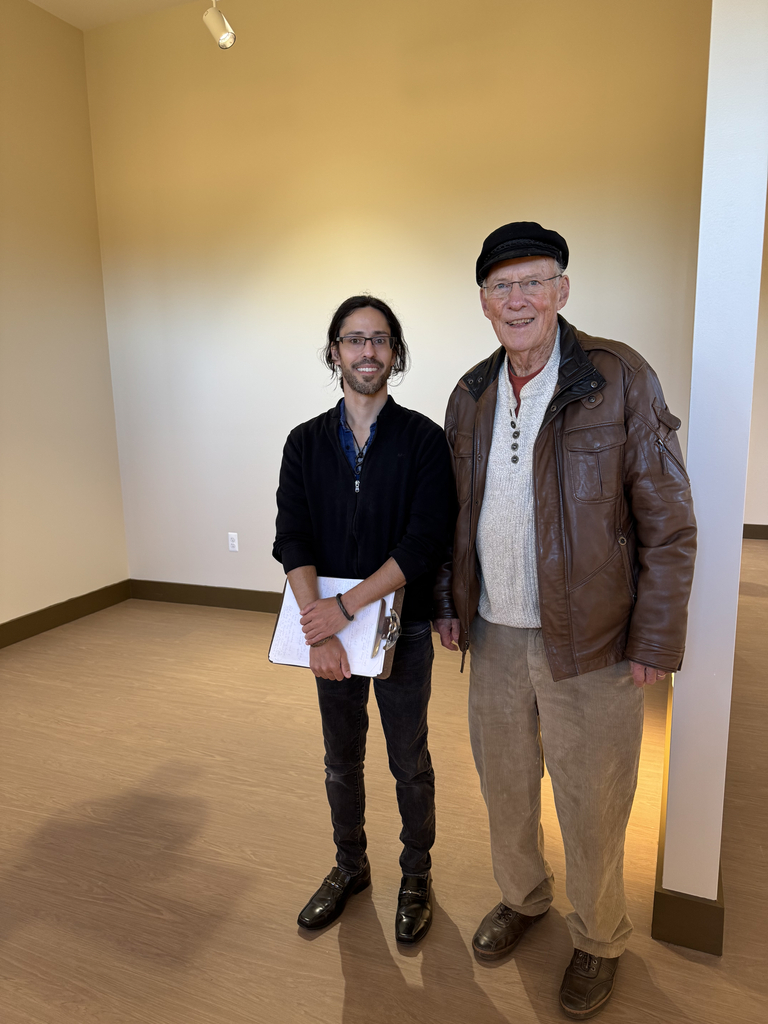
Curator of Collections Richard Adamczyk discusses incised designs on a huge shard from a Native American vessel. RIGHT: Assistant Curator Jonathan Dernbach and Robert Woodruff, Sr. stand in the space that is anticipated to exhibit a mock-up of an archaeologist’s field station. Robert’s father George assembled the artifacts that will be housed in this room.
These collections are soon to be housed in the new Museum of Native Heritage designed by Manders Merighi Portadin Farrell Architects. The design employs a timber construction that fits nicely into the agricultural landscape, and which reflects the current time period without competing with the historic nature of Greenwich’s colonial-era homes and palatial streets.
During the open house visitors were invited to explore the proposed concepts for its currently empty spaces. Each room had a docent to help people visualize what is planned for that area. Jonathan Dernbach, assistant curator, displayed a small sketch to share the concept for the Woodruff Room and talked about a number of potential interactive exhibits. One consideration, an experiential sand tank/box activity, will let visitors experience digging for discoveries. Associated museum activities will allow visitors to identify artifacts and then look for similar ones in the museum’s exhibits. The objective is to guide the visitor in identifying a piece’s intended use and the time period from which it derives. Such activities allow visitors to have a more interactive experience when examining the museum’s collection, and to help them make discoveries about pre-Contact peoples.
A U-shaped wall sits centrally in the Woodruff collection room. It will be set up like an archaeologist’s field station. This will enable visitors to see the tools and resources utilized by archaeologists, and may even inspire budding future archaeologists.
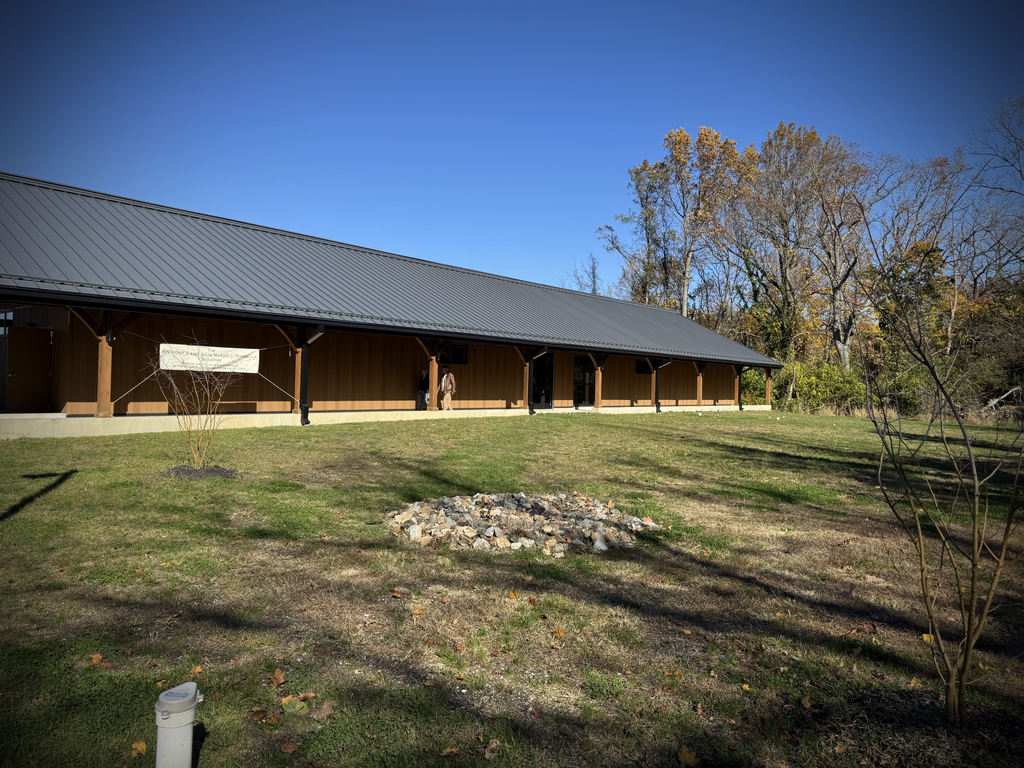
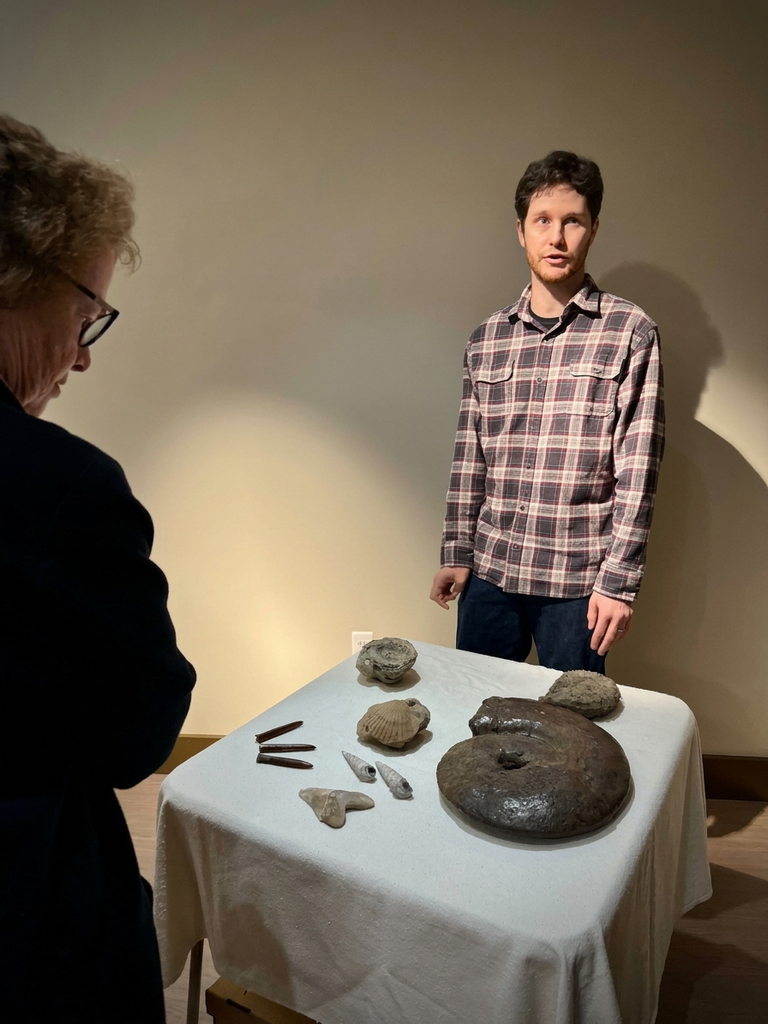
The new Museum of Native Heritage, designed by Manders Merighi Portadin Farrell Architects, blends well with the surrounding agricultural community. RIGHT: Consulting Curator of Paleontology Kyle Mcauley explains some exemplary fossils to open house participants.
Leaving the section that will house the Woodruff collection, we passed a library as well as a research space. Once in the reception area, I realized that as a group we had entered the exhibit through the side door. Proceeding down the corridor, we passed a Paleontology Gallery where Consulting Curator of Paleontology Kyle Mcauley was explaining some exemplary fossils and offering clues to the room’s future contents.
The next large room we entered will display artifacts from the Carman collection. For the open house, this room’s hosts were Brianna Dagostino, her mother Marie Reed Ayars, and her brother Dylan Ayars, a history enthusiast who works as a docent at the County Historical Society’s John DuBois Maritime Museum on weekends. They shared sketches of the room’s vision as well as implements used in hunting and gathering. A replica of a Clovis point and an atlatl were displayed as examples of what the room would soon offer.
This gallery will focus on lifestyles of ancestral Indigenous Americans and their archaeological/cultural time periods, each period being characterized by cultural changes. Pottery will be featured in the room, as well as implements for farming, hunting, and cooking. Dagostino additionally mentioned shelters as part of the room’s focus. She expressed her excitement in being part of the museum’s journey to represent her culture’s ancestral heritage.
In the last room of the museum, Curator Richard Adamczyk explained the collection and cataloging process. He was surrounded by shelves and boxes of artifacts that need to be painstakingly identified by use, time period, and whatever is known about the location where the item was discovered. Each will be measured and encased in proper acid-free wrapping to protect it.
Adamczyk fielded questions about the designs incised in the pottery and what information could be gleaned from them. He spoke of present-day descendants of Native Americans sharing their understanding of the symbolic meanings of the patterns in the pieces. During a previous encounter, a local Native American visitor not only explained the intended meaning of a design, but coincidentally had a tattoo of the same design around her arm.
The open house was intended to showcase the building that will house the collections and envision its future. The Cumberland County Historical Society expressed thanks for the generosity of the community in helping to reach this new chapter in the museum’s history.
For me, it whets the appetite for the displays yet to come. The enthusiasm of the docents for the museum’s potential emphasizes their desire to make their Native heritage better and more widely understood.
How You Can Help
There is much cataloging work still to be accomplished before the collection is finally displayed in its new format. The quality of the displays as well as the mortgage remain contingent upon the generosity of the community. If you would like to donate toward the museum’s endurance, the Cumberland County Historic Society suggests contacting either of these two individuals: Theodore H. Ritter, info@ritterlawoffice.com 856-451-3030 and Richard Adamczyk richardpadamczyk@gmail.com 609-610-9802

