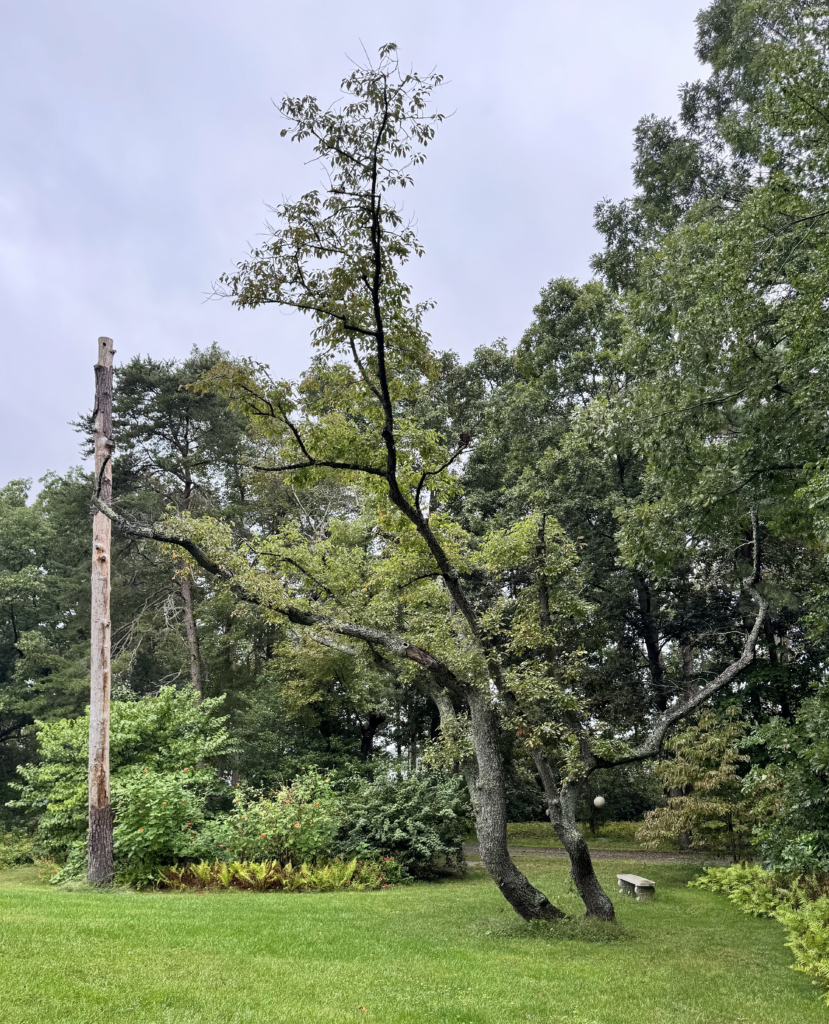
The black cherry in our columnist’s yard has holes where branches broke off many years ago. Woodpeckers investigate these on a regular basis. The tree is considered a “magical tree” for the many avian visitors that it hosts. Aging trees attract insects that provide food for wildlife, especially birds. Photos: J. Morton Galetto
From a bird’s-eye view, these trees only get better with age.
Today, as I approached the backdoor to my home, I watched a hummingbird who I suppose didn’t get the memo that it was time to “migrate,” instead of flying up into a craggy black cherry tree. There he was met by two red-bellied woodpeckers, an eastern kingbird, and a brown creeper. There was a lot of other movement for which I couldn’t identify the source without the aid of binoculars. Thus they remain LBJs, birder-speak for “little brown jobs.” As my eyes age they deceive me more regularly, and birds fall into this latter category more often. In fact I’ve been known to identify floaters!
Also near our entry, we have a large patch of giant sunflowers, and goldfinches are devoted to devouring the seed each fall. There are two trees where they most generally alight when flushed—a large oak and the cherry. The sunflowers are a bit of a misnomer since the plants are big but the blooms are modest; their proper name is Helianthus giganteus. Anyway, goldfinches are crazy for the seeds.
The old cherry has its struggles. We’ve pruned dead limbs off the top in hopes that their weight wouldn’t bring down the entire tree. Removing the highest branches from a tree almost guarantees its demise, but these large limbs were dead and the tree is advancing in the same direction. Today when I inspected the openings, I found that the main trunk is beginning to hollow out. From a woodpecker’s standpoint it is just like wine, getting better with age.
The red-bellied woodpeckers each had a hole under surveillance. When limbs are broken off by wind or storms this often creates the start of a cavity or hole. One bird didn’t only peer into the opening but placed his entire head and chest inside for a better look. I suppose he caught a few insects, or maybe he was house-hunting for future nestlings.
The tree seems to attract many insects and birds, which is not surprising since the black cherry, Prunus serotina, supports some 456 butterfly and moth species. In the spring and summer, birds are reliant on these caterpillars to feed their young, and in late summer the fruit of the tree will be eaten by 54 species of birds. That’s a lot of activity, a regular arborial supermarket.
This morning I was thinking about how, when we go on birding trips, the guides will often refer to a “magical tree,” which indicates the tree’s ability to attract a wide variety of species and serve as “a magnet for birds.” In 2020 at the Chan Chich Lodge in Belize I took the guide’s labeling of just such a tree very seriously when he declared a variety laden with red berries as a “magical tree.” He delivered the message with an accent similar to that used in commercials, which seemed to add mystery and substance to his declaration. And each time he used that term I felt compelled to check it out, to see which birds were visiting this paragon of nature.
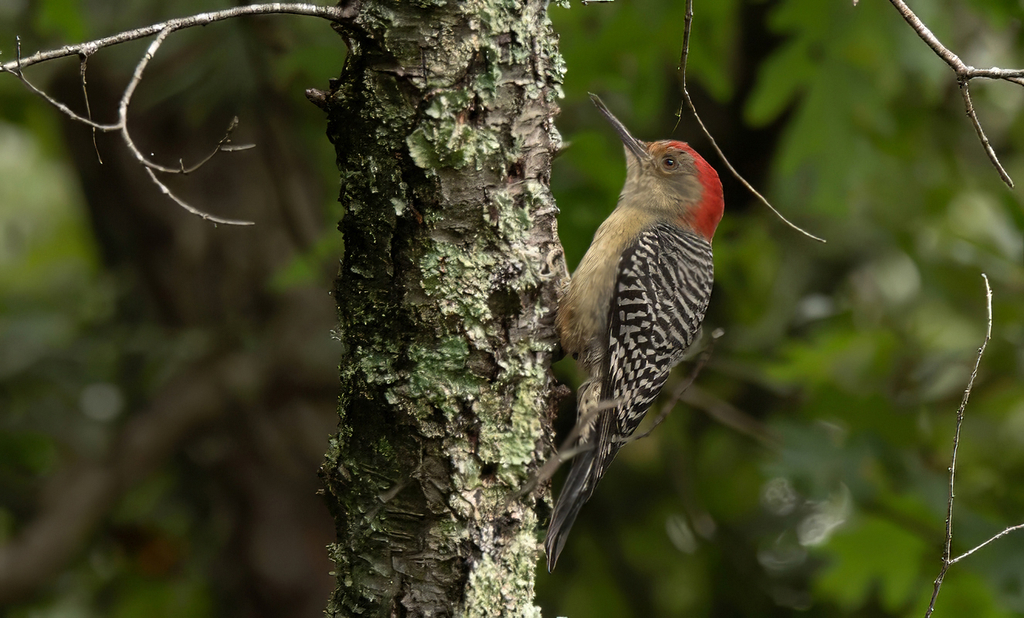
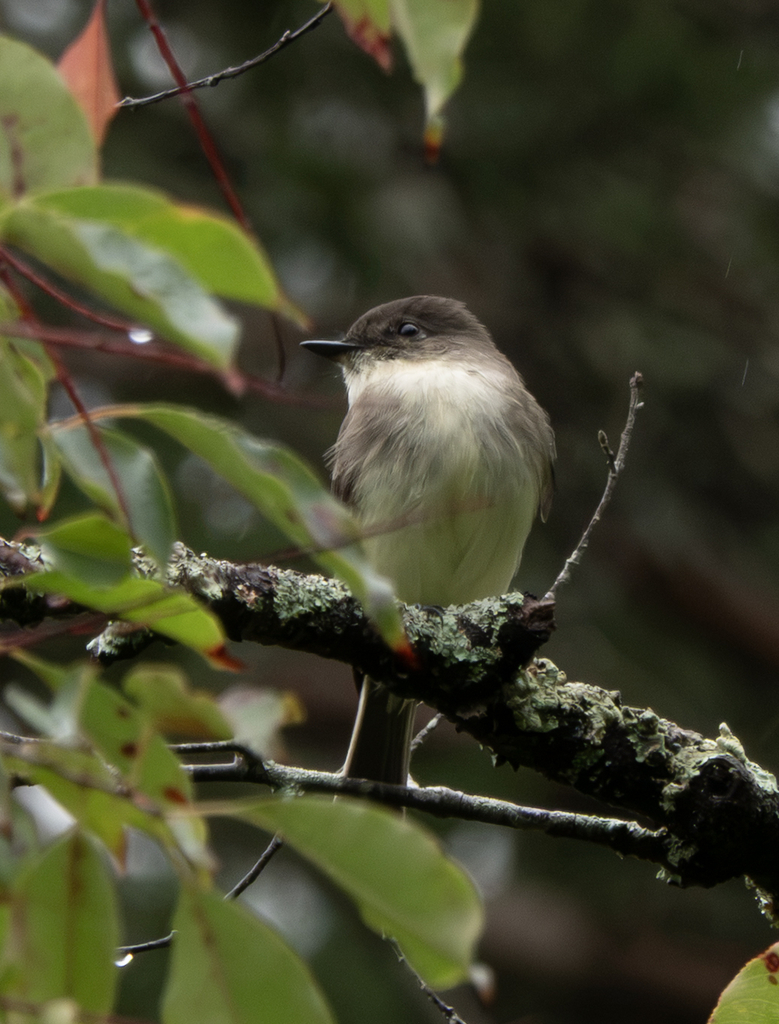
An eastern phoebe poses in the magical black cherry. ABOVE: Red-bellied woodpeckers are always checking out the black cherry.
On one such trip to see a tree I was met by a false fer-de-lance which I took unnecessarily seriously, mistaking it for a very poisonous viper that is not to be toyed with. I gave him a wide berth only to find out later that he was a harmless look-a-like. However, my persistence in visiting the tree paid off, because I got to see a red-capped manakin, a green honeycreeper, a collared aracari and a black-cheeked woodpecker. The manakin was doing his little moon-walk special, in yellow leggings, a red head, and black body, clicking his wings and eating the red fruit from the tree. I don’t recall the species of tree, but I’m certain of its popularity. When I returned in March of 2023 I noticed that the tree’s ability to attract wildlife had not diminished.
In our region the mighty oak is one of the most important trees in the forest and many have been labeled as magical. Oaks attract 517 species of moths and butterflies. In spring and summer the protein-packed caterpillars attract many neo-tropical migrants and native birds that raise their young in our wooded areas. Oaks and cherries both provide cover for nesting species. Older trees’ cavities offer breeding residences. Now, as fall approaches, oaks tend to hold their leaves into fall and early winter, providing good cover for southbound travelers and our year-round species. And their acorns provide sustenance to mammals, including humans.
Many birders return to “magical trees” on a regular basis to see who may be visiting. Today I was thinking about what might make for a magical tree in my yard, where we are blessed to have a number of candidates. I suspect it might just be any tree that is harboring a lot of activity at any given moment. Yet our cherry, that presents itself to me each time I come or go, continually beckons me to sneak a peek before I head out to my regular chores. Its thinner foliage also means I might have a greater chance to see who is visiting, compared to the thickly-leafed oak.
I was thinking about how happy I am that we didn’t remove the cherry as its top died or its trunk hollowed. I worry about its inevitable loss, but for now it’s simply magical. I hope that you too have a magical tree in your yard, or one that you like to visit elsewhere.

