The science team at the Pinelands Commission wrapped its annual frog and toad call monitoring season in late June, according to its June monthly report.
A final round of surveys was conducted by staff, who recorded frog and toad species throughout the Pinelands to track their activity, presence and callings. The data is in early stages of analysis preparation, s part of a long-term project.
The annual surveys have taken place for three decades. Since 1996, scientists at the commission have monitored 20 ponds across the 1.1 million acres of the Pinelands. The ponds are located on the western side of the Mullica River Watershed and between forest land and farmed landscapes.
That mans these are areas amphibians may be more likely to visit and thrive.
The surveys are essential to preserving the creatures in the Pinelands and beyond. Amphibians have been declining in world population since the late 1950s. Some of the possible reasons for this ongoing decline include ultraviolet radiation; habitat loss; disease and infections; and the introduction of non-native amphibians and predatory fish,” according to the commission’s website.
In the final survey, staff recorded eight species: green frogs, carpenter frogs, southern leopard frogs, northern grey treefrogs, Pine Barrens treefrogs, a bull frog, Fowler’s toads, and spadefoot toads. The spadefoot toads were heard calling in the vicinity of two monitored ponds after heavy rainfall in the month.
The Pine Barrens treefrogs, native to the region, are rare and endangered. The preservation and monitoring of their calls and presence helps to protect the species from going extinct. The frog itself is vibrant green with patches of orange and a light underbelly.
When one makes its call, it sounds like a fast-paced “honk” noise and occurs in about 20-second intervals. It can be heard in an Instagram video the Pinelands Commission posted a earlier this month.
More updates and analysis on the commission’s frog and toad findings will be reported over time.
In addition to amphibian monitoring, commission staff conducted rare snake monitoring: In June, they captured and processed 46 of the reptiles and reported an increase in gravid, or pregnant, female snakes. The reptiles – including the native and endangered corn snake – were taken to a lab to lay their eggs, which will be incubated so they can be protected and nurtured away from Pinelands’ predators and poachers.
The eggs will also be swabbed for the team’s snake fungal disease study, and the hatchlings will be released to the outdoors in the fall, according to the June report.
There were nine previously tracked snakes retired from the monitoring study and replaced with nine new ones that will be monitored by staff.
Staffers also completed opening all hibernacula corals – the areas where snakes spend their hibernation – in the Pinelands to allow snakes better movement in and out of enclosures. And they continue to monitor several pine snake hibernacula sites that have been monitored for decades by maintaining passive integrated transponder tag readers.
Rare snake monitoring and amphibian monitoring are both ongoing environmental monitoring studies conducted by the commission.
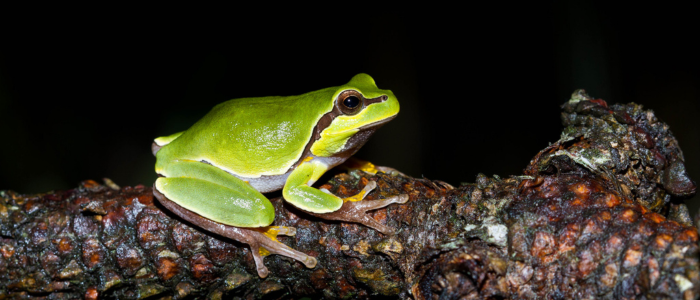
The rare and endangered Pine Barrens treefrog, native to the Pinelands, is noted in the June report.

