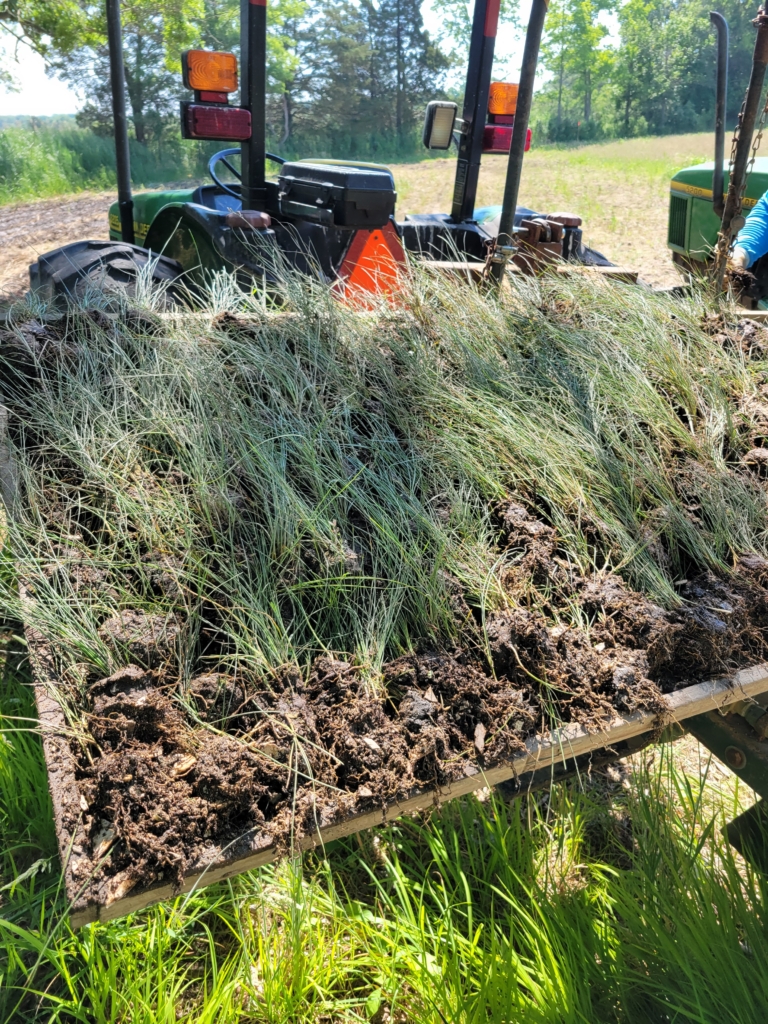
Cohansey Meadows Farms, located along the Delaware Bay Watershed and Cohansey River, is one of the mid-Atlantic region’s last working salt hay farms.
Save the Environment of Moorestown, the Moorestown Improvement Association, the Historical Society of Moorestown and the Moorestown Garden Club held a joint meeting at the community house on Feb. 10 that featured guest speaker John Zander, owner of Cohansey Meadows Farms.
Zander also manages the business, one of the mid-Atlantic region’s last working salt hay farms, with a focus on sustainability, responsible harvest practices, conservation and adaptation to climate-induced saltwater intrusion.
“It became very, very vitally important to me to try to make sure that it stayed the way it is and that it’s managed properly and that we’re doing conservation work there …” he explained. “We try to do a specific type of agriculture that really just meshes very well with the natural eco-system and with wildlife. No pesticides. No herbicides.
“(It’s) just about trying to really figure out what fits the land and not the other way around,” added Zander, whose family purchased the farms in 1997. “All of my happiest memories as a kid were hunting there and spending time with my family there.”
Cohansey Meadows Farms is located along the Delaware Bay Watershed and Cohansey River in Fairfield Township, just outside Bridgeton. The location positions it in convenient proximity to the Atlantic coast and major coastal wetland systems, for which the farm produce native wetland plant products. The farm’s salt hay is all natural, never treated with pesticides and herbicides, and weed free.
Salt hay has a variety of uses, including agricultural applications as weed barriers, bedding, feed and erosion control. Cohansey Meadows can also produce live native plant plugs, on demand, with relatively short lead times, in quantities well into the hundreds of thousands of units annually.
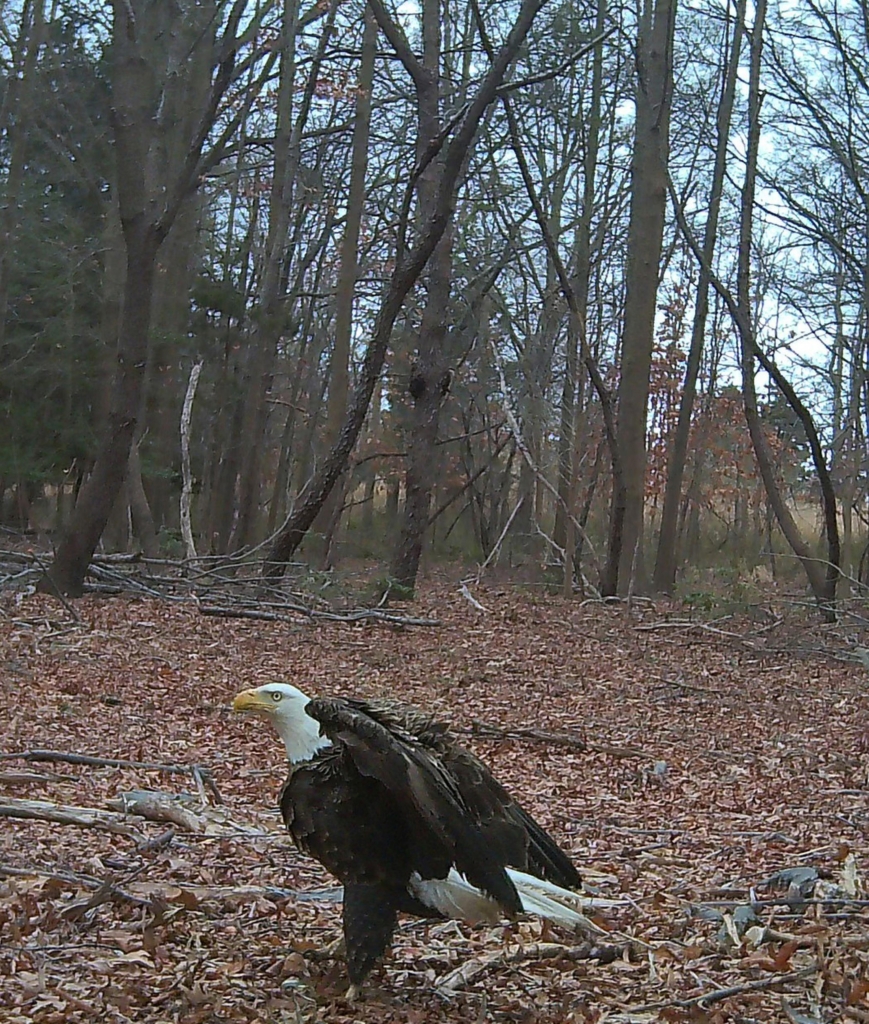
There are eight active bald Eagle nests on the property of Cohansey Meadows Farms property, just outside Bridgeton.
With a rich history that includes Quakers, pirates, trappers and farmers alike, the farms’ products are as unique as their past. The business has a history of cut salt-hay production that dates to the Colonial era. In 2020, the farms began experimental plantings of spartina patens (the primary component of salt hay), in agricultural production areas of the farm that had been rendered unproductive by the effects of saltwater intrusion.
Aided by a USDA-NRCS (United States Department of Agriculture-Natural Resources Conservation Service) Conservation Innovation grant, the business was able to expand spartina patens plantings and restore productivity to those areas of the farms.
Today, Cohansey Meadows Farms offers signature live spartina paten plugs for use in various conservation applications including tidal marsh and coastal restoration sites, living shoreline construction, soil stabilization/erosion control projects and more.
“ … I feel totally at ease and just relaxed when I’m there,” Zander noted of the farms’ property. “It’s often that there’s a lot of stuff going on, but when I’m there, I can kind of just make everything stop and just focus on what I’m doing and just have some deep thoughts and appreciation.
“It’s a good feeling.”

