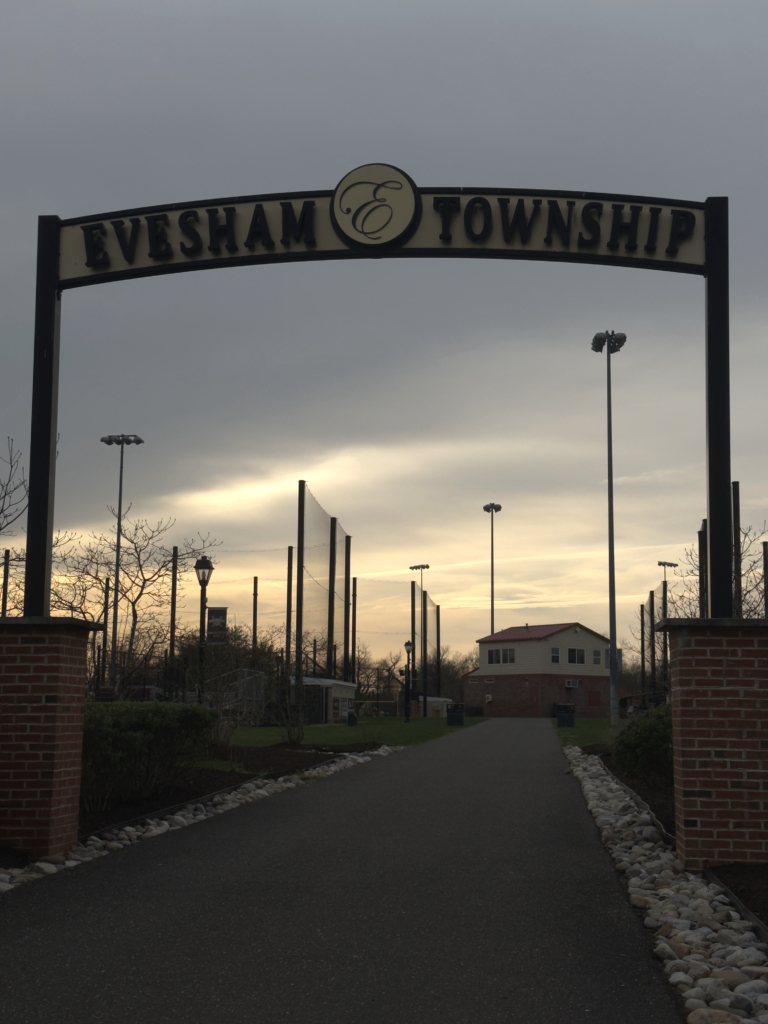
Evesham’s CFO April Sauls presented the township’s municipal and capital budgets at a recent council meeting to show residents where tax dollars are being spent.
A capital budget is a plan to fulfill the needs of the township for the current and succeeding five years. That includes roads, vehicles, equipment, improvements to facilities and land acquisition. It does not cover repair or maintenance costs. A capital budget helps the municipality spread the cost of large expenses over a number of years.
A capital budget is not a spending authorization, as funds can only be expended by the adoption of a bond ordinance authorizing debt for a fully-funded capital ordinance. That would mean fully funded projects from available money on hand.
The township’s capital budget for 2026 is $5,386,500. Some of the improvements Evesham is working on this year include an automated sanitation unit, HVAC improvements for the municipal building and the Blue Barn, repairs for the Barton Run Bridge and four police vehicles.
In summary, $677,000 of the budget will be used for the township’s road program, with $1.4 million through savings realized from 2025’s road program to supplement funding for this year. The program is an annual infrastructure initiative focusing on improvements, resurfacing, and maintenance to ensure safe travel on more than 320 miles of local roads. About $3.6 million will be used for facility improvements, and $1,015 for vehicles and equipment.
Potential Project Labor Agreement (PLA) Projects in the township include library renovations, an elevator replacement at the Gibson House, bicycle and pedestrian improvements and demolition of vacant VFW Post 6295.
“The two most important aspects of the budget are your revenues and your appropriations,” explained Sauls. “Your budget must be balanced so our anticipated revenues must equal our appropriation.”
Anticipated revenue for 2026 consists of $29.8 million in municipal tax levy, $8.3 million in miscellaneous local revenue (resident fees for court, construction, licenses, permits, etc.), $5.9 million in anticipated surplus revenue (excess revenues lapsing reserve appropriations), $3.2 million in state aid, $900,000 in prior-year taxes (receipts from delinquent taxes), $265,000 in cannabis tax revenue and $253,663 in grants.
Sauls noted that according to calculations by the New Jersey Department of Community Affairs, the township’s municipal budget is about average – if not lower – than those in neighboring municipalities. For every dollar in taxes collected, 40 cents goes to the Evesham school district, 22 cents to the Lenape Regional High School District and 14.5 cents to the municipality.
“With those 14.5 cents from every dollar, (the township) provides services to the community such as police and public safety, snow removal, public events and celebrations, and trash and leaf collection, just to name a few,” Sauls said.
Federal, state, and local grants are financial awards that go to local governments to support upcoming recreation projects, community services and infrastructure. The township’s grant writers research and apply for funds to help reduce the budget impact on residents; that includes recent efforts to gain supplemental funding for improvements to the Blue Barn.
So far in 2026, the township has received $1.8 million in grant-funding awards and expects that amount to increase.
Other highlights on the budget are the cost to the average household of $76.24 in annual taxes, or $6.35 monthly, and anticipated cannabis revenue to offset the cost of Evesham’s SROs (School Resource Officers).
The full capital and municipal budget presentation can be viewed on the township website.

