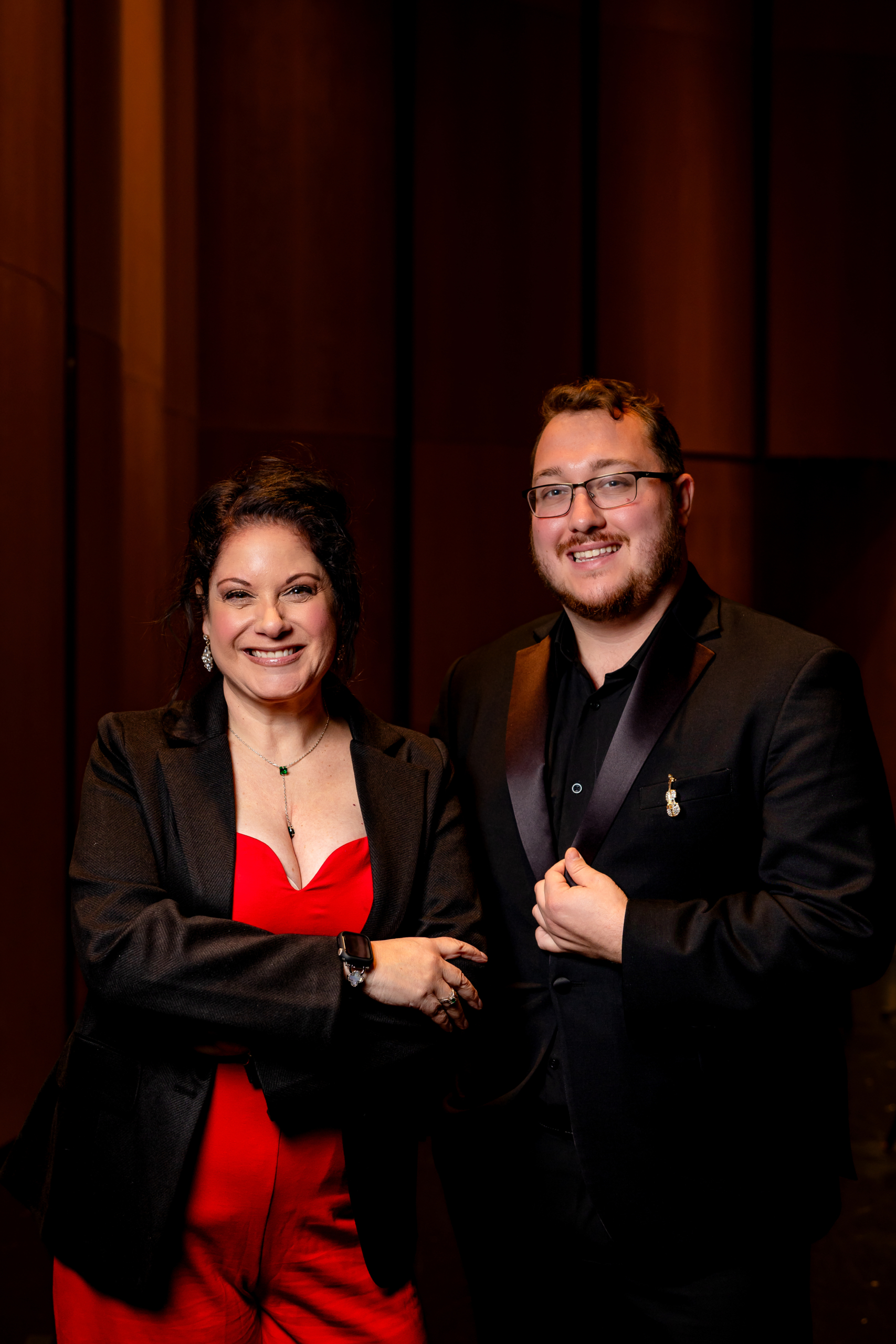
“I think we’ve stepped into this new territory that not many community orchestras get to in this way of professionalizing operations,” said Jake Heil, Philharmonic of Southern New Jersey’s first executive director.
By TRISTAN WEISENBACH
The Sun
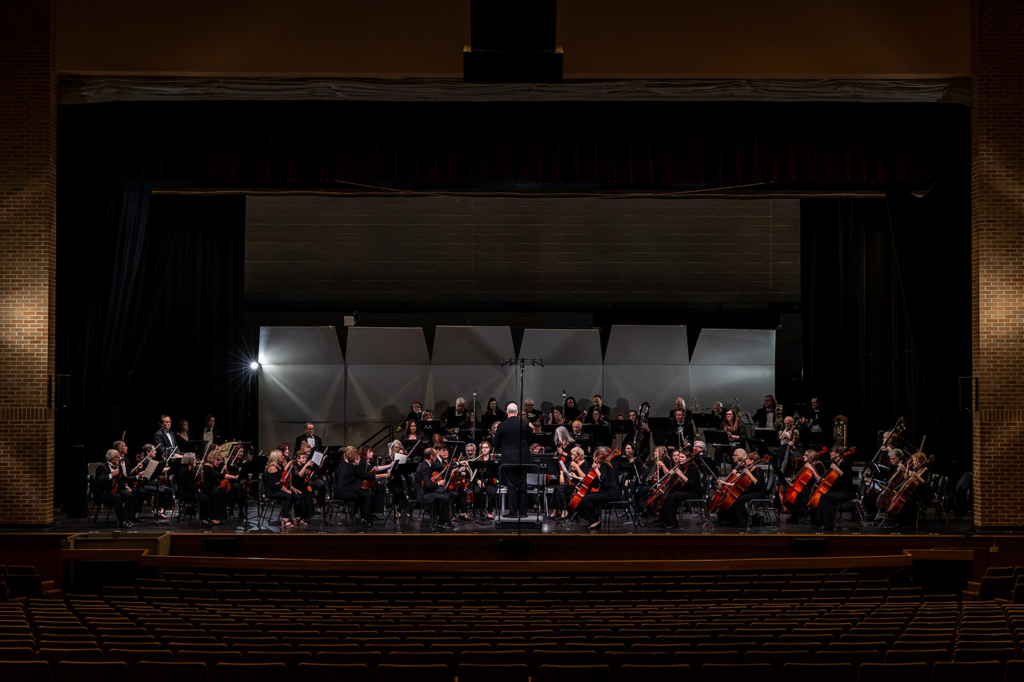
For more than three decades, the Philharmonic of Southern New Jersey has built what’s considered a rarity in ensemble music: a professional-level symphony orchestra entirely powered by volunteers.
It’s one of the area’s most consistently attended ensembles, drawing more than 1,000 people to each of the four main concerts it performs every season, mainly at Eastern High School in Voorhees.
At its core, the Philharmonic – founded in 1991 – is an organization grounded in the community. Every musician on stage is there by choice to donate their time and talent.
“This is not something that we see everywhere,” said Elura Nanos, the orchestra’s board president and one of its piccolo players. “Every town does not have a volunteer symphony orchestra that plays at this level, so it’s really very special.”
The Philharmonic rehearses over a six-week period for each program in its carefully curated concert seasons. What sets it apart from many community ensembles is the range of people who perform: music teachers, doctors, lawyers, nurses, graphic designers, accountants, a professional pilot, a beekeeper, retired performers and students playing side by side.
The musicians also range widely in age, from high-school students to performers in their 90s, including founding members who remain actively involved today.
“There are really not a lot of opportunities in life, at least that I have had, where you are a true equal to somebody who has a wildly different background as you,” Nanos observed. “You’re on stage, you’re family, you’re at the same table, you’re doing the same thing – and it’s a very humbling and special experience to have that.”
The orchestra has also developed a loyal audience base. First-time attendees regularly describe being surprised by the level of performance and its emotional impact, according to Nanos.
Accessibility plays a key role in that audience connection; concerts are affordable, parking is free and venues are easily reachable for South Jersey residents. That removes many of the barriers that often make classical music feel distant or exclusive, Nanos explained, and helps the Philharmonic attract listeners who might otherwise never attend a symphony performance.
Behind the scenes, the orchestra depends heavily on its volunteers. For most of its history, the organization has been run by board members who also served as an executive team handling everything from finances to community outreach.
The orchestra’s artistic leadership has been similarly committed: In more than 30 years, it has had only three music directors. That has helped preserve the orchestra’s identity and foster strong relationships between conductors and musicians.
The current music director, James Anderson, has extensive experience and a strong interest in working with volunteer ensembles. He views himself as equal to all members, Nanos noted, and works closely with them to curate the intricate musicality of the group.
“Everybody is there because they want to make music together,” Anderson observed. “They want to share their talents, they want to offer their insights artistically on the music that we’re playing, and there’s something really energizing about being able to stand in front of this group of people who are 100% committed to making music together.”
Under Anderson’s direction, the Philharmonic has leaned into thematic programming and repertoire. Recent and upcoming performances include concerts built around historical themes, cultural movements and international influences. A concert in May will feature Italian symphonic music.
The orchestra has also built a network of partnerships with local arts organizations and community groups. Collaborations have included performances with regional choirs and organizations like the Perkins Center for the Arts in Moorestown that enable the group to reach new audiences and offer educational and performance opportunities to students and emerging artists.
“To the extent that it’s possible for us to do it, we try,” Nanos acknowledged. “We’re always looking for new opportunities to do that. Community partnerships are one of the things that I expect to grow a lot in the next couple of years.”
Unlike many other volunteer or regional orchestras that often rely on internal musicians, the orchestra regularly brings in nationally and internationally recognized guest artists.
“That’s a special thing that we do, and we take that very seriously,” Nanos pointed out. “Our soloists are the top quality that they can be in terms of musicianship.”
After more than three decades of being run entirely by volunteers, the Philharmonic has hired its first executive director, Jake Heil, a violist who joined the orchestra years ago as a high-school student. He is launching a major shift in how the orchestra operates through an initiative called Next Movement.
A component of the initiative is to help Heil further connect on a deeper level with the community. His Community Conversations are talks he has with people who share their ideas, thoughts and feedback on the orchestra.
The leadership change includes the Philharmonic’s first capital campaign, a fundraising effort aimed at raising $250,000 by the end of 2027 to support long-term growth and sustainability. Announced last month, it isn’t intended to cover basic operating costs but to enable new initiatives previously unfeasible.
“It allows us to connect with other businesses,” Heil said, “to connect with other organizations and our community in ways that just haven’t been possible and aren’t possible to an organization that is run by volunteers.”
The goals include commissioning original works, producing professional recordings and expanding marketing. The campaign is also designed to secure the Philharmonic’s future. Volunteer organizations are particularly vulnerable to changes in leadership, financial pressures and external crises such as COVID. By solidifying financial stability and infrastructure, the orchestra wants to ensure it remains a permanent fixture in South Jersey.
“I’ve been in the group for 18 seasons, and during that time, there were several moments in time that it was a very real possibility that the whole orchestra would fall apart,” Nanos recalled. “And not because of any problem in the orchestra, but because there are these pressure points that you just don’t know what will happen.”
In an era when arts organizations across the country are struggling with declining funding and shrinking audiences, the Philharmonic stands out. Its ticket sales, patron base and artistic vision have all grown steadily.
“I think we’ve stepped into this new territory that not many community orchestras get to in this way of professionalizing operations,” Heil said.
The Philharmonic is an example of a symbiotic relationship with the community, in which its audience supports its work, and vice versa.
“I have not seen the level of dedication and pride that I see with our audience, with other ensembles and other organizations,” Nanos observed. “There’s a real sense of ownership. We have so many patrons that choose to spend their own money just to bring in strangers that have never seen us before, because they think it’s important for people to know that this is happening in our community.
“And to me, that’s extremely special.”
For more information about the Philaharmonic, visit www.psnj.org.
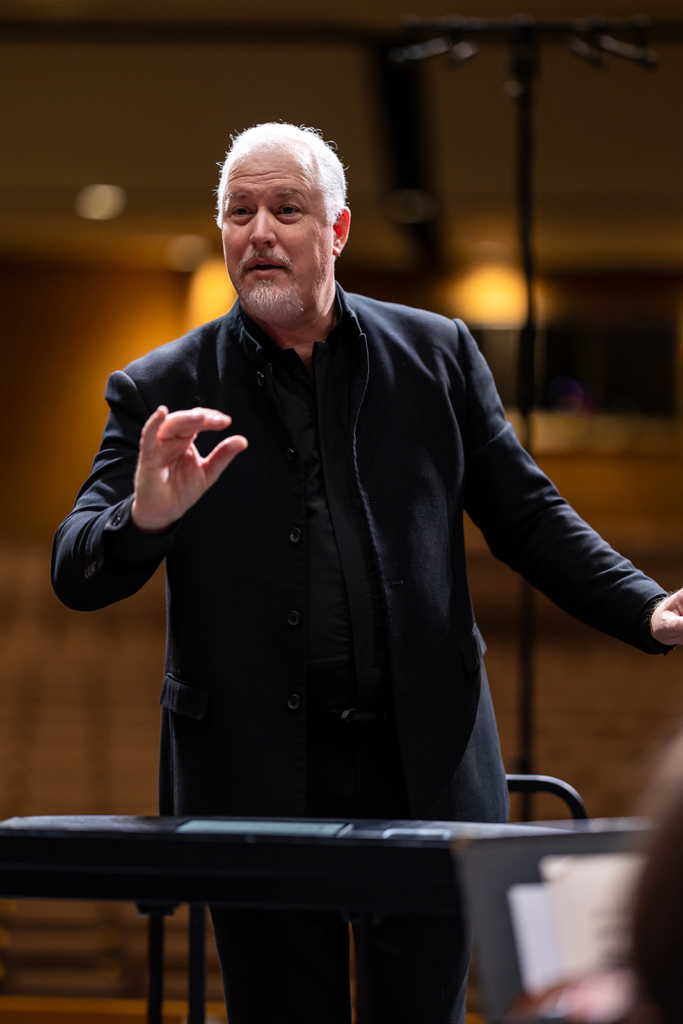
Conductor Jake Heil leads the Philharmonic at a recent concert. He joined the orchestra years ago as a high-school student.
