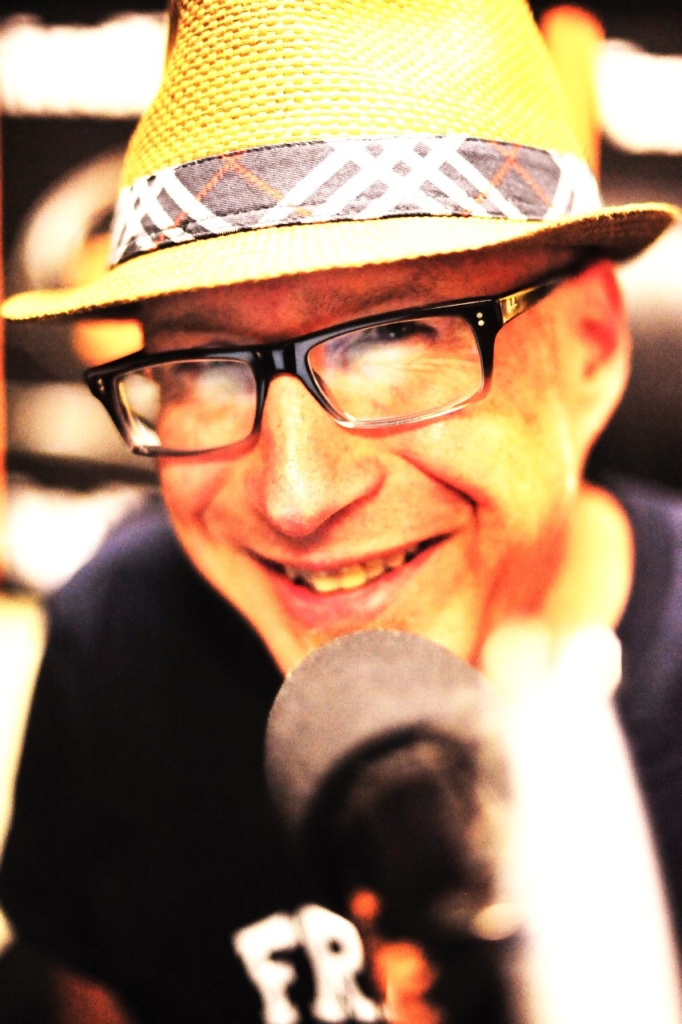
A list of popular show business-focused podcasts would probably fill much of this space. It’s far easier to name those emanating from Marlton, including “CooperTalk.”
At last count, the digital chatfest hosted by resident Steve Cooper was up to 1,059 episodes, with no end on the horizon. The segments cover a wide swath of the entertainment world including film, TV and especially pop music. Among guests who’ve chatted with Cooper are classic-rock titan Ian Hunter; ’80s pop chanteuse Sheena Easton; guitar god Joe Bonamassa; and Steve “Little Steven” van Zandt.
Earlier this month, Million Podcasts, a database for the public relations industry, put “CooperTalk” at number 74 on its list of the top 100 celebrity interview podcasts. Not bad for someone who didn’t set out to be a celebrity interrogator.
Cooper’s journey to the podcast universe began in the 1980s, when the Cherry Hill East High School and Stockton University alum began attending a Learning Annex comedy class conducted by standup comic and Pennsauken native Brian McKim and his Philadelphia-raised wife, Traci Skeene.
Cooper then spent several years on the nation’s comedy-club circuit and relocated to the West Coast in the mid-’90s.
“I wanted to pursue writing,” Cooper recalled during a recent interview. “I was in San Diego first and just wanted something different, to pursue comedy writing and try to get some (TV commercial jobs).”
That pursuit took him to Los Angeles in 2001.
“When you’re in LA, you have a bunch of different hustles,” Cooper explained. “I was a waiter, and then I ended up in event planning for a restaurant chain called Granville. And (in 2011), I met this guy who had an internet radio station.”
The station was primarily music focused, but when Cooper was invited to host a program, he knew immediately what its format should be.
“I said I want to do an hour-long talk show,” he recalled. “And (the station manager) said, ‘We have to do (what’s known as indie-rock), but you can do half indie music and half talk.’ So, I started getting comics to come in, and then I started getting a lot of listeners.”
The first get
Cooper ultimately decided to forgo playing music and do an hour-long conversation program he dubbed “CooperTalk.” While his guest list was pretty much limited to comedians he knew, Cooper soon enough branched out to non-comedy guests.
His “first big get” was Brian “Kato” Kaelin, who earned his 15 minutes of fame by living in O.J. Simpson’s guest house when the 1994 murder of Simpson’s wife and a friend captivated America and etched both men’s names in the true crime hall of fame.
Cooper – a substitute teacher in the Evesham school district – started contacting performers via their social-media accounts, fitting for someone whose workspace was online. To Cooper’s surprise, many responded. For instance, he noted, “I saw (actor) Robby Benson on Facebook, so I reached out to him. He was in LA and he came to the studio and did it.”
Coincidence at times helped his booking efforts. Cooper spoke of the day he stopped at a store to buy some onions for the chili that his wife JoAnn, then his girlfriend, was making for dinner. Inside was someone who looked familiar to him. It turned out to be Erik Palladino, who at the time was best-known for his role on the NBC-TV medical drama “ER” and would later have recurring roles on “The Marvelous Mrs. Maisel,” “Suits” and “Godfather of Harlem”.
Cooper approached Palladino, confirmed the actor’s identity and invited him to be a guest on his podcast.
As Cooper quickly learned, even if a podcast host is unknown, all it takes is a couple of “name” guests to establish credibility. His early subjects soon led him to book actor Ed Asner (“The Mary Tyler Moore Show,” “Lou Grant”) – and he was off and running.
Because of modern technology – specifically Zoom – when Cooper and JoAnn moved back to South Jersey in 2017 because of sky-high real estate prices in southern California, he was able to continue “CooperTalk” without missing a beat.
‘Organic’ interviews
Cooper now hosts two other podcasts, “Coop’s Comedy Corner” and the business-focused “Lawsuits & Lessons.” When asked what makes his shows different from similar podcasts, he didn’t hesitate.
“I do ‘organic’ interviews,” he explained. “I don’t even call them interviews; they’re organic chats.”
The format keeps editing to a minimum. While he does remove segments on request if a guest is concerned about something they said, Cooper keeps things like long pauses and the occasional tripping over words in the final product.
“I think the normal person stammers,” he noted. “We all stutter once in a while. And sometimes people take a while to think about what they’re going to say. But that’s what real conversation is. That’s why I don’t like asking (specific) questions and I don’t think in terms of editing.
“I just want it to be like I’m BS-ing with someone at a bar or at dinner,” Cooper added. “That’s why I don’t edit. I want that natural flow.”

