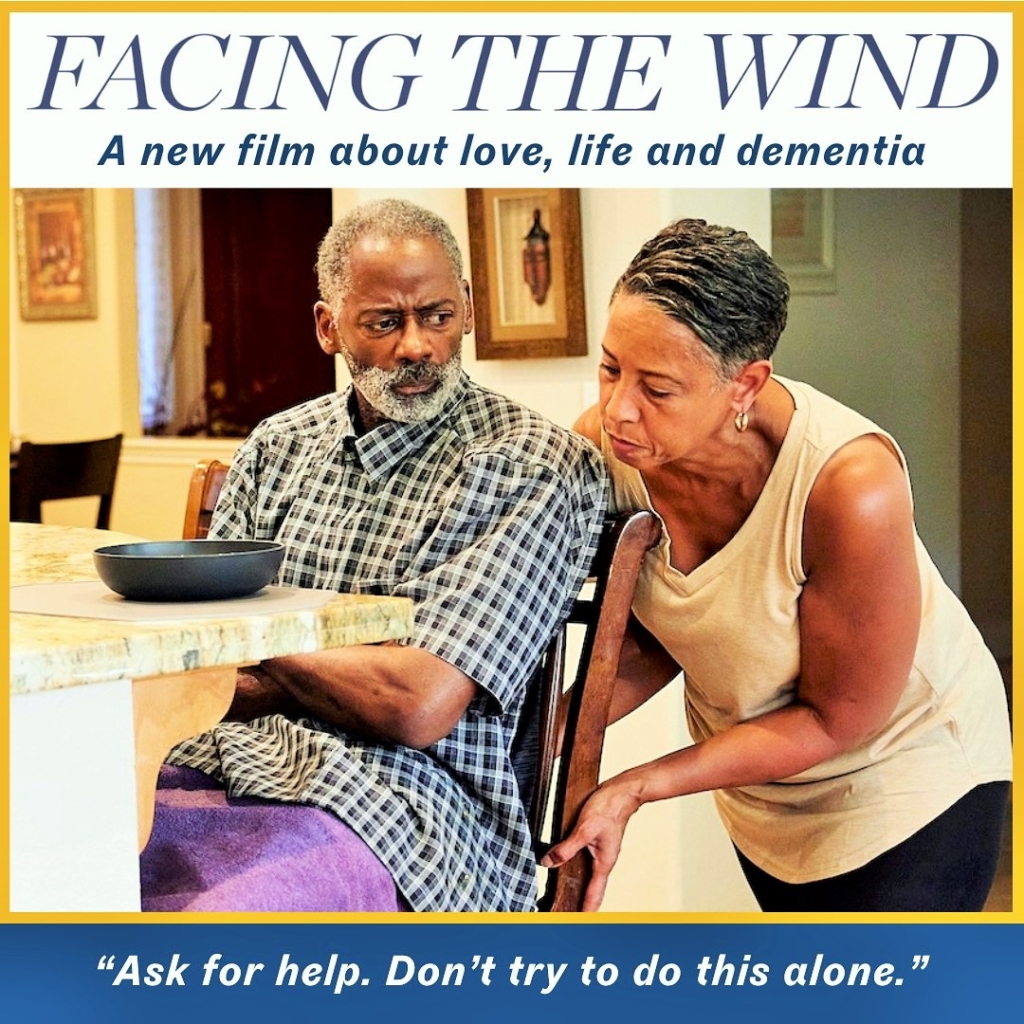
“Facing the Wind” is an emotionally powerful film depicting the journey of couples dealing with Lewy Body Dementia from both the caregivers and sufferers’ perspective.
Close to 100 people mingled in the lobby of the AMC Voorhees on the evening of March 5, just before a heartbreaking and at times heartwarming documentary about Lewy Body Dementia (LBD), a debilitating disease that affects 1.4 million families in the nation.
“Thank you all for coming,” said attorney Jerry Rothkoff, founder of the screening’s host, Rothkoff Law Group, who also warned the crowd of what they were about to see.
“Seeing this film in a movie theater is a little different,” he advised. “Get out the good, heavy tissues. There will be happy tears at the end.”
His words rang true in “Facing the Wind,” which follows the real-life journeys of Linda and Jim Szypula and Carla and Patrick Preyer from the perspective of the caregiver and the sufferer. The experiences of the two wives – as well as the pain and confusion of spouses with LBD – were sad, but there were also moments of laughter, lucidity and love.
The film opens with images of Geets Diner in Williamstown and Morey’s Pier in Wildwood, the latter where Linda and Jim first met one summer while she worked there.
“I’m going to marry him,” she thought to herself.
“We raised three amazing children and he built me our dream home,” recalled Linda, who first noticed something was wrong when Jim turned 56.
Carla said Patrick first started showing symptoms at age 58. The film featured old clips of their wedding.
“He had a great sense of humor,” she reminisced.
At first, Carla closed her hair salon and started working at home. But she had to stop working altogether, as the film shows, to take care of Patrick. She joined “a support group of eight or nine woman caregivers on Zoom” that helped her understand what they both were going through.
“He even helps me,” Carla noted. “He is compassionate and still very kind.”
Both Linda and Carla were devastated when their husbands were diagnosed with LBD, a progressive neurodegenerative disease that leads to cognitive decline, hallucinations, movement issues and sleep disturbances. A leading cause of dementia, LBD symptoms usually start after age 50 and advance for as many as eight years.
There is no cure.
“I will not let him see me cry,” emphasized Linda, who with a family friend decided to take a cross-country RV trip with Patrick. He initially enjoyed the journey, but became uneasy traveling at night. The couple did manage to visit with another married pair in the same situation, Curry and Linda Whisenhunt, before cutting the trip short.
“We are confined in the house,” Carla recounted in the film. “Patrick has lucid moments, especially when he talks to his son on the phone.” The couple even renewed their vows in an outside ceremony to the delight of their family.
Sadly, by the end of the film, both husbands have succumbed to LBD.
“It was certainly a powerful and moving experience for many of us in the room,” noted Laura Nelson, regional director of marketing for the Rothkoff Law Group. which specializes in elder care law.
After the screening, there was a Q&A moderated by Rothkoff; Tony Heriza, the film’s director; Linda Szypula; and Dr. David Irwin of Penn Medicine FTD (Frontotemporal Degeneration) Center at the University of Pennsylvania. The discussion reflected on the lived experiences portrayed in the film and the complex emotional journey faced by individuals with LBD and their caregivers.
The messages included that even in the most difficult circumstances, moments of laughter and humor can still emerge, offering brief but meaningful relief for victims and their families. The community can also play a vital role in helping caregivers endure challenging times. In the documentary, the spouses found strength and understanding through their virtual support group, essentially finding their “tribe.”
LBD is often misdiagnosed, and the panel emphasized the need for greater awareness and education within the medical community about its prevalence and symptoms.

