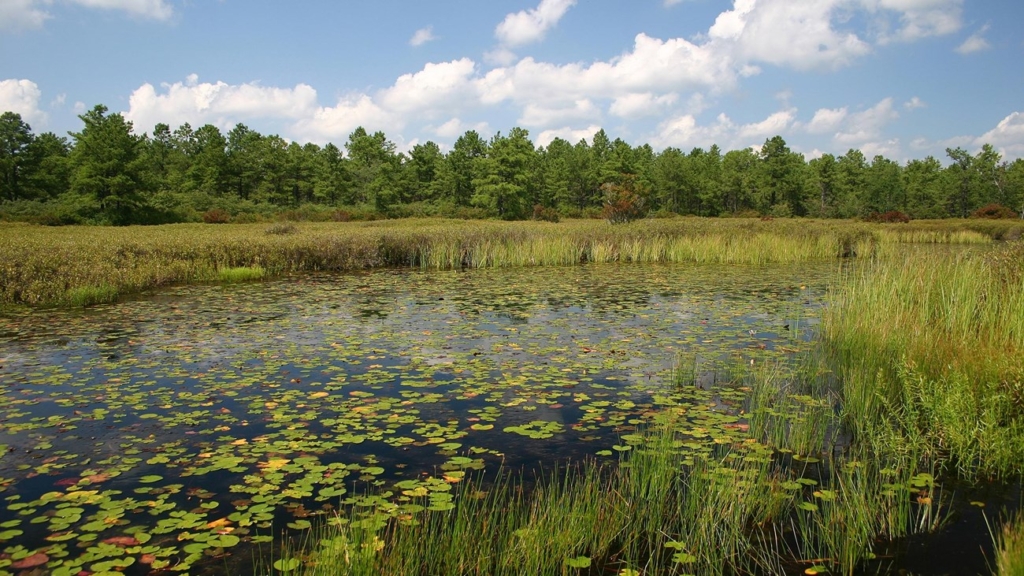
Shamong Township – like many Pinelands municipalities – faces unique challenges.
A significant portion of the township lies within the New Jersey Pinelands National Reserve (PNR), an area governed by strict land-use and development limitations established pursuant to federal and state law. In February, Mayor Michael S. DiCroce penned a letter to U.S. Sen Andy Kim for consideration of federal funding and support for municipalities that are “substantially constrained” by Pinelands preservation regulations.
“While these regulations serve an important national purpose by protecting a unique and environmentally sensitive region,” DiCroce wrote, “they also severely restrict the township’s ability to develop ratables, expand its tax base and pursue economic opportunities available to other municipalities.
“As a result,” he added, “Shamong Township faces ongoing fiscal challenges in funding essential municipal services, maintaining infrastructure, and supporting public safety, despite serving as a long-term steward of land preserved in furtherance of federal conservation objectives.
“In effect, our residents shoulder a disproportionate financial burden for preserving an environmental resource of national significance.”
Shamong adopted a $3.35-million budget in 2025. The municipality has 29 employees. In budget documents, the township outlined tax rates that also include Burlington County, local and regional school districts.
For a home assessed at $100,000, the homeowner’s local tax increase is estimated at $98.61. For a home assessed at $250,000, the increase is estimated at $246.53. For a home assessed at $450,000, the increase estimated is $443.76. And for a home assessed at $750,000, the homeowner’s local tax increase is estimated at $739.60.
“Targeted federal assistance, DiCroce insisted, “whether through direct appropriations, infrastructure or environmental grants, or enhanced eligibility under existing federal programs, would provide meaningful relief to Shamong Township and similarly situated Pinelands communities.”
Each fiscal year, the U.S. Senate’s appropriations committee accepts requests for Congressionally Directed Spending (CDS), allowing senators to set aside federal funds for specific projects in their states. On Kim’s website, he outlines the opportunity and how to submit. It is noted that the annual appropriations process is lengthy, with uncertain timing; there is no guarantee that CDS requests will ultimately be included in fiscal-year spending.
Kim’s office said they had a great conversation with the mayor on Feb. 27 and will meet in the near future to work together to bring federal funding back to the Pinelands.
The Pinelands National Reserve is the country’s first National Reserve created by Congress’ passage of the National Parks and Recreation Act of 1978, according to the state’s website.
The PNR is approximately 1.1 million acres and spans portions of seven counties and all or part of 56 municipalities. The reserve occupies 22% of New Jersey’s land area and is the largest body of open space on the Mid-Atlantic seaboard between Richmond and Boston.
The reserve is home to dozens of rare plant and animal species and the Kirkwood-Cohansey aquifer system, which contains an estimated 17 trillion gallons of water. In 1979, the state formed a partnership with the federal government to preserve, protect and enhance the natural and cultural resources of this special place.
Through its implementation of the Pinelands Comprehensive Management Plan, the New Jersey Pinelands Commission protects the Pinelands in a manner that maintains the region’s unique ecology while permitting compatible development.
Such support would ackowledge the federal interest served by Pinelands preservation while helping local governments remain fiscally sustainable.

