Long before European settlers arrived, Native Americans in the Unami “Turtle” tribe of the Lenni-Lenape nation lived along the Rancocas Creek, where they fished, farmed and transported their goods in canoes.
Current-day Delran was a hunting ground for the Unami and the many relics found along the creek include tools, stone pipes, ornaments, skinning knives, spears, tomahawks and spades.
The township’s Conarroes family – who were French Huguenots – boarded a ship in England to America in 1680, but the elder Conarroe died during the voyage. Three years later, his widow married Matthew Allen, who owned 3,200 acres of land from Swedes Run to the Rancocas Creek, including most of present day Delran and Riverside, according to historian Lloyd Griscom in his book, “The History of Delran.”
Allen gave 500 acres of land to his stepson, Isaac Conarroe, including the area behind the current day Delran United Methodist Church on Conrow Road. At around that time, the family simplified the French spelling of their name to Conrow.
Isaac’s grandson Darling Conrow married Deliverance Stokes in 1733 and built Conrow House, the oldest existing structure in Delran. Originally a small cabin, it was expanded into a two-and-a-half-story brick house in 1751. Now a private residence, it is located on a small road near the township water tower that winds behind the Delran United Methodist Church.
The Conrow family was very influential in the history of Delran for about 150 years. The great-grandson of the Conrow House builder Darling Conrow served as the mayor in 1882 and 1883. His son Abram was mayor of Delran from 1890 to 1893.
After earning degrees in veterinary surgery and medicine from the University of Pennsylvania, Abram married Minnie Buckman Atkinson and moved back to the Conrow homestead, where they raised five children.
Abram remained very active in the township. Besides serving as mayor, he was a township committeeman when the state divided Delran and Riverside in 1893. He also served on the Burlington County Board of Freeholders (now the board of commissioners.)
The Conrow family’s contributions to Delran history were many, and their legacy lives on with the Conrow Road Park along Haines Mill Road, near the water tower and the name of the street itself, Conrow Road. And still standing after 293 years is the brick Conrow House, built to last by Darling Conrow 42 years before the Revolutionary War.
It is still a private residence.
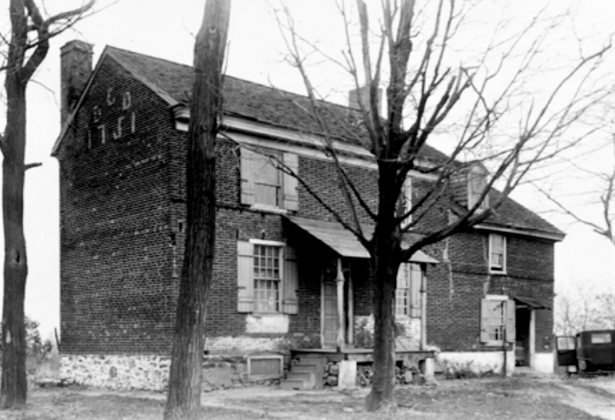
The Conrow House began as a cabin built in 1733 and was expanded into a brick farmhouse atop the tallest hill in what is now Delran.

