In 2006 the Museum was named the Official Teaching Center for the New Jersey Commission on Holocaust Education in Cape May County. Photo: J. Morton Galetto
The Sam Azeez Museum of Woodbine Heritage recounts a chapter in international history.
In today’s world we often feel polarized by our leadership, instead of being united in spirit as Americans. Divisiveness, racism, scapegoating, and dictatorships are nothing new. However, in our local history we don’t need to look far to find examples of people who—when suffering the worst of times—showed tolerance instead of indifference or prejudice, unity instead of bigotry, and worked together as a community recognizing the strengths that each person brings to the table.
Not long ago, SNJ Today hosted our article on a visit to the Seabrook Educational and Cultural Center, where we learned about a farming community that looked a bit like a United Nations of outcast people during the WWII era. This week we go farther back in time, to the end of the 19th and beginning of the 20th century, to learn about a community born out of intolerance—a community that became a place of hope and a pillar of diversity, self-sufficiency, and endurance. To explore this history, my friends and I visited the Sam Azeez Museum of Woodbine Heritage, on Washington Avenue in Woodbine.
The story of Woodbine begins in Eastern Europe, arising from a culture of blame instead of solution. This is often the recipe from which racism is born. Starting in Russia, Tsar Alexander III was threatened by revolution. Like many dictators he scapegoated the Jewish population, blaming the Jews for the nation’s serious problems. Angry groups of frustrated and impoverished peasants pillaged Jews’ homes, businesses, religious sanctuaries, and slaughtered many in the process. The police turned a blind eye. Hundreds were killed and thousands were displaced and left in poverty. Immigration was their only hope of survival.
After losing his only son in 1887, wealthy German railroad magnate Baron de Hirsch declared, “Humanity is my only heir.” He was horrified by the treatment of Russian Jews and focused his fortunes on creating a fund to help Russian Jewish immigrants to escape prejudice and begin new lives. Ultimately, he gave $2.4 million (in 2026 dollars an estimated $85.8 million – CPI Inflation Calculator) to enable Eastern European Jews to escape tyranny and raise their families in the United States.
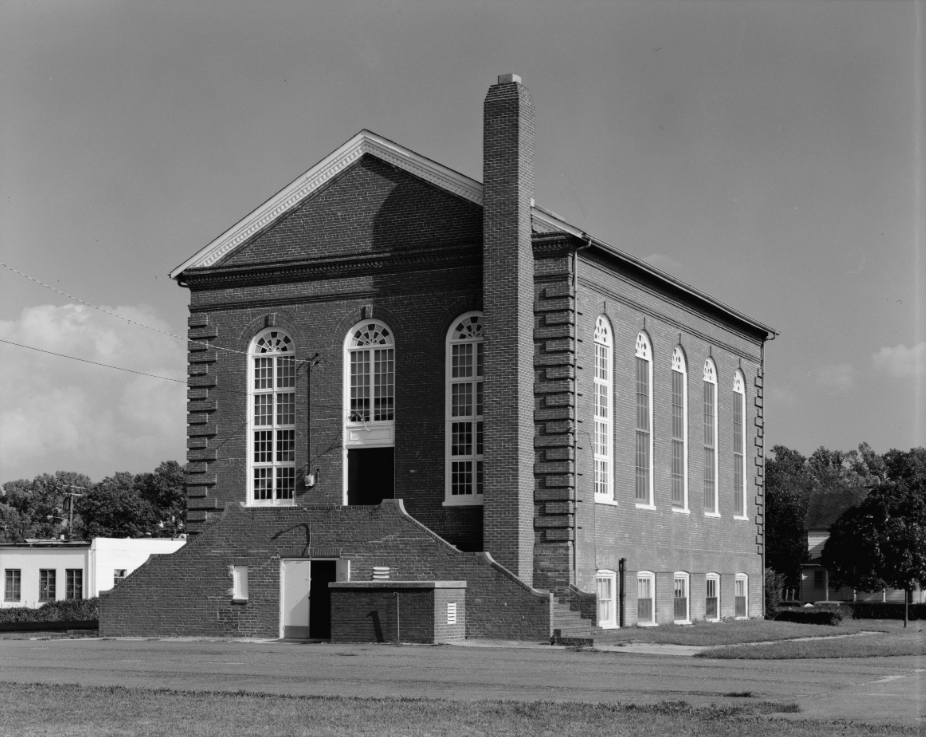
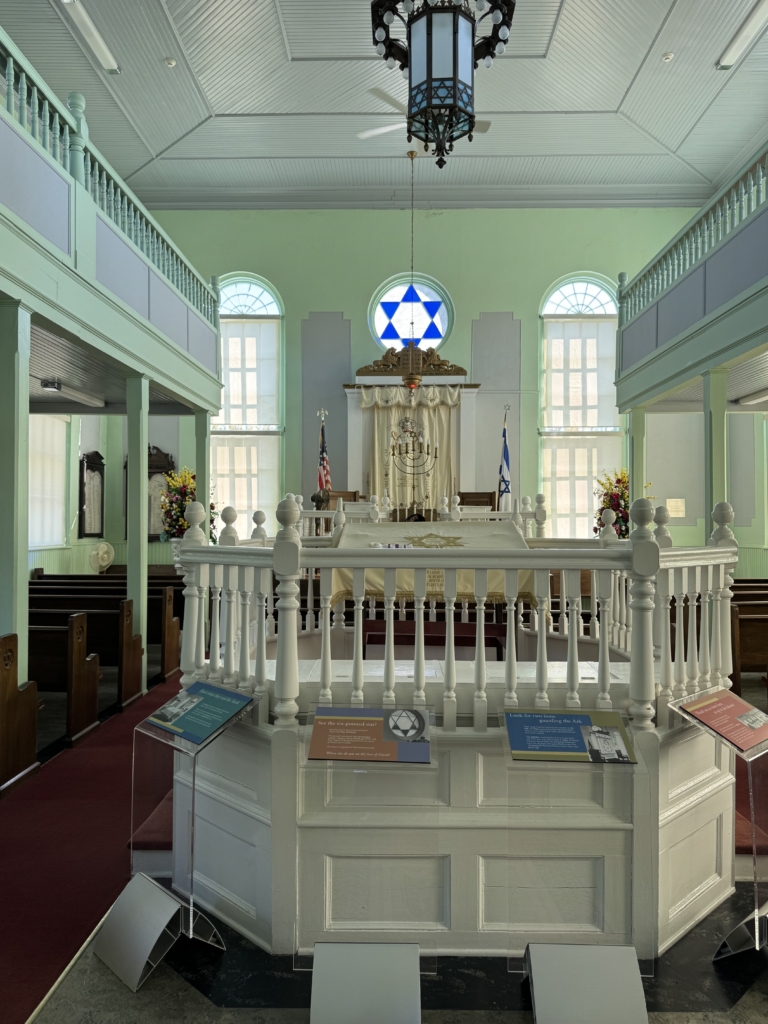
Woodbine Brotherhood Synagogue prior to the addition of the interpretative center c.1980. View from West / non street side – Photo: Historic American Buildings Survey (HABS). RIGHT: The Woodbine Brotherhood Synagogue’s sanctuary is above the Sam Azeez Museum. It is restored through the generosity of Michael Azeez and other donors. Today only high holiday services and bar and bat mitzvahs take place there. Photo: J. Morton Galetto
In 1891 the philanthropic trust, the Baron de Hirsch Fund, supported the purchase of 5,300 acres of pine barrens in Cape May County to establish Woodbine, NJ. De Hirsch believed that the Americanization of the refugees would help them to be accepted in the United States. He did not want them located in urban ghetto communities but he supported their adopting a rural agrarian lifestyle.
When we arrived at the museum we spent an hour talking with Museum Director Jane Stark, who has served the museum for decades. She shared the history of the settling of Woodbine and de Hirsch’s vision for the outcast Jews and their resettlement. She stressed that the museum is not only about the safe harbor Woodbine provided to Jews, but also about the history of a community that grew to become multicultural.
A tall sanctuary towers over the museum—Woodbine Brotherhood Synagogue (Agudath Achim Anshei Orthodox). Stark noted that the synagogue holds a unique place in American history as the oldest surviving synagogue constructed (1893–1896) entirely by its own members. The settlers built it by hand using an American design that blended Eastern European Orthodox traditions with local architectural styles.
Within two years of their arrival the newcomers built a town and thriving farms. Eight hundred acres were set aside for town lots, and today’s streets follow the same grid. Founded in 1891, by 1903 Woodbine was incorporated as a separate borough and was no longer part of Dennis Township. The township had taxed them at an unfair rate and township schools were overcrowded. After gaining independence Woodbine was referred to as the “first self-governed Jewish community since the fall of Jerusalem.” News of this achievement was covered by newspapers throughout the country.
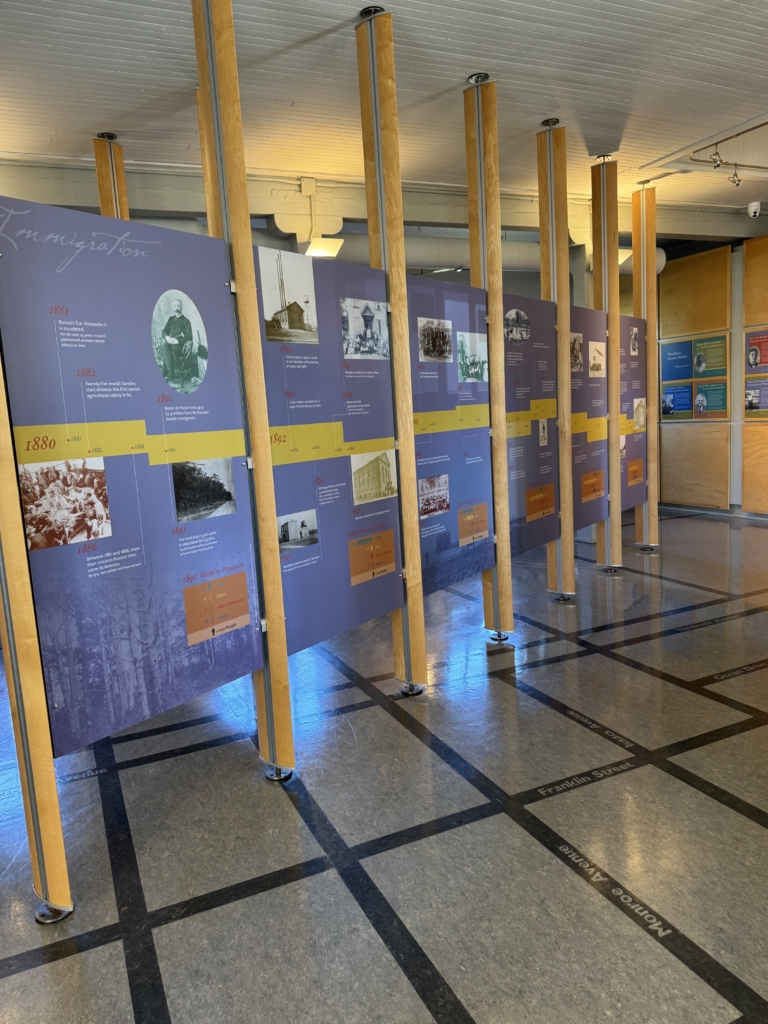
The floor shows the original (and still existing) streets of Woodbine. The Jewish settlers used many of the US Presidents’ names to denote their commitment to being Americans. These panels offer a timeline to important events in Woodbine’s multicultural history. Photo: J. Morton Galetto
By 1902 the industrious immigrants had established a population of 1,400 people, 52 farms, and seven factories.
Next, Assistant Director Sadie Wasilauskas led us through the museum’s displays—an organized chronology of Woodbine, starting with de Hirsch’s fund and his vision for the resettling of embattled Jews in the pines of southern New Jersey.
I was especially impressed by the early endeavor to create a secondary school: The Baron de Hirsch Agricultural and Industrial School opened in its doors in 1898. Jewish youth came from other farm communities to study there, and by 1902 there were 160 students. In 1917 the school closed, and in 1921 the trustees donated the facility to the state and it became the Woodbine Colony for Feeble-minded Males. In 1983 it was renamed the Woodbine Developmental Center and presently, in 2026, it is actively helping 184 clients.
The displays give an overview of many historic aspects of the Woodbine community—community rifts, factories, stores, planning, music, athletics, discrimination outside the community, religious life, and farming. We learned lots of interesting facts about Woodbine and the immigrants who came throughout its decades from 1891 to 2003.
A timeline shows the changing demographics of Woodbine. In 1891 there were 760 Jewish and no “African Americans” or Latinos. In 1920 there were 825 Jews, 541 “other,” 43 African Americans and no Latinos. In 1945 the GI Bill, and the mobility of servicemen seeking education and jobs showed a decrease in Jewish residents to 545, and by the 1970s 175 Jews remained, with 1,550 other, 810 African Americans, and 410 Latino. In 2003 where the timeline ends 72 Jews remained, with 1,207 other, 880 African Americans, and 557 Latinos. In checking the 2020 U.S. census figures for religious affiliation, staff said no Jewish people remained in Woodbine. The breakdown provided showed a population of 2,128 with 1,042 being white, 553 Latino and 361African American; the remainder were “other.”
The final display panels we visited highlighted the success stories of people who got their start in Woodbine and took their gifts to the Americas and beyond (see sidebars).
We wrapped up our visit by ascending the steps to the sanctuary. Its high ceilings, lime green walls, and balconies, where once the women of the congregation sat, give it a light and airy ambiance. A circular stained-glass window with cobalt blue triangles forms the Star of David, perched over the Aron Kodesh or “Holy Ark.” The Aron Kodesh is flanked by an American flag and the flag of Israel. A classic seven-branched menorah representing the ancient Temple of Jerusalem is centrally located in the front of the sanctuary. Also centrally located is a larger platform, or bimah, where men place the scrolls from the Ark for reading during Shabbat services.
The sanctuary itself speaks volumes about the immigrants’ desire to embrace the American dream. They made a town, tilled the soil, built homes and factories, developed institutions for learning, and from there they set forth to conquer greater endeavors and contribute to America’s inventiveness. Learning where these great Americans got their start and the adversity that led them to America is worthy of exploration. What they ultimately accomplished with their freedom from oppression is a story of the immigrant contribution to America, one we must all take the time to learn. In the end the greatest lesson of all is that tolerance unlocks human potential, and from that comes greatness.
Jacob Lipman: A Woodbine Success Story
Jacob Lipman (1874-1939), a famous soil chemist, got his start in Woodbine.
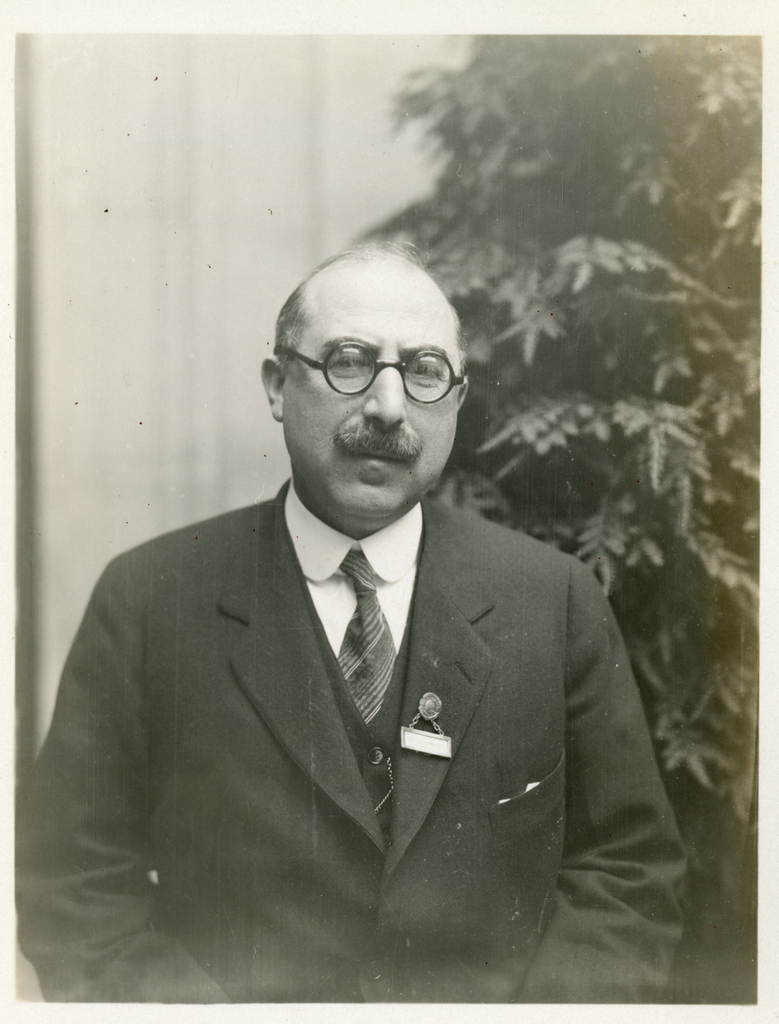
All Jacob Lipman needed was a chance and Woodbine gave him one. To help him get into college, his teachers arranged English lessons, lectures—even chores, so he could pay his way.
After he graduated from Rutgers University, Lipman came back to Woodbine to teach. In 1915 he became Dean of Rutgers’ College of Agriculture. A world-renowned soil chemist, he pioneered research on new crops and pest control.
If you like Jersey tomatoes, thank Dr. Lipman. His lab bred the famed Rutgers tomato in the 1920s. (source: Sam Azeez Museum of Woodbine Heritage)
The Pastors: A Woodbine Family
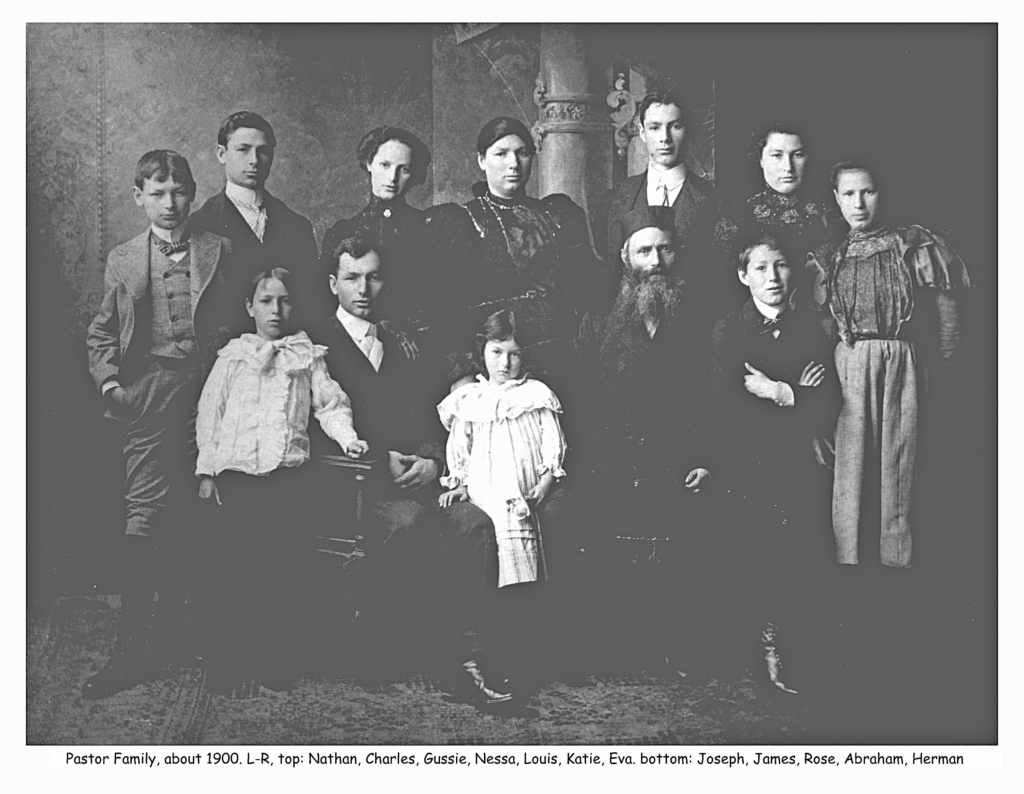
CU Trustee Emeritus Leslie Pastor Ficcaglia, in reviewing this week’s story, responded that it was all too familiar. Her father’s family started off life in America in Woodbine, and her family members have many recollections about their years there. As an adult she has attended services at the Woodbine Brotherhood Synagogue in memory of her ancestors. She provided this story about her own people.
“These were the Pastors, my father’s grandfather and father and the rest of the family. They arrived in Woodbine from Kyiv circa 1900, and most became doctors, lawyers, and judges. They did NOT want to stay on a farm! My great grandfather and great uncle are buried in Woodbine’s Brotherhood Cemetery. My grandfather, Louis Mordecai Pastor, just to the right of the pillar and for whom I’m named, became a horse-and-buggy doctor in Bangor, Maine, and my father also became a doctor on Long Island.”
Visitation: The Sam Azeez Museum can be visited on Wednesday, Thursday, and Friday between 10 a.m. and 4 p.m. (the website suggests Sunday hours – this is unreliable). All the museum’s panels are available online at: woodbinemuseum.org. But the staff helps to pique visitors’ interest and can answer more in-depth questions. Seeing the sanctuary and experiencing Woodbine’s ambiance is only possible by going in person.

