Wielding his palette and paintbrush, artist, sculptor and professor Louis Jules Gabriel Mounier (aka Alan Mounier, his great grandson). PHOTOS: NAOMI INGRALDI
Re-enactors take on roles of Vinelanders who cast long shadows.
A perfect autumn day with clear, bright blue skies and moderate temperatures was the setting for the Spirits of Siloam Cemetery living history tour on a recent Saturday. As guests walked the historic grounds, with acorns and fallen leaves crunching under foot, they were easily transported back a century and more to hear the stories of some of Vineland’s notable, as well as little-known, residents.
Siloam Cemetery is Vinelands oldest cemetery, established in 1864 on a plot of land donated by Charles K. Landis, the founder of Vineland. The gothic revival Siloam Chapel, circa 1918, was open, as well as the 1885 winter vault or mausoleum. This unique above-ground structure was used to temporarily store caskets during the winter months when the ground was frozen too hard for a traditional in-ground burial.
Seven of Vineland Historical Society’s members and trustees donned period attire to portray notable Vineland residents. Some are more well known, such as 19th century naturalist and botanist Mary Treat. Others, such as John White Hurn, have faded from memory but their actions are noteworthy to our nation’s history.
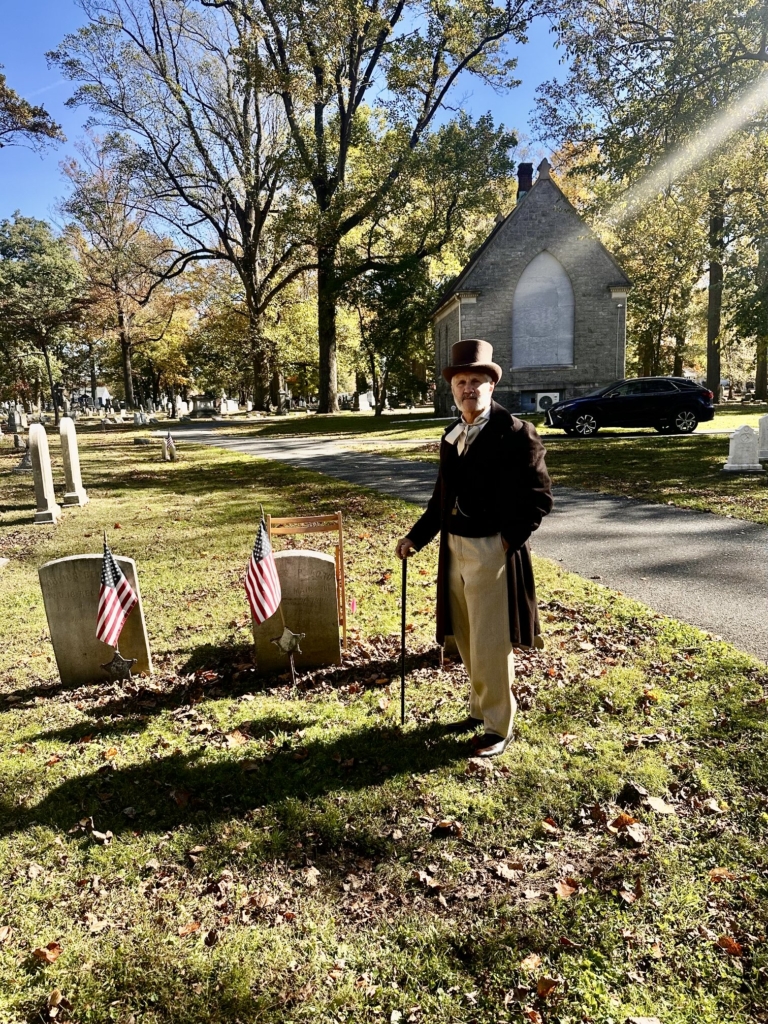
Charles Phineas Lord (aka Mark Grussenmeyer), Civil War veteran and a mayor of Vineland, looking dapper in his top hat, cane, and frock coat.
This interactive tour engaged visitors by treating them as contemporaries of the time period; in other words, a first-person reenactor (or living historian) assumes the identity of a real historical figure and speaks directly to the audience as if living in that past era.
Discussion and planning has already started about expanding this tour for next year.
The Vineland Historical Society is located at 108 S. Seventh Street Vineland. The next open house is Saturday, November 21, from 1 to 4 p.m.

