Held at the Alice Paul Center for Gender Justice on Sept. 26, the RYSE (Reclaiming Youth Stories for Everyone) Youth Summit culminated a year-long journey led by girls from across New Jersey who are committed to uncovering the hidden histories of the American Revolution. Together, they explored whose stories have been overlooked and how a fuller understanding of our nation’s founding can help shape a more just future.
Through interactive experiences and youth-led programming, participants engaged with restorative approaches to history and learned how the stories we tell about our past can shape our future. Throughout the day there were themed activities and workshops and two panel discussions. The first panel focused on students and teachers and what it means to teach the history of America’s 250th anniversary in today’s day and age, and the latter focused on the founding mothers of our nation. The summit was also about reclaiming the narrative of our founding moments to better understand what happened, who was there and what they thought or felt. To put it together, the project’s cohorts read firsthand accounts of the American Revolution from women who saw it all around them. Over the course of a year, the group met once a month and explored marginalized female voices and stories.
“These are some really sharp girls who – through meeting every month, through doing historical research with primary sources for the first time – they’re doing historical interpretation work and they’re learning how to critically think and through doing that, I have seen firsthand their confidence bloom,” said Molly Gonzales, advancement and civic engagement manager at the Alice Paul Center. Gonzales has been with the organization for almost three years. In grad school she studied ethics, peace and human rights while working in the university archives. That experience showed her how the preservation of history is an act of humanitarian work.
“It allows people to be subjects of their own story rather than objects, and those who are remembered, those whose stories we get to keep telling whether that’s in a history class or as a folktale, that impacts the culture and that impacts how we see different groups,” Gonzales said. “If folks grow up their whole lives never learning the stories of women leaders or women who like Alice Paul changed the constitution and enfranchised half the population, then people aren’t going to respect women so much. I really see historical storytelling as this humanitarian world.”
Alice Paul was the architect of some of the most outstanding political achievements on behalf of women in the 20th century. Born on January 11, 1885, to Quaker parents in Mount Laurel, Paul dedicated her life to the single cause of securing equal rights for all. A leader in the fight to ratify the 19th Amendment in 1920 to extend voting rights to women, Paul authored the Equal Rights Amendment 1923 and spent the rest of her life fighting for its ratification to ensure that the U.S. Constitution would protect women and men equally. Sometimes when Gonzales feels down about everything that’s going on around her, she thinks about the women who couldn’t vote, couldn’t open a bank account, couldn’t own property or who couldn’t be citizens but still woke up every single day and fought for their rights.
“If they could do that, without a driver’s license, without anything, I can pick myself up a little bit higher,” Gonzales said. “Their determination is really inspiring to me. The sacrifice and the discipline that these women had is a huge motivator and humbling force in my life.”
The Alice Paul Center is dedicated to dynamic advocacy – equipping women and girls with the knowledge, tools and connections to effect change; movement building that unites generations, engages all races and ignites collective action; and impassioned stewardship – telling stories that illuminate multiple truths of women’s history; passionately assuming responsibility for preserving, spotlighting and sustaining historic artifacts and places; and planning for long-term financial health. Working at the Alice Paul Center, Gonzales finds herself in a lucky and special position to be able to share the stories of women throughout history.
“What’s most impactful and what I love the most is when I can see the gears turning while I’m talking, and people feel empowered to share experiences that happened to them,” Gonzales said. “Different generations (are) coming together and being able to connect with people of all backgrounds, to be able to hear their stories, is some of my favorite parts, but also, every day I learn something new. One of the benefits of working in women’s history is that there’s always a discovery to be made.”
Additional Partners for the RYSE Summit included the Justice + Joy National Collaborative, the New Jersey Division on Women, RevolutionaryNJ, the New Jersey Historical Commission, the Ruth Project and the New Jersey Department of Children and Family Services.
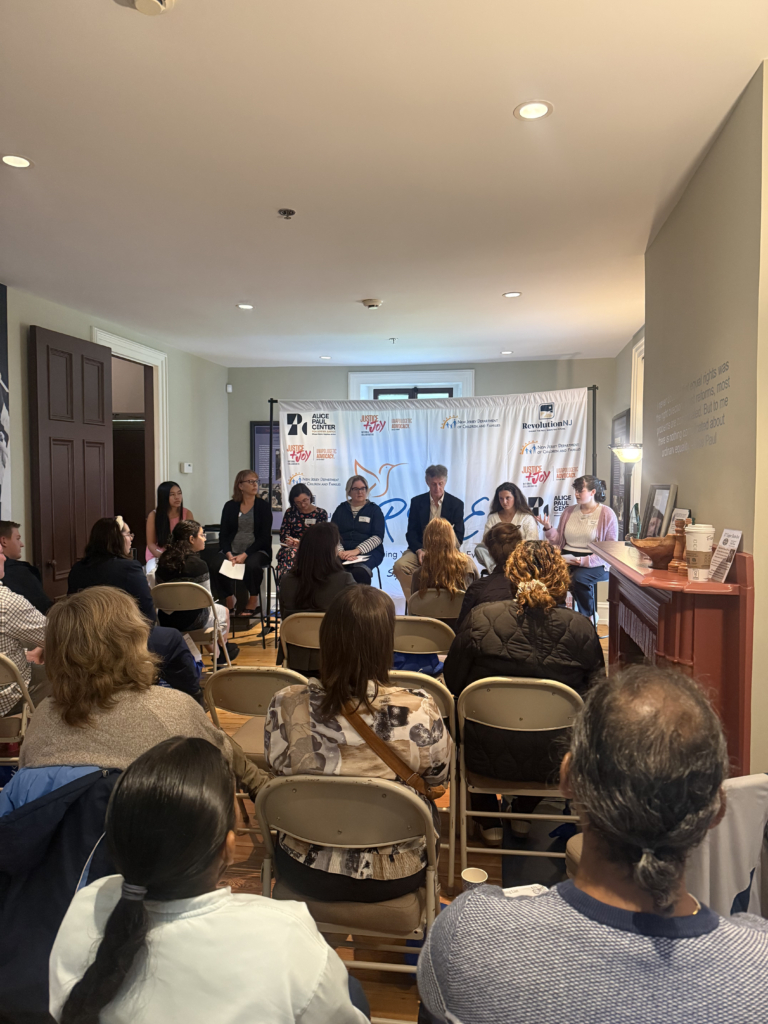
The RYSE Youth Summit at the Alice Paul Center for Gender Justice culminated a year-long journey led by local students committed to uncovering the hidden histories of the American Revolution.
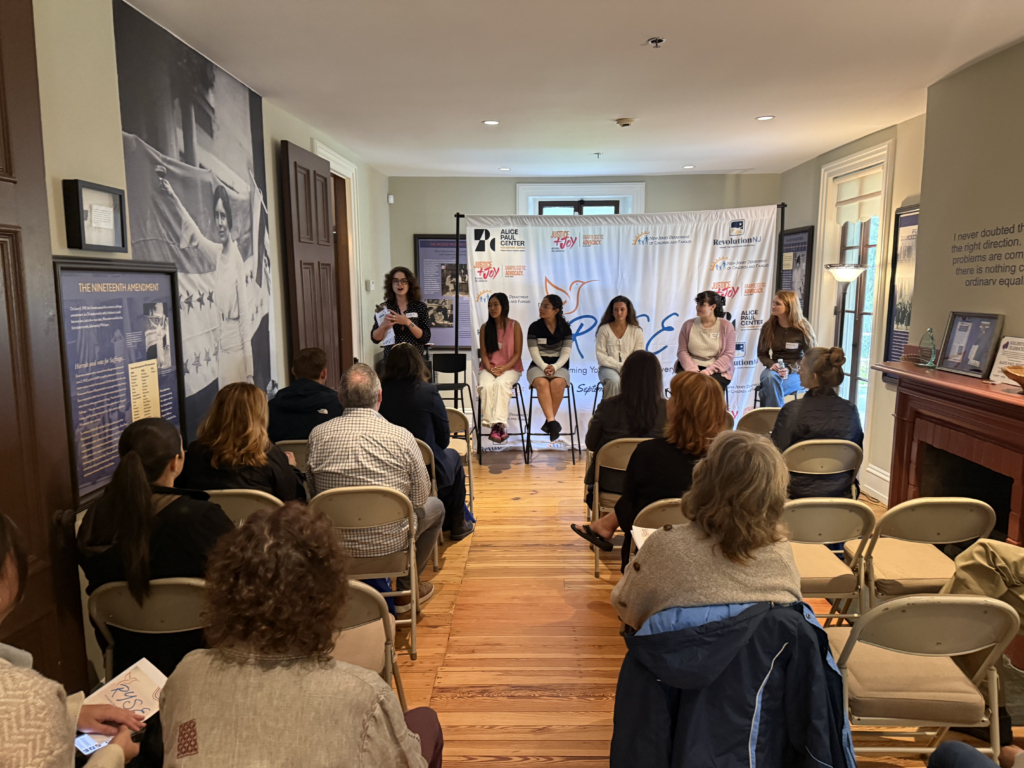
The summit explored whose stories have been overlooked and how a fuller understanding of our nation’s founding can help shape a more just future.

