Twenty-six years ago, September 11 meant back-to-school spirits; hazy, end-of-summer weather; the beginning of a season with rowdy fans, dressed in green, piling into Veterans Stadium to cheer on their favorite football team. When American Airlines Flight 11 hit the North Tower at 8:46 a.m. in 2001, though, everything changed. The crashes that subsequently hit the South Tower at 9:03, the Pentagon at 9:37, and an empty field in Shanksville, PA, alerted the country that this was an attack, unlike anything we had seen on U.S. soil since Pearl Harbor.
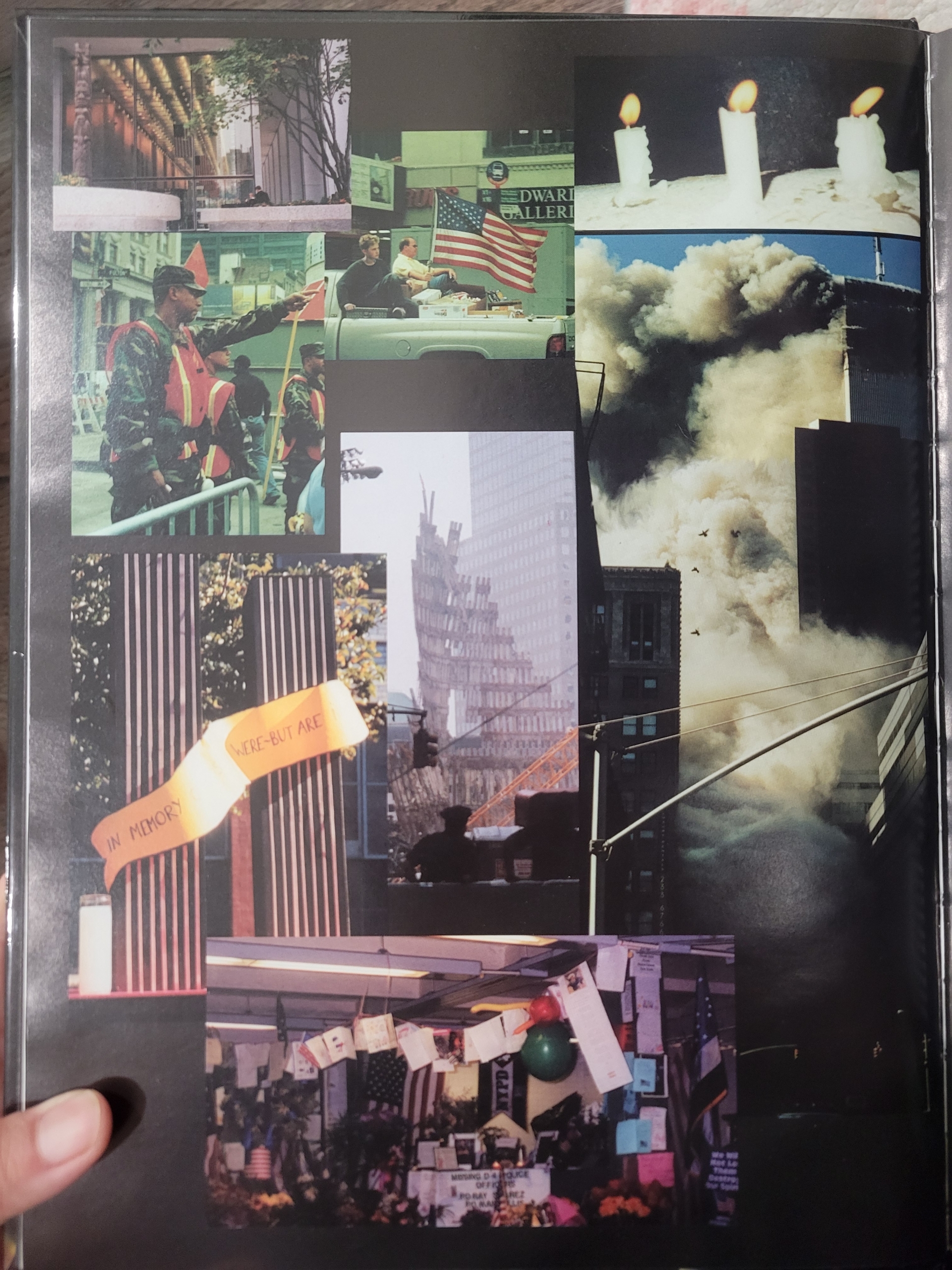
Images printed in the 2001-02 Bronx High School of Science yearbook of 9/11 and the aftermath.
People of all ages were immediately impacted within the five boroughs and beyond. Tina Young, now living in Hopewell Valley, was in her senior year at Bronx High School of Science when the planes hit the towers. Upon reflection, Young shared, “Seared into my memory was the NYC ‘skyline’ that late afternoon on Tuesday, September 11, 2001, when we crossed over the Whitestone Bridge. The sky was completely black with smoke, coming from the direction of South Manhattan. That’s when it really hit home what had happened. I’m trying not to make it into a hyperbole, but that was when my 17 year old self ‘grew up’, facing the reality of terrorism and war arriving in our backyard.”
Maria LeBlanc, now of Vineland, had just started college at Pace University in Manhattan. All these years later, the immediate destruction made a permanent impact on her. “The visions and sounds of the plane entering the World Trade Center and immediate screams will always be imprinted in my psyche. Even though it was 25 years ago, the memories feel like moments ago. I dealt with survivors guilt for many years and knowing that thousands of people died around me, and there was nothing I could do to save them is something that breaks me to my core.” The devastation was quickly apparent.
Only 500 to 1,000 feet separate New Jersey from Manhattan at the nearest points of the Hudson River. As smoke filled the skies and the buildings crumbled, emergency response from the Garden State jumped into action and headed to what became Ground Zero.
Members from the Cecil Fire Company in Williamstown were one of the companies to join the efforts; the group included Anna Mills, Derek DeFelice, and two other men. DeFelice’s wife, Deb expressed, “I was terrified when he told me he was going. [Derek was a volunteer EMT at the time.] We had a young daughter and the world was in a state of unknown, so I worried what he was walking into.” The couple, engaged at the time, entered a world of unexplored territory that many people throughout the region faced.
Mills recalled watching the Twin Towers collapse on Sept. 11 and feeling an immediate, overwhelming connection to the firefighters and first responders who were trapped inside. After responding to local emergencies that day, she volunteered to spend a week at Ground Zero, where she witnessed injured firefighters refusing to leave the pile as they searched through the devastating rubble for their fallen brothers.
Mickey Brandt wrote a reflection for the Cumberland News on October 3, 2001, which details the experience of “hell on Earth” faced by local first responders Dave Schoch, Ed Conrow, Fred Mastrogiovanni and Dan Bestwick upon their reentry to normalcy after 10 days of physically punishing and emotionally devastating work at Ground Zero in New York City. As noted by Brandt at the time, All four men use(d) tightly structured vocabulary, like “mission,” and “deployment,” to keep their focus on the work that they were trained to do, not on the vast destruction and human carnage they were asked to examine. Mickey’s original piece been posted and updated on our website under SNJ Today for further exploration.
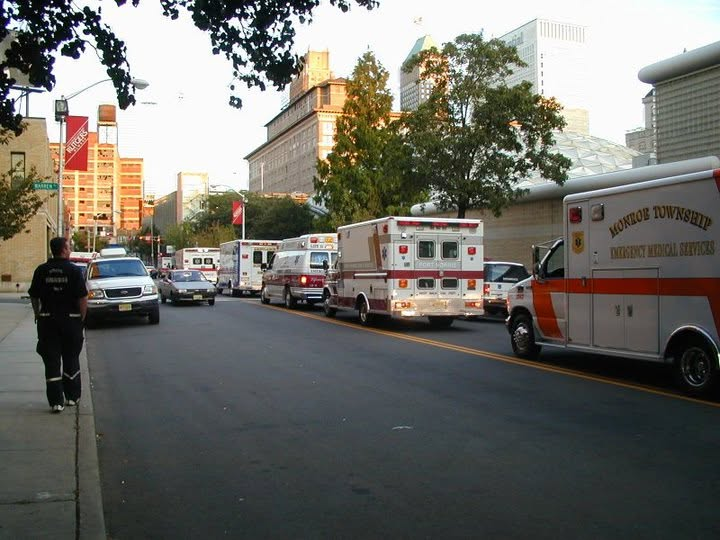
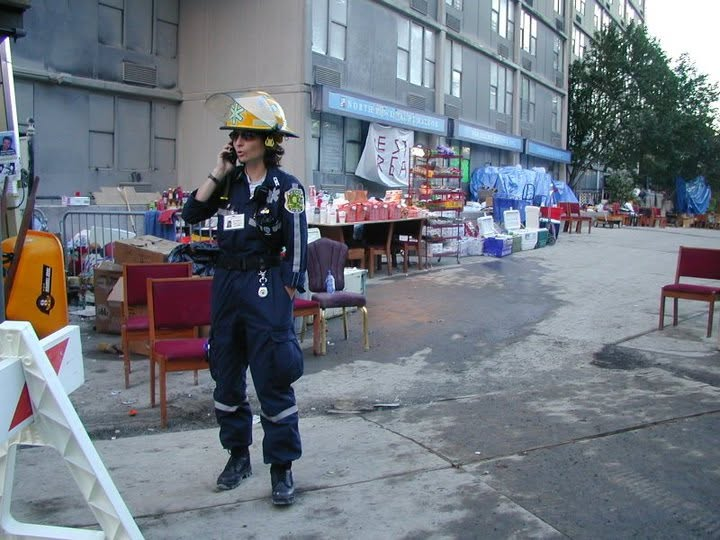
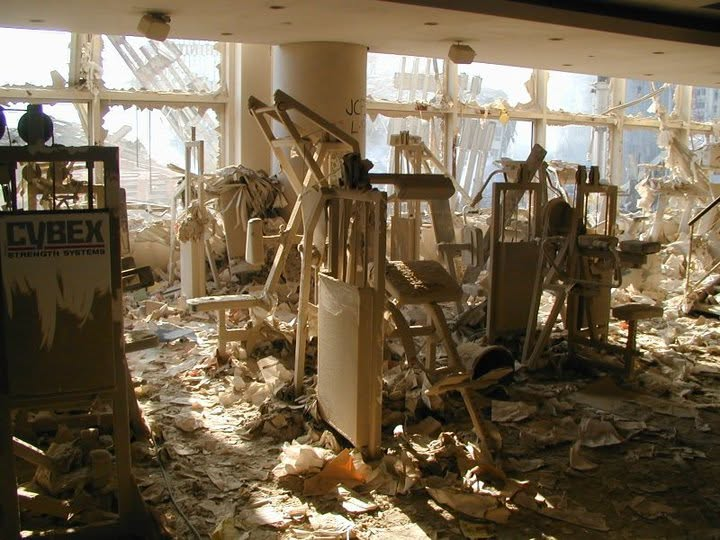
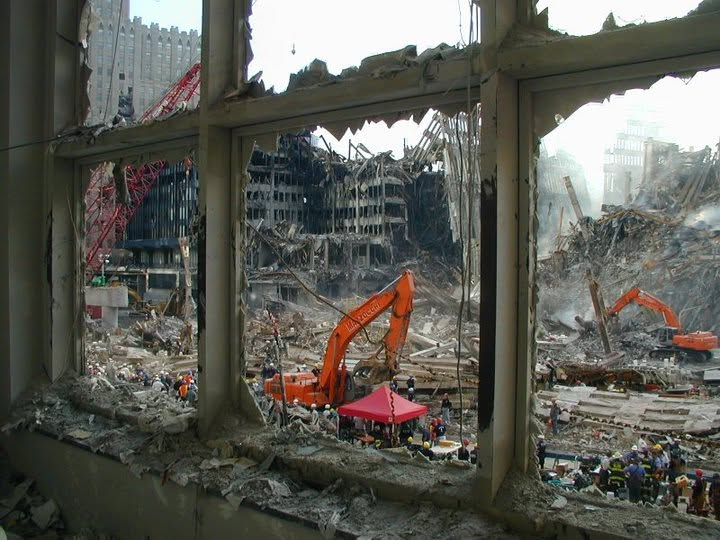
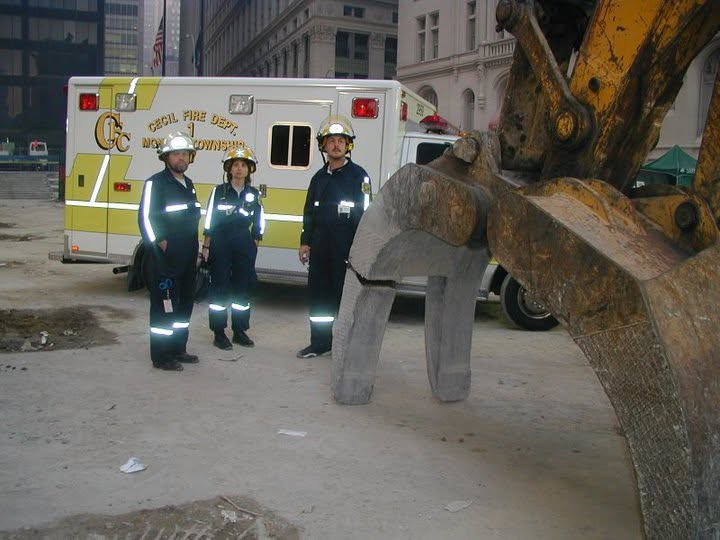
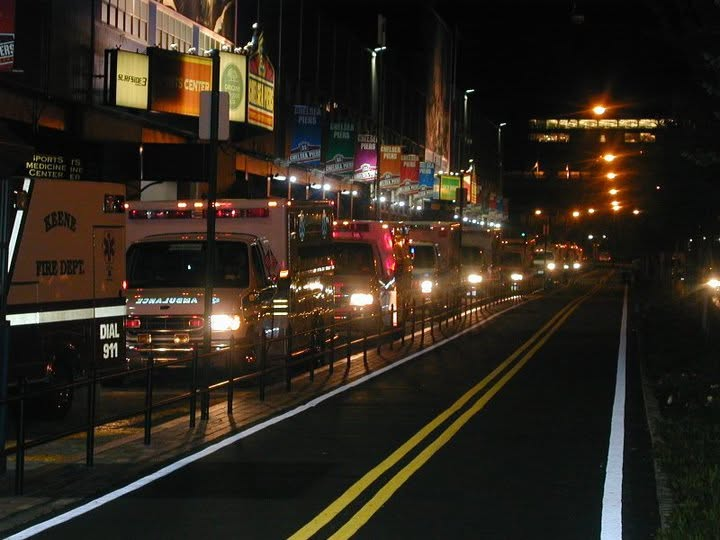
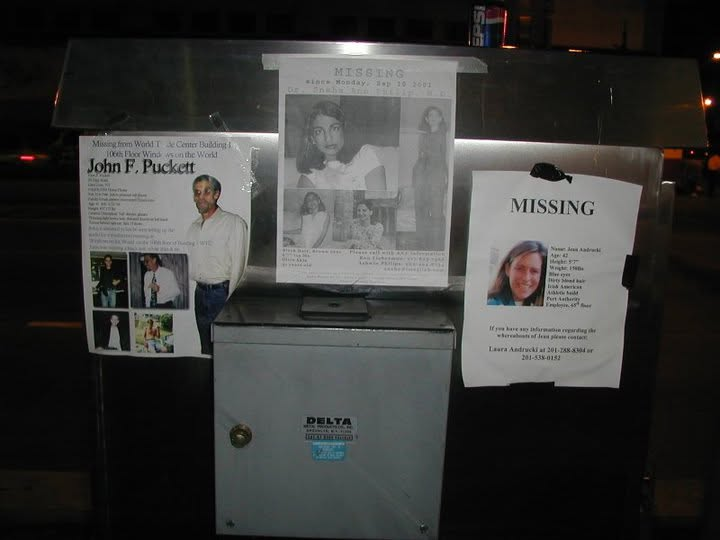
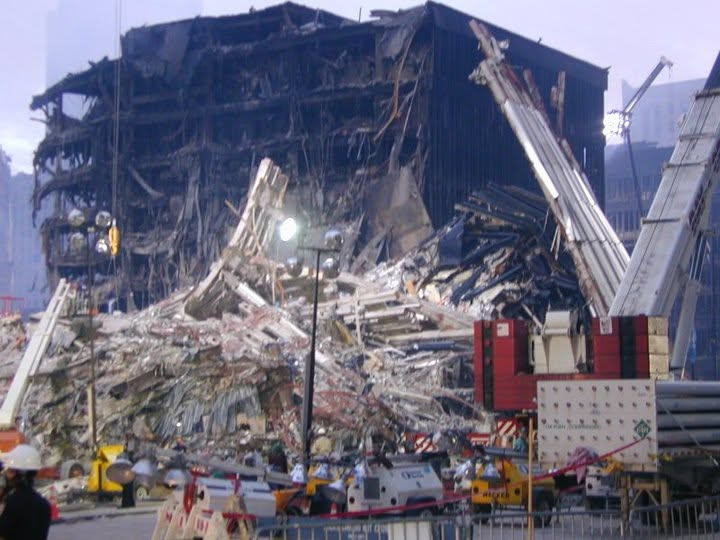
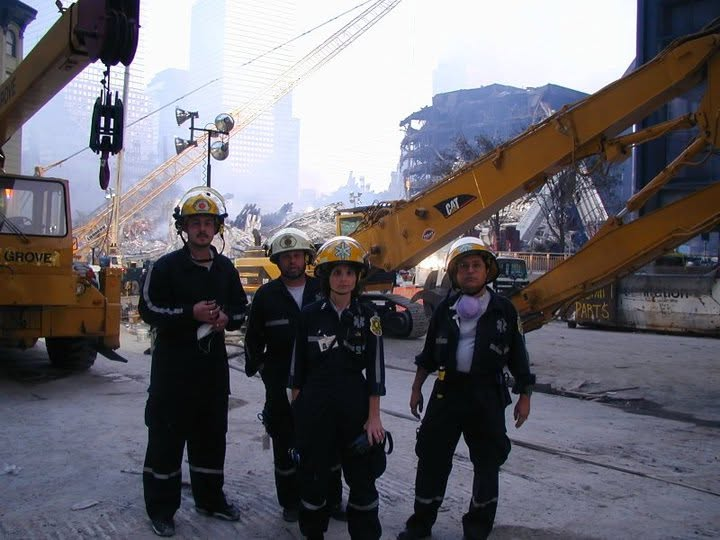
DeFelice’s husband, Derek, Anna Mills, and two other members of the Cecil Fire Department joined the recovery efforts in New York.
Kathy O’Grady worked as a Licensed Clinical Social Worker in Trenton at the VA as therapist working mainly with combat veterans and grieving families. “I arrived on site at about 5 p.m.,” she shared. “There wasn’t any counseling to be done, everyone was just in shock, traumatized.” The images do more justice than words ever will; the destruction, the missing, the settling soot all shook people to their core.
Others may have been too young in the moment to head to NYC, but witnessing such tragedy impacted the trajectory of their lives. Now a Voorhees resident, Justine Agaloos lived in Clifton, NJ at the time. As a thirteen-year-old, the attacks motivated her to join the military. “I was inspired to protect the country,” shared Agaloos, who joined the Air National Guard with the 177th Fighter Wing, which operates F-16s from Atlantic City and began flying homeland-defense missions over the Northeast as part of Operation Noble Eagle following the attacks.
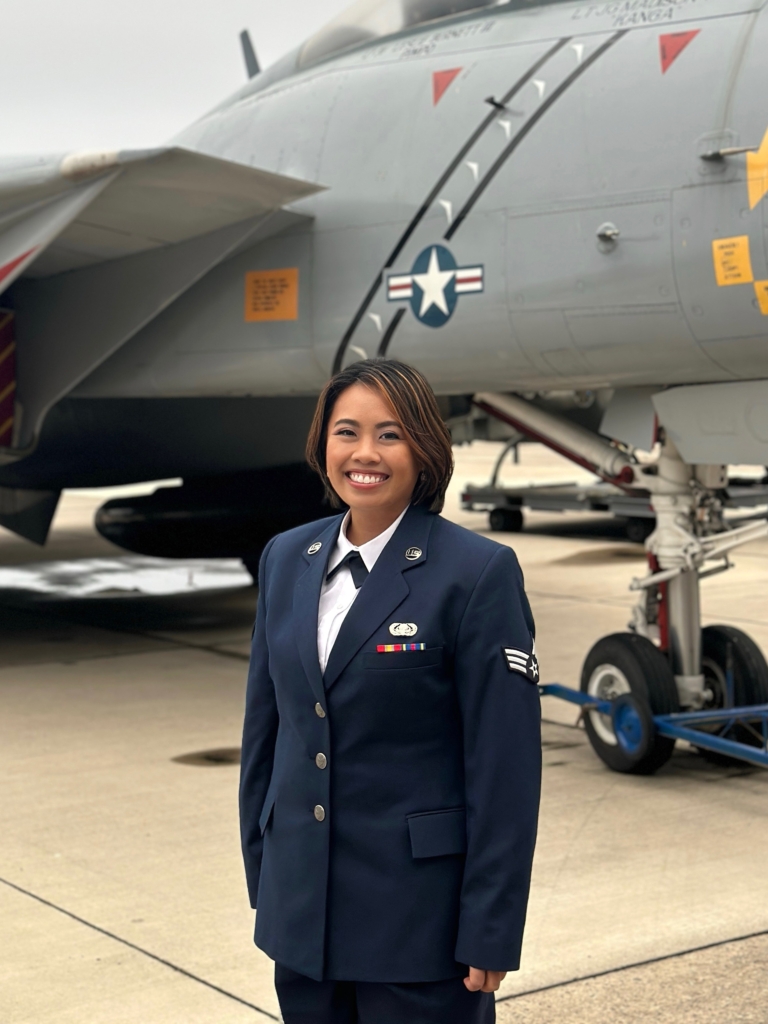
Agaloos, a Voorhees resident, has served with the 177th Fighter Wing and the 227th Cyberspace Squadron.
Since joining the military, she has transitioned to the 227th Cyberspace Squadron at McGuire Air Force Base, focused on a deeper mission concerned with threats that may hit the cyber domain. At the time of her initial service, cybersecurity was not as dominant in national security discussions, as it is today. The attacks created a broader sense of awareness that threats to the USA could take many forms, including cyber warfare. As technology became more integrated into military operations and everyday life, networks, communication systems, data and critical infrastructure evolved, Agaloos acknowledged, which led her to her current position.
Today, though, she asserts, “I continue to have the same motivation that drew me to military service after witnessing September 11, 2001.”
The somberness around 9/11 continues 25 years later in the same way patriotism may. A total of 2,977 victims died as a direct result of the hijackers.
Additional first responders and individuals have since passed away from 9/11-related illnesses and toxic dust exposure. According to the World Trade Center (WTC) Health Program, over 400,000 people were exposed to 352 chemical agents in toxic dust when the two buildings collapsed. As of December 2024, 140,000+ of those exposed had enrolled in the WTC Health Program; 49,000+ first responders and survivors have been diagnosed with WTC Health-certified cancers.
Total deaths from post-9/11 toxic exposures (including respiratory diseases, digestive disorders, and cancers) have vastly surpassed the number of victims who died on the day of the attacks.
Anna Mills of Cecil Fire Company asserted that she remains deeply affected by Sept. 11, remembering the 343 firefighters who died that day and the hundreds more who later succumbed to illnesses linked to their work at Ground Zero, while also coping with her own lasting respiratory problems. “I’ve suffered with a collapsed lung and many breathing problems but nothing like these men have suffered,” she shared. Amid the devastation, she remembers the extraordinary unity and compassion of New Yorkers who cheered on first responders, cared for rescue workers and dogs, and came together under the American flag in a display of strength she says she will never forget.
September 11, 2001, profoundly shaped the trajectory of life on a personal and political level for U.S. citizens. Collectively, we entered a new era of national security seeking to balance security and liberty. As we reflect a quarter of a century later, our local communities continue to honor those lost in a variety of ways.

The LeRoy W. Homer Jr. Foundation awards scholarships to young people who pursue aviation careers.
LeRoy Homer tragically lost his life in the crash at Shanksville as the co-pilot on United Airlines Flight 93; his wife Melodee, of Marlton, took this devastation and turned it into a legacy with the LeRoy W. Homer Jr. Foundation, which awards scholarships to young aviators and helps their dreams of flying come true. This year, the organization achieved a milestone of 40 scholarships awarded, to honor the 40 heroes of United Flight 93.
This week, the Port Authority of New York and New Jersey and the World Trade Center Memorial Fund marked the completion of a new permanent memorial honoring Port Authority colleagues lost in the 1993 World Trade Center bombing and the 9/11 attacks. Created by the WTC Memorial Fund in collaboration with PANYNJ, the memorial reflects a shared commitment to honoring the colleagues and families affected by the attacks. “Bringing this memorial to fruition has required care, technical expertise and a shared understanding of what it represents to the Port Authority community,” said Paul Iannacone, president of the World Trade Center Memorial Fund and retired assistant director of procurement for the Port Authority of New York and New Jersey.
And in moments of joy, people continued to find the silver lining. O’Grady, the social worker from Trenton, commented, “Before I left for NYC, I was going to take a pregnancy test. I, unknowingly, threw it in my suitcase. Before I left, I took the test, and it was positive! [It was] surreal in the midst of all of the death we were surrounding with.” Her baby is now 24.
From celebrity telethons to sports rallying, unforgettable images and cross-national support, communities came together in a generational way that showed the spirit of what puts united in the United States of America. As we continue to reflect on the tragedy twenty five years later, one thing remains clear: we remember.

