For a future mechanical engineer who wants to work in robotics, Cinnaminson High School graduate Ryan Coceano’s eight-week trip to Thailand was quite an experience.
“It was very exciting. We stayed at a hotel in Bangkok, and traveled once a week to the Ang Sila Mangrove Education Center,” said Coceano, a senior at Worcester Polytechnic Institute (WPI) in Massachusetts who was part of a WPI four-student team that completed a professional-level, research-driven “Mangrove Restoration Education for Ang Sila Community” project.
“We were working with four students from Chulalongkorn University,” where they met each day to discuss and study problems of deforestation caused by urban development and shrimp farming and how the mangrove trees protect the coastline.
“We were raising awareness and trying to get children more interested and involved in mangrove conversation. We talked to a lot of professors and put together a website to teach youngsters,” said Coceano, who enjoyed the weekly research trips to the education center on the coast of the Gulf of Thailand 57 miles southeast of the capital city.
While there on a field trip, they met with 24 students from nearby Watkungwaree Elementary School “to demonstrate our lesson on mangrove trees that we created. We then gifted a copy of our learning materials to them to use in future classes,” he said.
On another trip, an education center staff member explained how the center operates and the methods that they use to restore the mangrove forests. “My Thai teammates were translating what he said for myself and my other WPI teammates,” Coceano said.
He and his fellow students were participating in the school’s Interactive Qualifying Project, a core part of the innovative undergraduate experience at WPI with a hands-on approach that offers students opportunities to help develop thoughtful solutions to open-ended problems.
“The WPI project-based curriculum’s focus on global studies brings students out of the classroom and their comfort zones and into the global community to apply their knowledge and to solve problems,” Professor Kent Rissmiller said.
Coceano and his team arrived in Bangkok on June 10, and they stayed until March 8. “It was very hot and humid, even though it was winter. The temperature was in the 90s. The food generally was very good. It was spicy, but I could tolerate it,” said Coceano, who is majoring in mechanical engineering and interning this summer at Opex, a robotics company in Moorestown.
“We worked every day from 9 a.m. to 4 p.m., and we were able to explore Bangkok at night and on the weekends. It was very exciting and there were a lot of cool things to do,” he said. “There were huge parks, and I did quite a bit of running a few days each week.”
A talented track and cross country runner at Cinnaminson High School, he is doing the same at WPI, a Division III school, where he competes in the 1,500 meters and 5K races.
“I established my work ethic at Cinnaminson High, and it carried over to my college education,” said Coceano, who will graduate this December and then go for his Masters in mechanical engineering.
This past winter, he learned a lot about mangrove trees. They create a spider web of roots in the water and catch dirt and sediment that prevent erosion, especially during the rainy seasons, he said. “The trees help protect the coast. One of our main focuses was on flooding.”
The Khaled bin Sultan Living Oceans Foundation’s Mangrove Education & Restoration program is a hands-on initiative designed to educate students about the importance of mangroves while actively restoring these critical marine ecosystems.
Through immersive learning experiences, students gain firsthand knowledge of mangrove biology and ecology, a deeper understanding of the benefits mangrove forests provide to people and the environment, and how they can contribute to local mangrove conservation efforts, states the Foundation’s website.
“Mangroves are among the world’s most important and threatened ecosystems. They provide coastal protection, support biodiversity, store carbon, and offer vital ecosystem services to local communities. Yet, over one-third of the world’s mangroves have been lost in the past 50 years due to coastal development, pollution, and climate change.”
By engaging students, teachers, and community members in conservation, the four-person team from WPI helped to foster environmental stewardship and empower the next generation to protect these vital coastal forests.
“I learned a lot while I was there, and hopefully the website we created and the lessons we prepared for elementary students will help to address the environmental issues,” Coceano said.
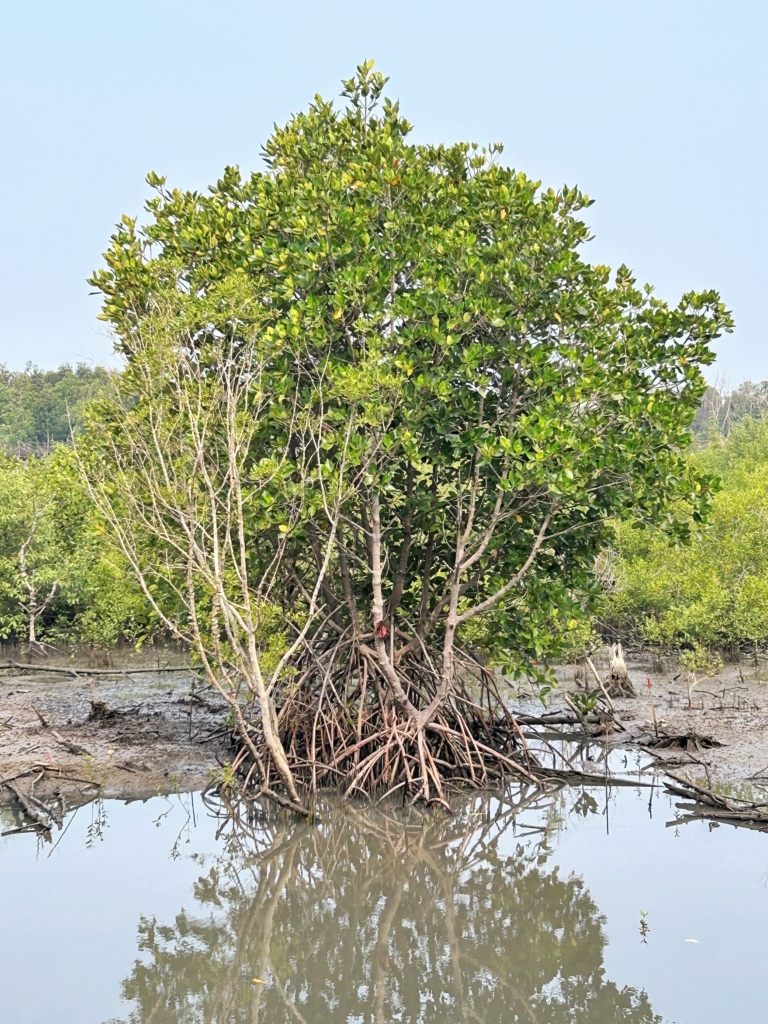
A mangrove tree with its roots deep in the water thrives after being planted and grown as part of the Mangrove Restoration effort at the Ang Sila Mangrove Education Center in Thailand
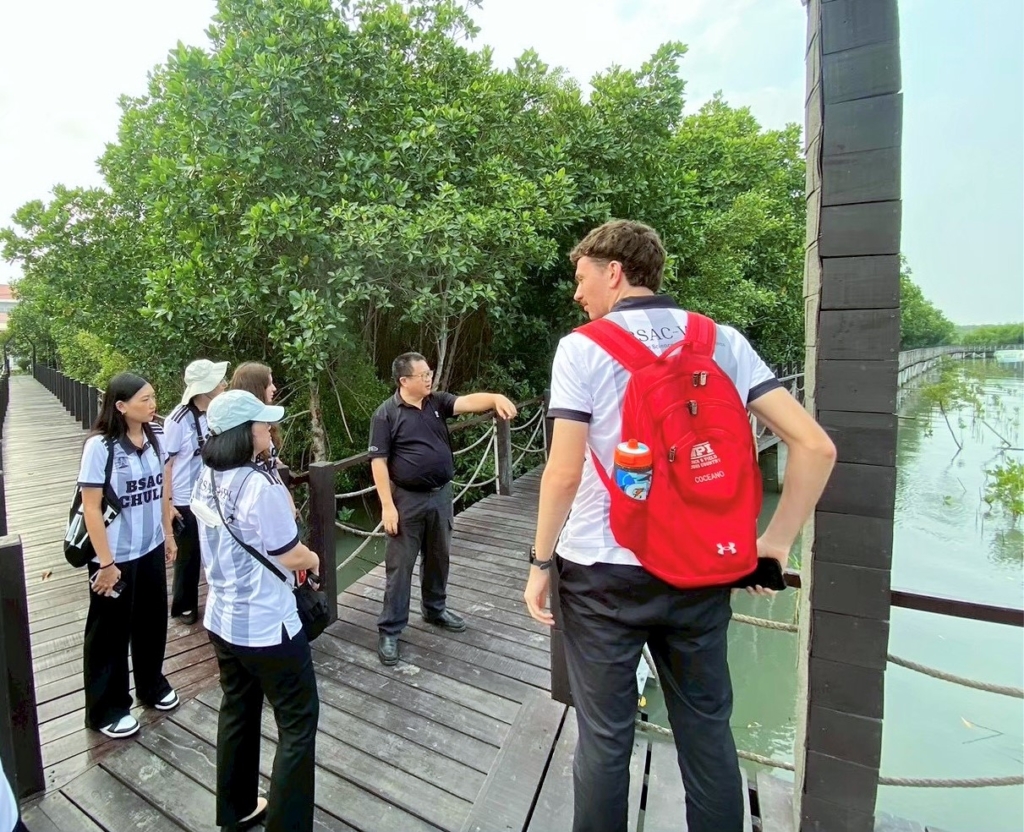
During a research visit a center staff member explains methods used to restore the mangrove forests.
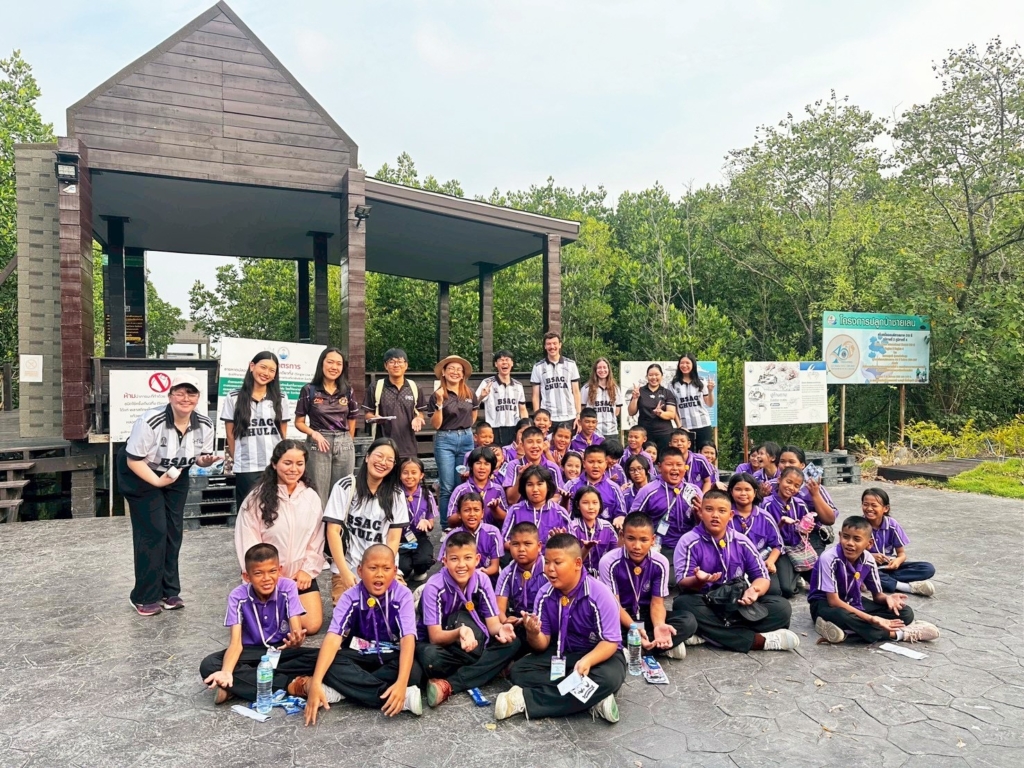
While posing for a group shot after a field trip, four students from the Worcester Polytechnic Institute team and four Chulalongkorn University students pose with a group of students and teachers from Watkungwaree Elementary School.

